
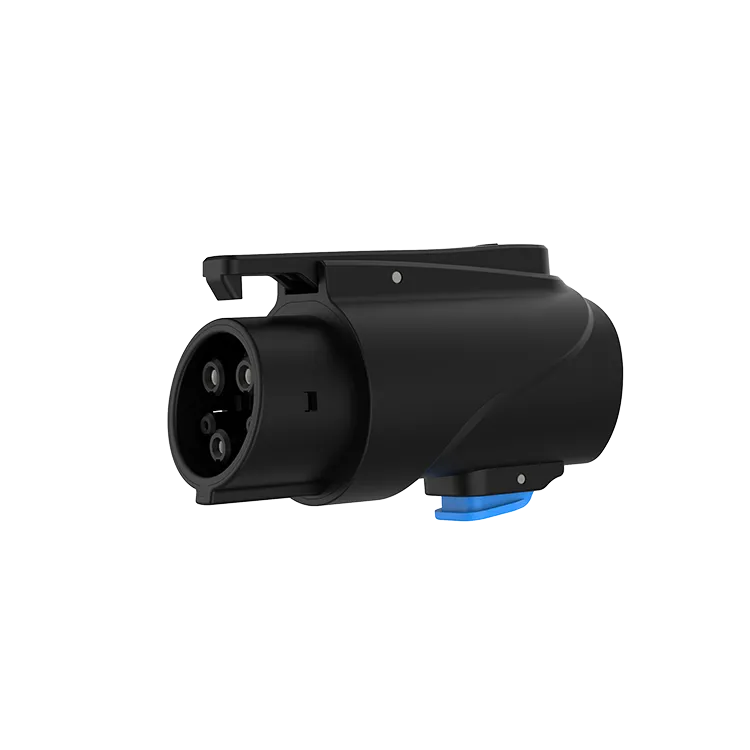
No. The JT02 is an AC adapter, and a Supercharger is a DC fast charger — the two work on different power paths. The adapter reshapes a plug so a J1772 car can take AC charging; a Supercharger delivers DC straight to the battery and runs a digital negotiation between station and car that this adapter plays no part in. The mismatch is in the kind of charging, not the shape of the plug.
Key Takeaways
- The JT02 is an AC adapter; a Supercharger is DC fast charging. Different power path, no bridge.
- DC sessions are negotiated digitally between station and car; an AC pass-through adapter takes no part in them.
- Supercharger access for other brands runs through Tesla’s own built-in adapter arrangement, for cars with a CCS1 inlet.
- For CCS1 cars at NACS DC stations, the DC adapter family — JT08 and JT09 — is the right direction, used only with the car maker’s approval and where the station is open to the car.
Two Different Power Paths
| AC charging — Wall Connector, destination charger | DC fast charging — Supercharger | |
|---|---|---|
| What leaves the charger | AC power, at Level 2 rates (DOT: typically 7–19 kW) | DC power, at fast-charge rates (DOT: typically 50–350 kW) |
| What converts it | The car’s onboard charger turns AC into DC for the battery | The station itself converts AC to DC before it reaches the car |
| The adapter’s place | Passes AC power and the charger’s signals through to the car | None — the session is arranged for a direct station-to-car DC connection |
In AC charging the conversion happens later, inside the car. In a Supercharger session the power arrives as DC and bypasses the onboard charger — a different system that happens to share a plug family, which is why whether the Tesla charger is NACS and whether J1772 works with CCS have separate answers.
Why the Adapter Cannot Bridge That
- It is wired for the AC arrangement. The JT02’s contacts map the AC circuits and signals of a Level 2 session. It is rated at 80 A and AC 250 V — an AC part, on paper and in construction.
- A DC session is negotiated digitally. Before DC power flows, the station and car exchange data and agree the session. An AC adapter passes analogue charging signals through; it holds no electronics to join that negotiation, and it is not part of the arrangement the station expects.
- Nothing about it is a workaround: no setting, plugging order, or technique turns an AC adapter into a DC one. Using it outside AC charging is outside its design and rating — full stop.
What a J1772 Car Can Do Instead
- Charge on AC, widely. Home and destination AC charging is where a J1772 car lives; where the plug is NACS, the JT02 makes the connection.
- At Superchargers, only Tesla’s own arrangement counts. Some Supercharger posts carry a Tesla-fitted built-in adapter, and Tesla opens certain sites to other brands under its own programme, serving cars with a CCS1 DC inlet. A car whose only inlet is J1772 has no DC inlet at all, so no adapter gives it one. Check Tesla’s current station information for what is open to your car.
- On other DC networks, the car’s own inlet rules. Cars with a CCS1 inlet charge at CCS1 stations natively; that is a property of the car, not something an AC adapter changes.
The Adapter That Points the Other Way
EVDANCE’s DC adapters exist for the opposite journey: a CCS1-inlet car charging at a NACS DC fast station — an open Supercharger, for example. The JT08 covers that direction at up to 500 A; like all DC adapters it is used only where the car’s maker approves it and the station is open to the car. Keep the directions straight: the JT02 takes a J1772 car to a NACS AC charger; the JT08 and JT09 take a CCS1 car to a NACS DC station. Neither substitutes for the other.

Frequently Asked Questions
What happens if I try the JT02 at a Supercharger anyway?
Do not. The adapter is designed and rated for AC charging only, and a DC session is a different arrangement end to end. There is no supported way to use it there, and no partial success to aim for.
Is there an EVDANCE adapter that lets a J1772 car use DC fast charging?
No. Our DC adapters serve cars with CCS1 inlets at NACS stations. A car with only a J1772 inlet has an AC-only charge port — fixed by the car’s design, not by any adapter.
My car has a CCS1 inlet. Can it use a Supercharger?
Where Tesla has fitted the post with its own built-in adapter and opened the site to your brand, yes — under Tesla’s programme and its current terms. That route uses Tesla’s hardware, not a carried AC adapter.
Related Reading
- Is the Tesla Charger NACS? NACS, J3400 and Adapters Explained
- Does J1772 Work With CCS? CCS Connectors Explained
- Are EV Charging Adapters Safe?
- Can I Use a Tesla Charger for Other Cars?

