
The 80 A on the JT02 is the adapter’s own ceiling: the most current its contact path is built to carry. It is not a charging speed. Your session is decided by the charger’s output and your car’s acceptance — and in almost every home setup, both sit well below 80 A.
Key Takeaways
- 80 A is the JT02’s own current ceiling — a property of the adapter, not a charging speed.
- Real sessions are set by the charger and the car: 32 A is about 7.7 kW, 48 A about 11.5 kW at 240 V.
- The rating spans the whole Level 2 band, so the adapter is never the limiting part at home.
- Headroom buys compatibility across cars and chargers — never extra speed for the car you have.
What an Amp Rating on an Adapter Actually Certifies
A current rating describes the part it is printed on. For an adapter it says: the contacts and the internal path are sized to carry up to that many amps, continuously, within the rating — the JT02’s listing pairs its 80 A with AC 250 V. The marking exists so you can compare the part against your planned session. What the number does not contain is any promise about a session. An adapter supplies nothing; it is a rated joint in a path other equipment controls. The checks that go with the rating — condition, seating, certification — are set out in our guide to whether EV charging adapters are safe.
Amps Into Kilowatts: The Sessions You Will Actually See
Charging speed is power, and power is amps times volts. At the 240 V of North American home charging, the common session currents convert like this — labelled arithmetic; each pairing is a charger’s stated specification:
| Session current | Power at 240 V | Whose stated rating this is |
|---|---|---|
| 32 A | About 7.7 kW | EV-ACS3210T portable charger, at its top step |
| 40 A | About 9.6 kW | EV-ACS4005T and EV-AC04001U portable chargers |
| 48 A | About 11.5 kW | EV-ACT5006T wallbox — and the Tesla Wall Connector’s maximum |
| 80 A | About 19.2 kW | Arithmetic only — the top of the Level 2 band |
All four rows sit inside the Level 2 band — 7 to 19 kW, roughly 10 to 20 miles of range per hour in the U.S. DOT figures. So an 80 A adapter rating spans the entire Level 2 class: there is no home AC session it is too small for. The bands themselves are covered in our explainer on how many kW a Level 2 charger is.

Why Sessions Land Below the Ceiling — and When the Headroom Matters
A session takes the lowest of three numbers: the charger’s output, the car’s onboard-charger acceptance, and the adapter’s ceiling. With an 80 A adapter, the third number is effectively never the lowest — which is the point of the headroom. It earns its keep in three ordinary cases: a destination charger away from home that offers more than your home unit does; a wallbox upgrade next year that does not force a new adapter with it; and never having to check the adapter first. Headroom never pulls a session upward: a 32 A car on a 48 A charger charges at 32 A through an 80 A adapter, exactly as it would plugged straight in.
The JT02 Rating in Context
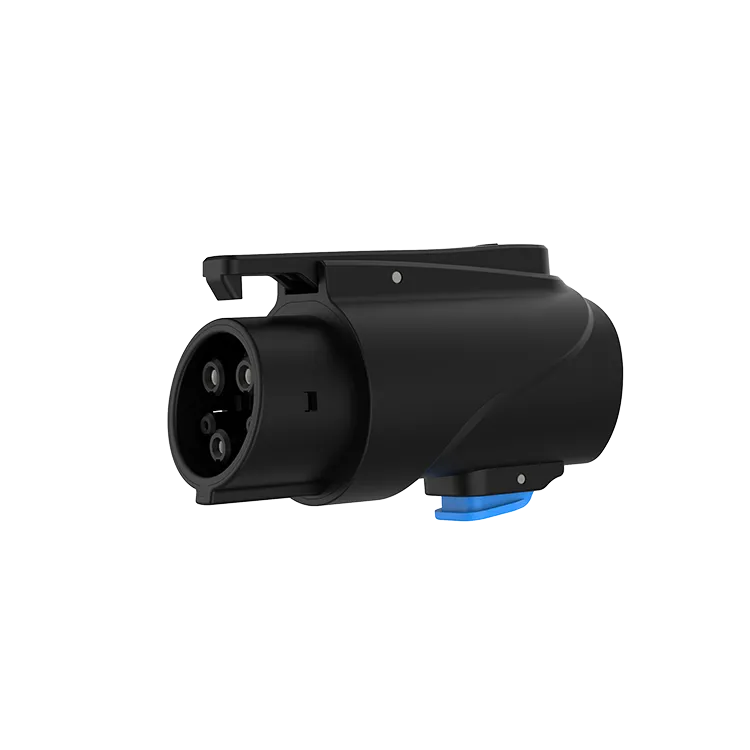
The EVDANCE JT02 NACS-to-J1772 adapter is listed at up to 80 A, AC 250 V, IP65, with silver-plated copper contacts. In short: rated for the whole Level 2 class, used at a fraction of its ceiling in most homes. If your car is native NACS and the question is the charger itself, the EV-ACT5006T 48 A wallbox is the home unit in this range.
Frequently Asked Questions
Does an 80 A adapter give me 80 A charging?
No. The adapter sets no speed at all. Your charger offers a current, your car accepts a current, and the session runs at the lower of the two. The 80 A figure only guarantees the adapter is not the part holding that session back.
My car only accepts 32 A. Is the JT02 wasted on it?
No. A ceiling above the session is what a correctly rated adapter looks like. The headroom means the same adapter still fits if you change cars or chargers, and it will never be the reason a session runs slower than the car allows.
Could a charger ever offer more than 80 A on AC?
Not within Level 2 as the DOT defines it: the band tops out at 19 kW, about 80 A at 240 V. Anything faster is DC fast charging — a different current path and a different adapter family, such as the JT08 and JT09, which are used only where the automaker approves them.
Related Reading
- How Many kW Is a Level 2 Charger?
- Are EV Charging Adapters Safe?
- What Is J1772? The North American EV Plug Explained
- Is the Tesla Charger NACS? NACS, J3400 and Adapters Explained

