
The vehicles that need charging in a motorsport paddock are rarely the race cars — they are the support fleet: the tow car, the team van, the crew’s cars. Their charging has to fit the gaps in the team’s own day. The EV-ACS3205PE fits that pattern where the circuit provides a 32 A three-phase CEE point: it travels in the truck with the team’s kit, plugs into the site’s socket, and can add roughly 20 kWh per hour — allowing about 10% for losses — to a support vehicle that accepts the full rate. No installation at a venue the team does not own.
Key Takeaways
- In the paddock, the support fleet is the charging job — and its windows are the gaps in the team’s day.
- Ask the venue the socket question in advance: class, position and availability decide whether the charger travels.
- At full acceptance the unit adds roughly 20 kWh per hour; plan each vehicle’s time by its own rate.
- Portable is the point: one charger, every circuit on the calendar that offers the matching socket.

Arrange the Power Before You Arrive
One question goes to the circuit or the organiser in advance, alongside tyres and fuel: is there a 32 A, 5-pin CEE point the team may use for vehicle charging, where is it, and when is it available? Ask it before the event, not on arrival — the answer decides whether this charger comes in the truck at all. Venues differ, and nothing here assumes an answer:
- The 32 A class: this charger’s socket. The weekend plan below applies.
- Only the 16 A class: a different socket size, and the matching portable is the 11 kW ACS1605PE — our guide to CEE plugs, 16 A vs 32 A, shows how to tell the classes apart.
- Household sockets only: single-phase, and far below this charger’s draw. No adapter creates the missing phases — plan the support fleet’s charging at base or en route instead.
The Race-Weekend Rhythm
| When | What charges | Why then |
|---|---|---|
| Arrival and setup | Every support vehicle, in turn | The longest dwell of the weekend — vehicles sit while the team unloads and sets up |
| Between sessions | The tow car or the van tops up | Support vehicles do their own work between sessions; the gaps suit top-ups, not refills |
| Evening | Crew cars and the van take the long window | The overnight dwell absorbs the biggest top-ups without watching the clock |
| Before departure | A final top-up for the road home | The next charge may be hours away |
Every time in that rhythm is conditional on the vehicle: a support car accepting 11 kW of three-phase AC takes roughly twice as long per kilowatt-hour as one accepting the full 22 kW. The rhythm survives that — it is built from dwell, not from the rating plate.
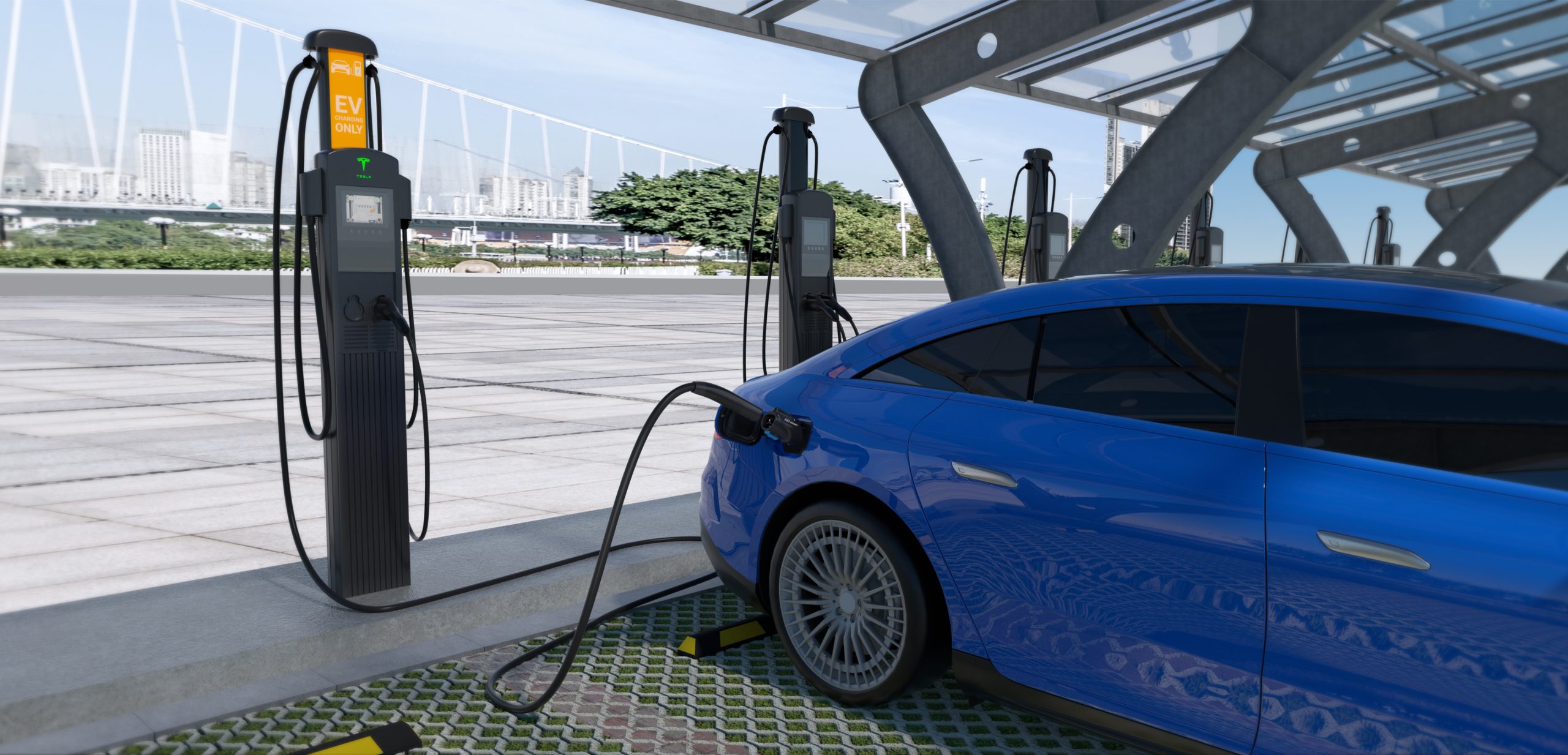
Working Around a Busy Paddock
- Route the cable out of the way. A paddock is traffic — vehicles, trolleys, people. The cable runs along edges, never across the paths the team itself uses all day.
- Cap the connector between uses. Dust is the paddock’s constant. The unit’s IP66 enclosure is sealed against dust and powerful water jets, and the capped connector keeps the working end in the same condition.
- Keep the unit with the team’s kit. It loads with the tools, works where the support vehicles park, and leaves with the truck — one charger serving every circuit on the calendar that offers the socket.
The unit is the EV-ACS3205PE: a 22 kW three-phase portable, 32 A at 380–400 V, CEE 5-pin plug on the supply side, Type 2 to the car, a 1.77-inch display and an IP66 enclosure, made by EVDANCE (Shenzhen, founded 2011) with a 3-year standard warranty. Our guide to portable EV charger types covers the class in full.
Frequently Asked Questions
Can it charge an electric race car?
Only a car fitted with a Type 2 inlet that accepts AC charging — which describes road-going EVs, not most competition machinery. The support fleet is the realistic job, and it is the one this article plans for.
What if the paddock’s supply is not the 32 A class?
Then this charger has nothing to draw from at that venue: the plug must match a socket natively, and adapters do not change the supply behind it. The 16 A sibling covers the smaller CEE class; anything less is a plan-the-charging-elsewhere answer.
How much can it add across a race day?
Roughly 20 kWh per plugged hour for a vehicle accepting the full rate, with losses allowed — so a support car needing about 40 kWh wants around two hours spread across the day’s gaps. Vehicles that accept less take proportionally longer.
Related Reading
- CEE Plugs Explained: Choosing 16A or 32A for a Three-Phase Portable EV Charger
- Portable EV Charger Types Explained: 10A, 16A, 32A and Three-Phase Models
- Single-Phase vs Three-Phase EV Charging: 7kW, 11kW and 22kW Explained
- Portable EV Charger Buying Guide 2026: Specs, Costs, and When to Choose One Over a Wallbox

