
Most restaurants offer EV charging three ways: free for diners while they eat, paid charging open to anyone, or free charging unlocked by a meal — a code from the host stand. The hardware is an ordinary Level 2 charger in the car park. What makes it a restaurant offer is the stay — a meal, not a fuel stop — and the check that the driver really is a customer. Price, time limit and who may charge are the restaurant’s own policy.
Key Takeaways
- Restaurants run three models: free for validated diners, paid and open, or free while open, unchecked.
- The offer is built around a meal-length stay; Level 2 adds a top-up, not a full battery.
- Validation — a host-stand activation, a receipt code, or a flagged account — is what ties charging to a customer.
- Free sessions are still metered and recorded — the venue’s evidence for keeping or changing the model.
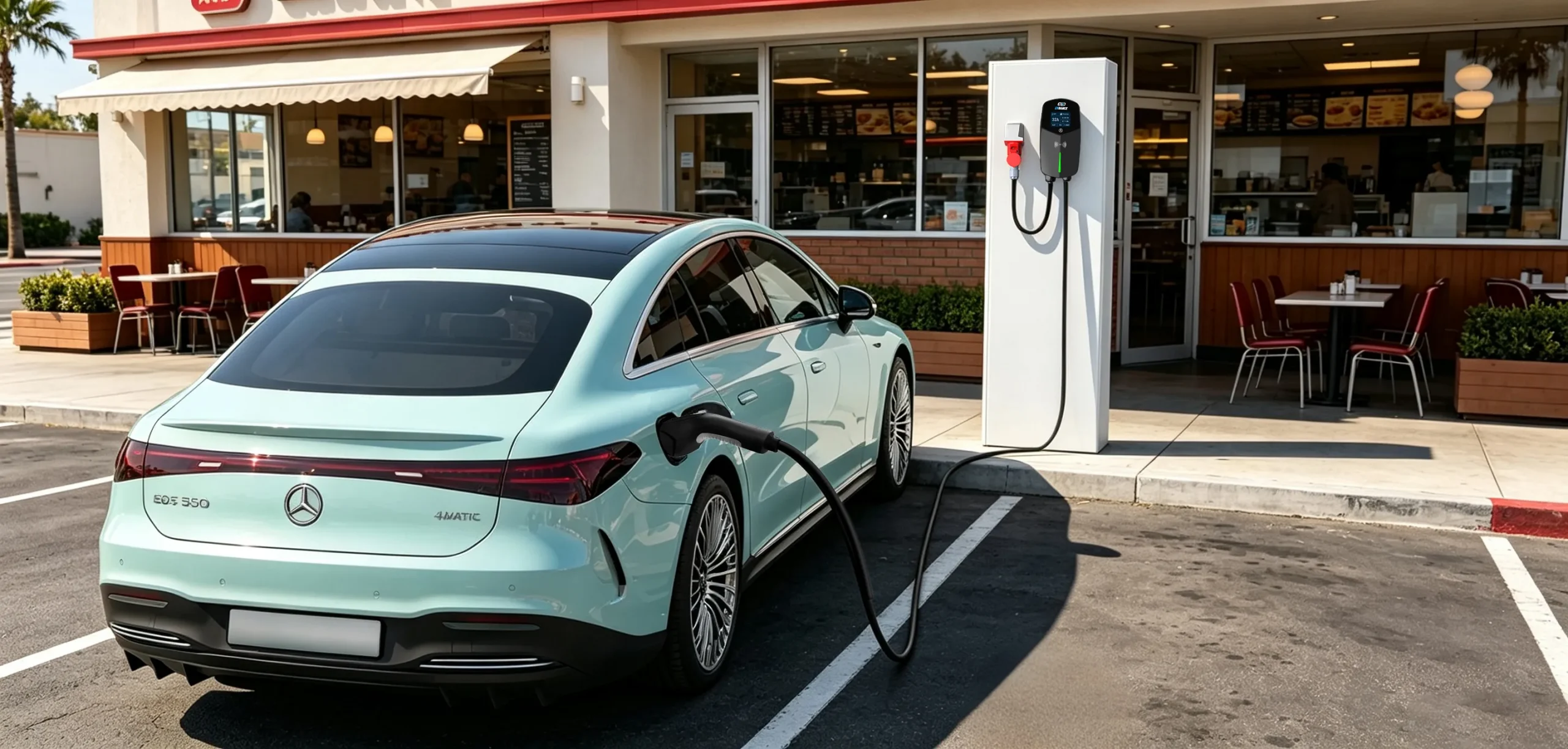
The Three Ways Restaurants Run the Offer
| Offer model | How the driver starts | What the venue controls |
|---|---|---|
| Free for diners, validated | Asks at the host stand, or enters a code issued with seating or on the receipt | Only eating customers charge; the session window matches the meal |
| Paid and open to anyone | Starts at the charger through the site’s platform, like any public post | Nothing to validate; the price is the control |
| Free while open, unchecked | Plugs in and charges, no code or account | Simplest to run; some users never come inside |
All three run on the same physics: U.S. DOT figures put Level 2 at 7–19 kW, adding roughly 10–20 miles of range per hour — a useful top-up across a meal, never a full battery. The buying side starts from observed dwell time, as our guide to EV charging for restaurants and retail sets out.
Validation: How the Restaurant Knows You Are a Customer
A validated offer needs one reliable link between the table and the car. Restaurants pick from a small set of mechanisms:
- Host-stand activation. Staff start or approve the session when the party is seated; the charger stays locked otherwise.
- A code tied to the visit. A PIN or QR code given with the menu or on the receipt unlocks a meal-length session.
- An account flagged as guest. The driver starts with an RFID card or app account, and the platform marks the session as a customer session; RFID cards are the usual tool for that identification.
- A time window. Free sessions run during opening hours; outside them the charger is paid or off.
Even a free session is metered and recorded. The record shows whether the offer works — how many sessions were diners, how long cars stayed — and is what a later switch to paid would be built on.
Running the Bays Through a Service
The offer succeeds or fails on small operational choices. Sign the rule at the bay — who may charge, for how long, what it costs — so a driver never needs to ask. Keep charging hours aligned with the kitchen’s. Decide the overstay rule in advance: a line in the house rules beats staff policing the car park mid-service. And list the chargers accurately on charging maps, so drivers arrive expecting the right thing. Building the number is a pricing exercise — our explainer on how much charging stations charge breaks down the models.
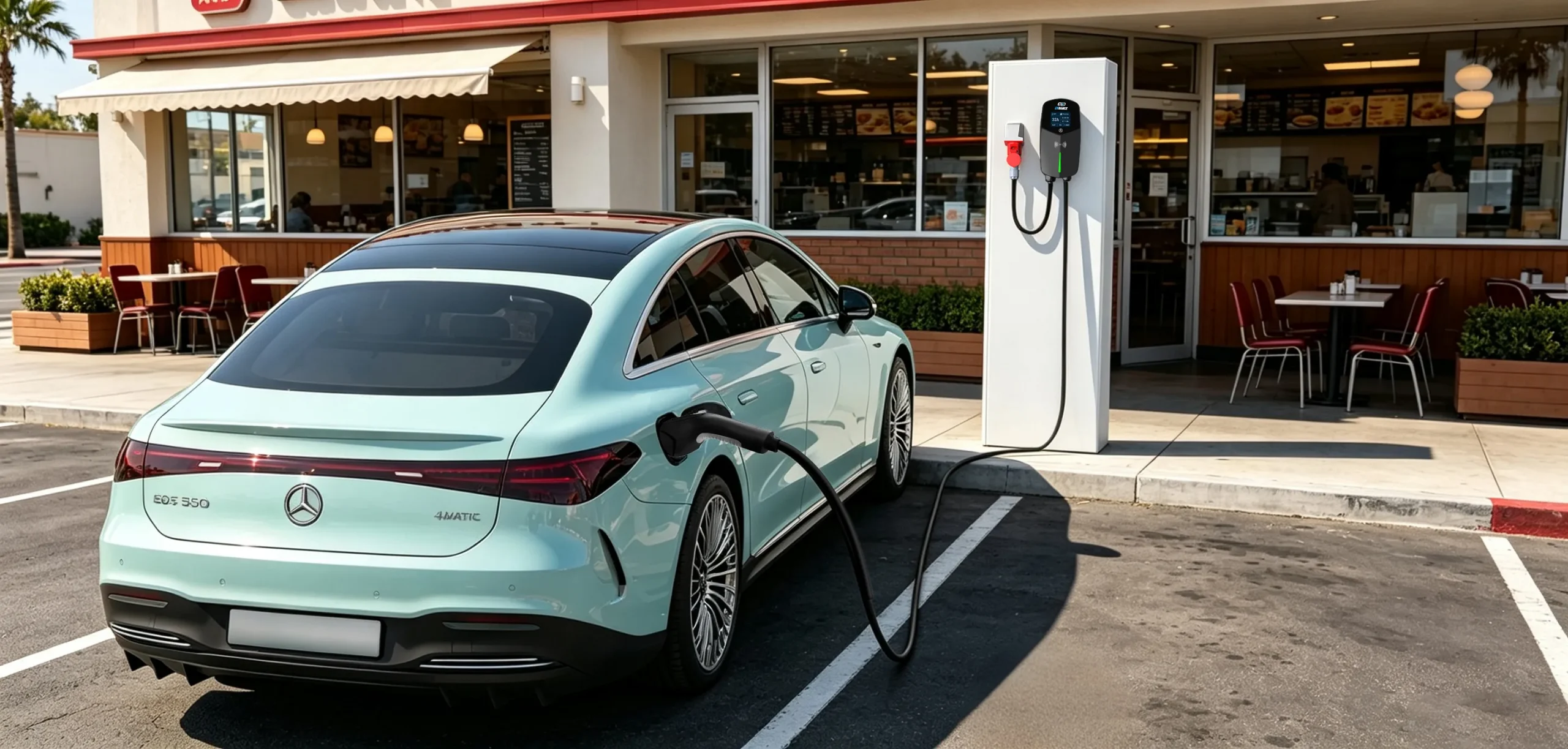
Chargers Restaurants Run This Offer On
The unit’s stated access method must match the validation chosen. The EV-ACT3204PE 22 kW wallbox (three-phase Type 2, cable or socket, RFID and app, IP66, CE) gives a single bay a controlled start. Where two bays share one position, the EV-AC03201T dual-connector AC station runs two Type 2 connectors at up to 43 kW shared (22 kW per connector), OCPP 1.6J, RFID, IP54. Its screen is a display, not a payment terminal — where charging is paid, payment runs through the operator platform the venue appoints. EVDANCE’s commercial charging page covers the wider hospitality range.
Frequently Asked Questions
Do restaurants give EV charging free or charge for it?
Both exist, and the middle model — free for diners, validated at the host stand or by receipt code — is common because it ties the cost to a meal. The choice is the venue’s policy; the charger runs whichever model was set.
How long can I charge at a restaurant?
As long as the venue’s signed policy allows. Offers are built around a meal, so expect a window of an hour or two, sometimes enforced by a time limit or overstay fee. Check the bay signage or the app before you sit down.
Can I charge at a restaurant without eating there?
Only where the offer is open or paid. A validated offer is checked at the start, so the charger will not start for a non-customer; paid public charging alongside is the route for everyone else.
Related Reading
- EV Charging for Restaurants and Retail: Turning Dwell Time Into Visits
- Hotel EV Charging: How to Plan Guest Charging That Pays Off
- RFID and User Management for Shared EV Chargers
- How Much Do EV Charging Stations Charge? Pricing Models Explained

