
A rental company can offer Supercharger access with these adapters because the car belongs to the company: the approval check is done once per model, by the company, before an adapter goes in the car. The working setup is three parts — only models that pass both conditions carry an adapter, the adapter lives in that car, and the renter gets a plain instruction card. The conditions do not change: the car’s maker must approve third-party DC adapter use for that model, and the network must be open to the car.
Key Takeaways
- Rentals invert the approval problem: the company checks each model once, in advance — the renter never has to.
- Only models passing both conditions (maker approval, network access) carry an adapter, and the materials say which cars those are.
- The renter card must cover the conditions in plain language, the seating steps, and a call-us line.
- A check-in look for the adapter’s presence and condition keeps a missing or damaged unit out of the next rental.
Approve the Model Once, Not the Renter
A renter cannot be asked to research adapter approvals at the counter. The company does it in advance, per model:
| The company’s check | What settles it |
|---|---|
| The model has a CCS1 inlet | The car’s specification. NACS-inlet rentals need no adapter at a NACS station. |
| The maker approves third-party DC adapters for this model | The vehicle maker’s current published document — read for this exact model, and re-checked when the maker updates it. |
| The network is open to this model | The Supercharger network’s current terms on eligible vehicles and sites. |
| Only passing models carry an adapter | The adapter goes in the cars that passed, and the renter materials say which cars have Supercharger access — never the whole fleet by implication. |
The Renter Instruction Card
The card in the car has to carry a renter who has never used a DC adapter. It must cover:
- What the adapter is for: “This car can charge at Tesla Superchargers that are open to it. The adapter is in the charging kit; it fits between the charger’s connector and the car.”
- The two conditions, in renter language: “Use only Supercharger sites shown as open to this car in the network’s list. If a site is not listed for this car, do not charge there.”
- The seating steps: fit the adapter onto the charger’s connector, then seat the pair fully into the car’s inlet until it engages; start the session the way the network directs at that site.
- If it will not start: re-seat once, check the site is listed for this car, and if it still fails, call the number on the card — do not force the connector.
- Bring it back: the adapter returns in the car, in its place in the kit.
Check-Out and Check-In
The adapter moves through the company’s own turnaround routine. At check-out, the car leaves with the adapter present and the card in place. At check-in, one quick look — adapter present, housing and both connector faces visibly sound — catches a missing or damaged unit before the next renter plans a trip around it. An adapter that fails that look comes out of the car and is replaced, not sent out again. How it is handled between company and renter is the company’s own rental process — what matters is that the routine catches it.
The Adapters in the Rental Car
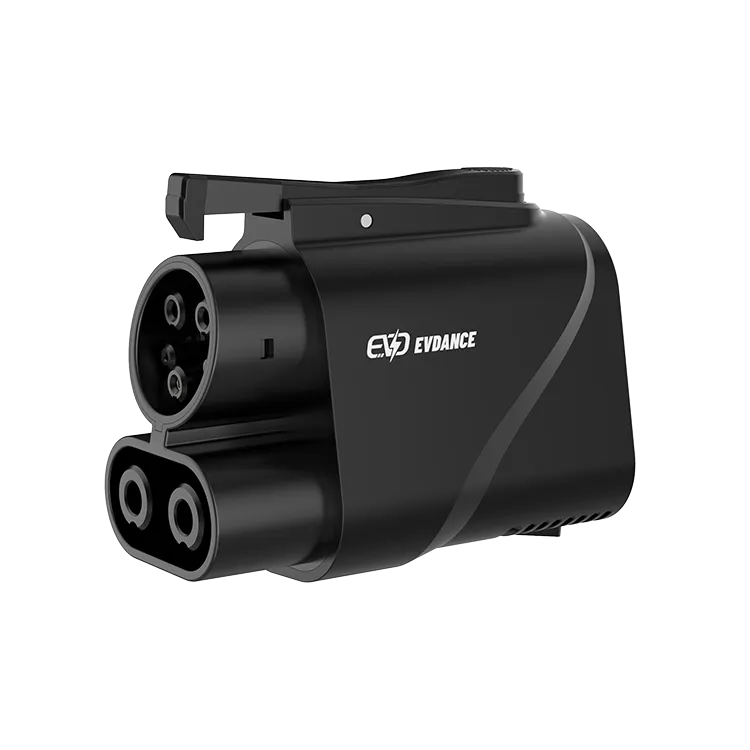
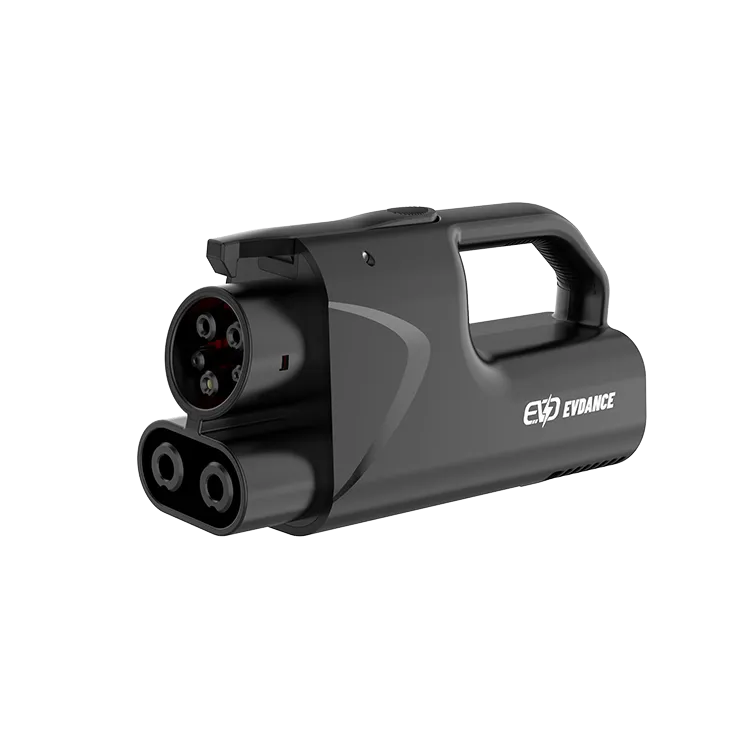
The EVDANCE JT08 and EVDANCE JT09 are NACS-to-CCS1 DC adapters in the 250 kW class, rated up to 500 A and sealed to IP66; the JT08 is also stated at up to 1000 V, the JT09 carries a handle. They let a CCS1-inlet rental charge at a NACS DC station, including Superchargers open to that car — only where the car’s maker approves third-party DC adapter use for the model, which is why the company’s per-model check comes first. Neither adapter adds power: the station and the car set the session, as our explainer on whether the Tesla charger is NACS sets out.
Frequently Asked Questions
Does the renter need their own adapter?
No — that is the point of the offer. In a rental car equipped by the company, the adapter is part of the car. A renter in a car without one should not borrow or buy one for it: the approval check was done per model, by the company, only for equipped cars.
Can a renter use any Supercharger?
Only sites the network has opened to that car, under the network’s current terms. The instruction card tells the renter to check the network’s list — eligibility follows the car, not the adapter.
What if the adapter is missing or damaged when the car comes back?
That is settled by the company’s own rental process. The operational point is the check-in look: the adapter is found missing or damaged at the depot, the car is re-equipped or held, and the next renter never discovers it at a charger.
Related Reading
- Is the Tesla Charger NACS? NACS, J3400 and Adapters Explained
- Are EV Charging Adapters Safe?
- Does J1772 Work With CCS? CCS Connectors Explained

