
A 32 A EV charger is a continuous load: it can hold full current for hours, and every watt its components lose as heat stays inside an enclosure sealed against water and dust. Thermal design is how the manufacturer moves that heat to the outside of the box without vents or airflow — through conduction paths, component placement and ratings proven by test, not ratings on a label.
Key Takeaways
- A sealed IP-rated charger sheds heat by conduction through its enclosure — design, not airflow.
- Charging is a continuous load: thermal design must hold at steady state for hours, at the highest claimed ambient.
- Designed-in, documented derating is good engineering; an undocumented cut-out is a defect in the paperwork.
- Buyers verify thermal design through test data and a long sample run — adjectives are not evidence.
Where the Heat Comes From
| Heat source | Why it heats | Typical design answer |
|---|---|---|
| Power stage (switching devices, magnetics) | Conversion losses become heat exactly where current is highest | Devices bolted to a metal chassis or backplate, conducting heat to the enclosure wall |
| Relays, contactors and terminals | Contact resistance at every joint; a loose or undersized joint becomes a hot spot | Generous contact area, correct conductor sizes, controlled assembly torque |
| Control electronics and auxiliary supplies | Small but constant losses, day and night | Placement away from the power stage, in the coolest zone |
| The enclosure itself | Sun load adds heat from outside | Ratings proven at the highest claimed ambient |
Why a Sealed Box Changes the Design
An IP65 or IP66 enclosure keeps dust and water jets out — and the same seals block the airflow an open design would rely on. Heat can only leave by conduction through the housing and radiation from its surface, so design starts with metal-to-metal paths: hot components flat against a chassis.
The load case is unforgiving. Under the NEC, EV charging is a continuous load and the breaker is sized at 125% of the charger current — 32 A means a 40 A breaker. Thermal design must work at steady state, not survive a short peak: a unit fine for twenty minutes can still cook itself over four hours.
The Design Tools Engineers Actually Use
- Conduction first. Power devices couple to the enclosure structure with thermal interface material; the box becomes the heat sink, and the hot power stage is zoned away from control and metering parts that age faster when hot.
- Margin in component selection. Parts are rated comfortably above the temperatures the layout will actually reach.
- Designed-in derating. Temperature sensors let the firmware reduce current before anything is damaged — a tested, documented curve, not an improvised cut-out.
- Chamber testing. Prototypes run at full current at the top of the claimed ambient range while internal temperatures are logged for the type-test evidence.
Our guide to hot-climate EV charging covers what desert heat does to installed chargers; the engineering answer begins on the drawing board.
What a Buyer Should Ask For
You cannot see thermal design from outside the box, so ask for the evidence it leaves:
- Temperature-rise test data at rated current, from the model’s type-test reports — the documents behind its certification marks (see our certifications explainer).
- The stated ambient range in writing, plus any published derating curve.
- Which component sets the thermal limit, and what the unit does — by design — at that limit.
- A sample run on your own supply: a full-current session of several hours (see our guide to testing a sample before a bulk order).
Where This Shows Up in the EVDANCE Range
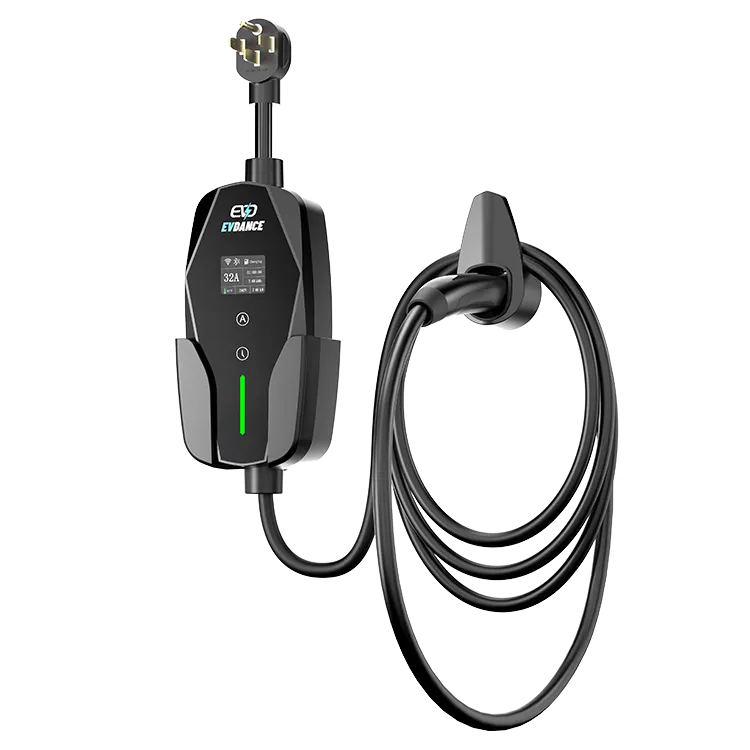
The EV-ACS3210T is a sealed IP66 portable offering about 7.7 kW, adjustable from 10–32 A in six steps — the sealed-box case. The EV-ACT5006T runs up to 48 A in an IP65/IP66 enclosure and lists ETL, FCC and CE. Put the thermal questions above to the maker of any model you evaluate — through the OEM programme or via contact us.

Frequently Asked Questions
Why not simply add a fan?
A fan that exchanges air with the outside breaks the weather seal, and a fan is a wear part in a product expected to live outdoors for years. The heat still leaves through the enclosure wall — conduction design comes first.
If a charger derates in hot weather, is it faulty?
Not if the reduction is the designed, documented behaviour: protective derating trades a little speed for component life. It becomes a problem when the curve was never published and buyers discover it in service.
Can I verify thermal claims without a laboratory?
Partly. Run an approved sample at full rated current for a long session in warm conditions, log whether output stays stable, and compare against the maker’s derating curve. Anything the documents did not predict is a question for before the bulk order.
Related Reading
- Hot-Climate EV Charging: Protecting Chargers From Desert Heat and Sun
- EV Charger Certifications Explained: CE, UKCA, UL, ETL, CB and What Buyers Should Ask For
- How to Test an EV Charger Sample Before Placing a Bulk Order

