
The difference is real but conditional. A 40 A J1772 charger such as the EV-AC04001U delivers 9.6 kW, against about 7.7 kW from a 32 A charger — roughly 25% more energy per hour. Your car only receives that extra speed if its onboard charger accepts more than 32 A of AC power. If the car caps at 32 A or below, the two chargers run at exactly the same speed — and the deciding factor moves to your circuit.
Key Takeaways
- 40 A delivers 9.6 kW against a 32 A charger’s 7.7 kW — about 25% more per hour, at full car acceptance.
- If the car’s AC limit is 32 A or less, both chargers charge at exactly the same speed.
- The difference shows up with large batteries, short windows and shared chargers — about an hour on a 40 kWh session.
- The 40 A charger also steps the circuit up: 50 A breaker, against 40 A for the 32 A unit.
The Two Chargers Side by Side
| 32 A J1772 charger | EV-AC04001U (40 A) | |
|---|---|---|
| Output current | 32 A | 40 A |
| Output at 240 V | About 7.7 kW | 9.6 kW |
| Circuit it pairs with (125% rule) | 40 A breaker | 50 A breaker |
| Connector | J1772 | J1772 |
Both sit inside the U.S. DOT’s typical Level 2 band of 7–19 kW, which adds roughly 10–20 miles of range per hour. Neither is a different class of charging; the 40 A unit simply needs less of the night — when the car lets it. How outlet and current decide real-world speed is covered in our explainer on whether portable EV chargers work.
When the Difference Is Zero
AC charging is a negotiation, and the car’s onboard charger has the final word. Work through three checks:
- Your car’s AC limit is 32 A or less. The acceptance figure is in the car’s charging specifications. If it reads 32 A, 7.7 kW or less, a 40 A charger cannot beat a 32 A one — the car caps both.
- Your sessions are short top-ups. Adding 10 kWh takes about 1.3 hours at 7.7 kW, about 1.0 hour at 9.6 kW — a real difference, rarely a deciding one.
- Your battery is small. Either charger refills a car that comes home needing 15–20 kWh long before morning.
When the Difference Is Real
A worked example, labelled as such: the car accepts the full rate and you add 40 kWh overnight. At about 7.7 kW that takes roughly 5.2 hours; at 9.6 kW, roughly 4.2 — about an hour saved, before charging losses. Over six hours the same arithmetic gives about 46 kWh against about 58 kWh. The gap matters when several of these hold at once: the car accepts 40 A, the battery is large and comes home low, the parked window is short, or two cars take turns on one charger. The power figures behind this are set out in our explainer on how many kW a Level 2 charger is.

The Circuit Is Part of the Difference
The chargers also differ in what they ask of your home. A 32 A charger pairs with a 40 A circuit; the 40 A EV-AC04001U needs a 50 A circuit, because EV charging is a continuous load and the breaker is sized at 125% of the charging current. If your garage already has a 40 A circuit, a 32 A charger fits it today, and the 40 A step means circuit work by a licensed electrician first. Our breaker sizing guide walks through the pairings.
Where the EV-AC04001U Sits
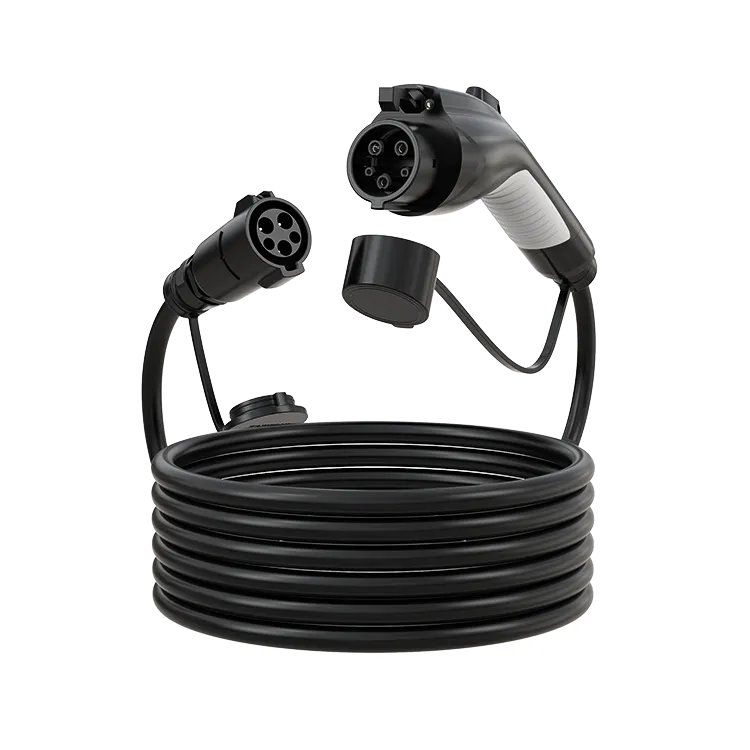
The EVDANCE EV-AC04001U is a 40 A J1772 portable charger: 9.6 kW, NEMA 14-50P plug, IP66 enclosure, a 25 ft cable, 3-year warranty. It is the right side of this comparison when your car accepts more than 32 A and a 50 A circuit is in place or planned. If your car caps at 32 A, a 32 A charger serves you identically — pay for the car and circuit you have, not the number on a box.
Frequently Asked Questions
Will the 40 A charger charge my J1772 car faster?
Only if the car accepts more than 32 A of AC power. Check its AC charging specification: above 32 A the 40 A charger pulls ahead; at or below it, the car sets the rate and both tie.
How much time does the 40 A charger actually save?
At full acceptance, about 25% of the session. On a 40 kWh top-up that is roughly an hour (about 5.2 hours versus 4.2 hours, before losses). On small top-ups it is minutes.
Can I run the 40 A charger on a 40 A circuit?
No. A 40 A continuous load needs a 50 A breaker under the 125% rule. A 40 A circuit is the correct home for a 32 A charger instead.
Related Reading
- Do Portable EV Chargers Work? How Speed Depends on the Outlet
- How Many kW Is a Level 2 Charger?
- What Size Breaker Do I Need for an EV Charger?

