
The EV-AC04001U’s spec sheet fits on an index card; each line answers a different question. SAE J1772 says which cars it plugs into. 240 V and a NEMA 14-50P plug say what must feed it. 40 A and 9.6 kW say the circuit it needs and the ceiling it offers. IP66 and a 25 ft cable say where it can live and how far it reaches. Read in that order — car, circuit, ceiling, conditions — the sheet is a fit check, not a brochure.
Key Takeaways
- Read in order: connector (the car), plug and current (the circuit), output (the ceiling), rating and cable (the conditions).
- This model lists one fixed output — 40 A, 9.6 kW — so its circuit pairing is fixed too: a 50 A breaker.
- 9.6 kW is a ceiling; the car’s onboard charger sets the real charging rate.
- What is absent from the sheet — settings, app, network — should be treated as absent until the maker confirms it.
The Connector Line: SAE J1772
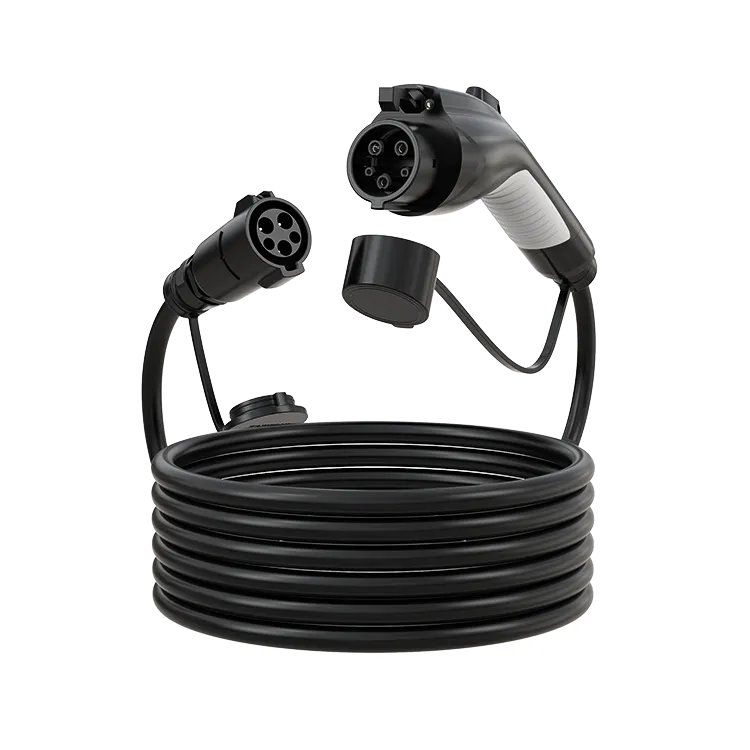
Start here: this line settles compatibility before any number matters. SAE J1772 is the standard name for the North American AC charging connector — the inlet fitted to most non-Tesla EVs and plug-in hybrids sold there. If your car has that inlet, this connector plugs into it; if not, no other line can rescue the match. Our explainer on what J1772 is covers the standard and the CCS inlet that shares its shape.
The Input Line: 240 V Through a NEMA 14-50P
The plug line names its own requirement: a NEMA 14-50 receptacle on a 240 V supply — see our guide to what a NEMA 14-50 outlet is. The current line lists a single figure, 40 A — not a settings range. Because charging is a continuous load, the NEC sizes the breaker at 125% of the charger’s current, which fixes this unit’s pairing: 40 A belongs on a 50 A breaker, as our guide to breaker sizes for EV chargers works through. There is no lower step: if the circuit is smaller, the sheet has already given the answer.
| Line on the sheet | What it states | The check it triggers |
|---|---|---|
| SAE J1772 | The AC connector standard | Your car’s inlet is J1772 |
| Input 240 V, NEMA 14-50P | The supply and the plug | A sound 14-50 receptacle where you park |
| Output 40 A / 9.6 kW | The fixed maximum | A 50 A breaker (125% rule); a car that accepts it |
| IP66 | Dust-tight; resists powerful water jets | Outdoor duty is the enclosure’s job |
| Cable 25 ft | Reach from the outlet | Measure outlet-to-port along the cable’s route |
| Warranty 3 years | EVDANCE’s standard cover | Keep the paperwork |
The Output Line: 9.6 kW Is a Ceiling, Not a Promise
The output figure is arithmetic, not marketing: 40 A × 240 V = 9.6 kW, inside the U.S. DOT’s Level 2 band of 7–19 kW — and it is a ceiling. With AC charging, the car’s onboard charger converts the power and sets the real draw, so a car that accepts less takes less: the session runs at the lower of the charger’s ceiling and the car’s acceptance, as our explainer on how many amps an EV charger needs sets out. Read the 9.6 kW line as “up to”, every time.
The Lines That Are Not on This Sheet
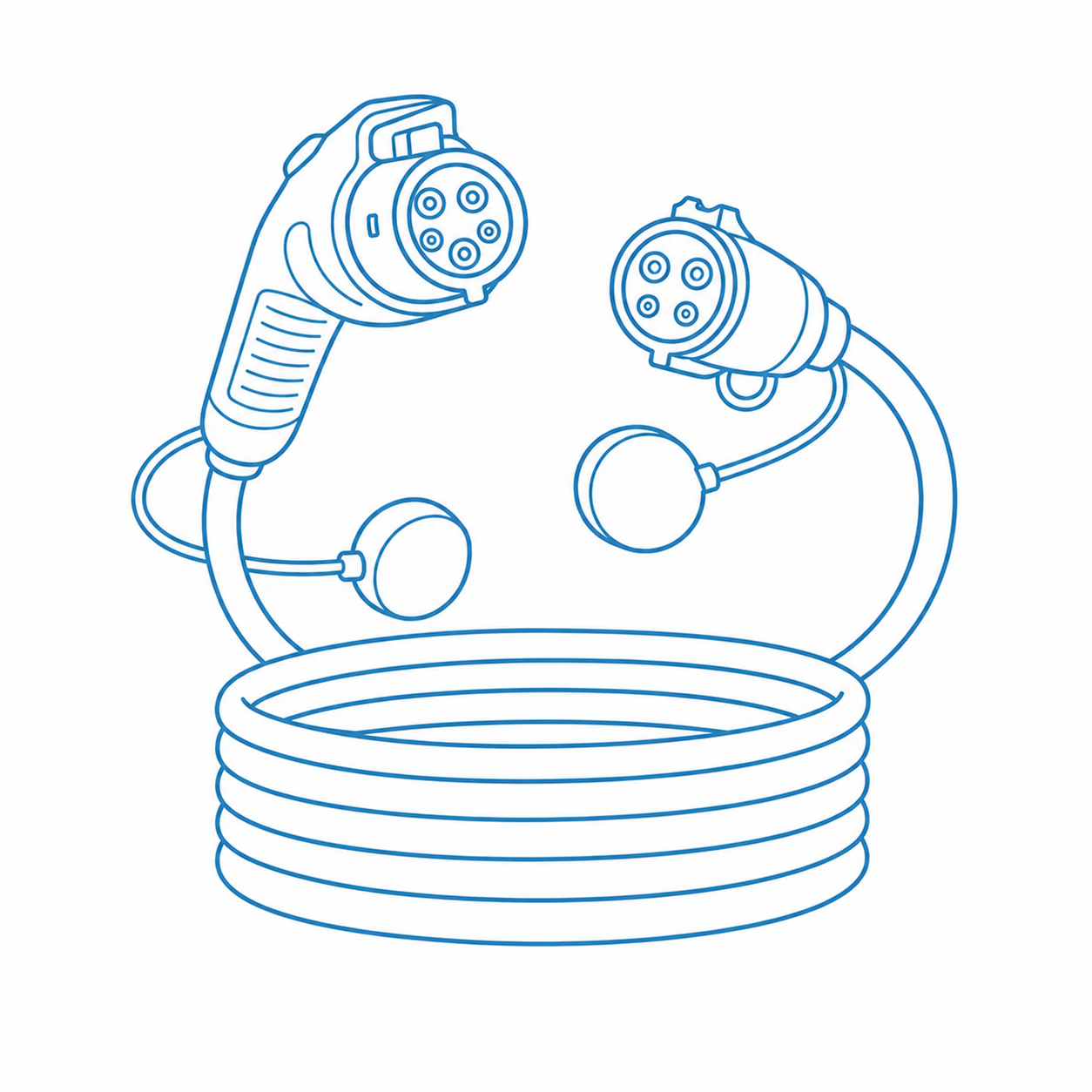
A spec sheet also tells you things by absence. This model’s published lines include no current-settings range — nothing to dial down — and no app or network line: session control lives at the unit and in the car. Treat any feature you cannot find on the sheet as absent until the maker confirms it. That verify-don’t-assume rule is the one our datasheet guide applies to every brand.
The Charger Behind the Sheet
The EVDANCE EV-AC04001U is the unit those lines describe: a 40 A J1772 portable charger, 9.6 kW, NEMA 14-50P, IP66, 25 ft cable, made by EVDANCE (Shenzhen, founded 2011) with a 3-year standard warranty. Read against your car’s inlet, circuit and parking spot, the six lines are the whole buying decision.
Frequently Asked Questions
Is 9.6 kW the speed my car will charge at?
It is the ceiling. Your car draws what its onboard charger accepts, up to 9.6 kW — cars with smaller onboard chargers run below it. That is normal, not a fault.
Can I set this charger to a lower current for a smaller circuit?
It lists a single 40 A output, not a settings range, so plan on the full pairing: a 50 A breaker. A smaller circuit means an electrician — or a different model.
Does the IP66 line mean it can live outdoors permanently?
It means the enclosure is sealed against dust and powerful water jets. Placement still matters, and the rating covers the charger, not the outlet behind it; our comparison of IP ratings decodes the digits.
Related Reading
- How to Read an EV Charger Datasheet: A Buyer’s Guide
- What Is J1772? The North American EV Plug Explained
- Type 2 vs J1772 vs NACS: Which EV Charger Connector Does Your Market Need?
- Portable EV Charger Buying Guide 2026

