
The EV-AC03201T lists OCPP 1.6J in its specification — a named, implemented version, not an “OCPP-ready” promise. Connecting it to a charging platform is then a defined job: choose a platform whose back-end runs OCPP 1.6J, agree your account with that platform, have the station pointed at the platform’s back-end during commissioning, and prove the link with a test session.
Key Takeaways
- OCPP 1.6J is a listed specification on this station — an implemented version, not a “ready” promise.
- Connecting means: a 1.6J platform, your account with it, the station pointed at its back-end, and a test session.
- Platform fees and terms are the platform’s own; they are never part of the charger’s specification.
- No certification or tested-platform list is claimed — confirm the pairing in writing before a rollout.
What OCPP 1.6J Does Here
OCPP — the Open Charge Point Protocol — is the language a station uses to talk to a separate management platform: the system that authorises drivers, records each session’s energy, reports the station’s status and applies the operator’s tariffs. Our operator guide, OCPP Explained, covers that world in full. On this station the driver-facing half of the arrangement is also listed: RFID, so drivers can be authorised at the connector against the platform’s records. Contrast the class below it in EVDANCE’s own range: the EV-ACT3204E wallbox runs on RFID and the maker’s app, with no OCPP line in its specification — local control, no platform. The AC03201T is the step up to managed operation.
The Connection, in Order
- Choose the platform first. Its back-end must run OCPP 1.6J. A platform built for a different version, or a proprietary system, is a different conversation — have the platform confirm the version pairing in writing.
- Open the operator account. Fees, contract length and support are the platform’s own commercial terms. They are not part of the station’s specification and are never quoted here; they belong in your agreement with the platform.
- Point the station at the back-end. During commissioning, the installer configures the station with the platform’s back-end address and the station’s charge point identity. This is a commissioning task for your installer, done once, not a driver setting.
- Confirm the network path. The station needs a working connection to reach the platform. How this model connects is not stated in the product listing — ask, because the site’s answer (a cable run, a router location, a signal check) belongs in the installation plan.
- Run a test session. Authorise with an RFID card, charge briefly, and check the session appears in the platform with its energy recorded. Only then open the station to drivers.

What to Confirm in Writing
A named OCPP version is a strong claim, but it is not the whole pairing. Before a rollout depends on the link, get these answers from the platform and the supplier:
| Ask | Why it matters |
|---|---|
| Has this station model been tested with your back-end, by name? | Same version is necessary; a tested pairing is what makes day one boring. |
| Which OCPP functions are enabled on this unit? | The platform can only use what the station implements — remote start, meter values and status are the working set to verify. |
| What happens to sessions if the connection drops? | Offline behaviour decides whether drivers can still charge and whether records survive an outage. |
| Who supports the link when it fails? | A station fault, a network fault and a platform fault have three different owners; know which is which in advance. |
The Station Behind the Connection
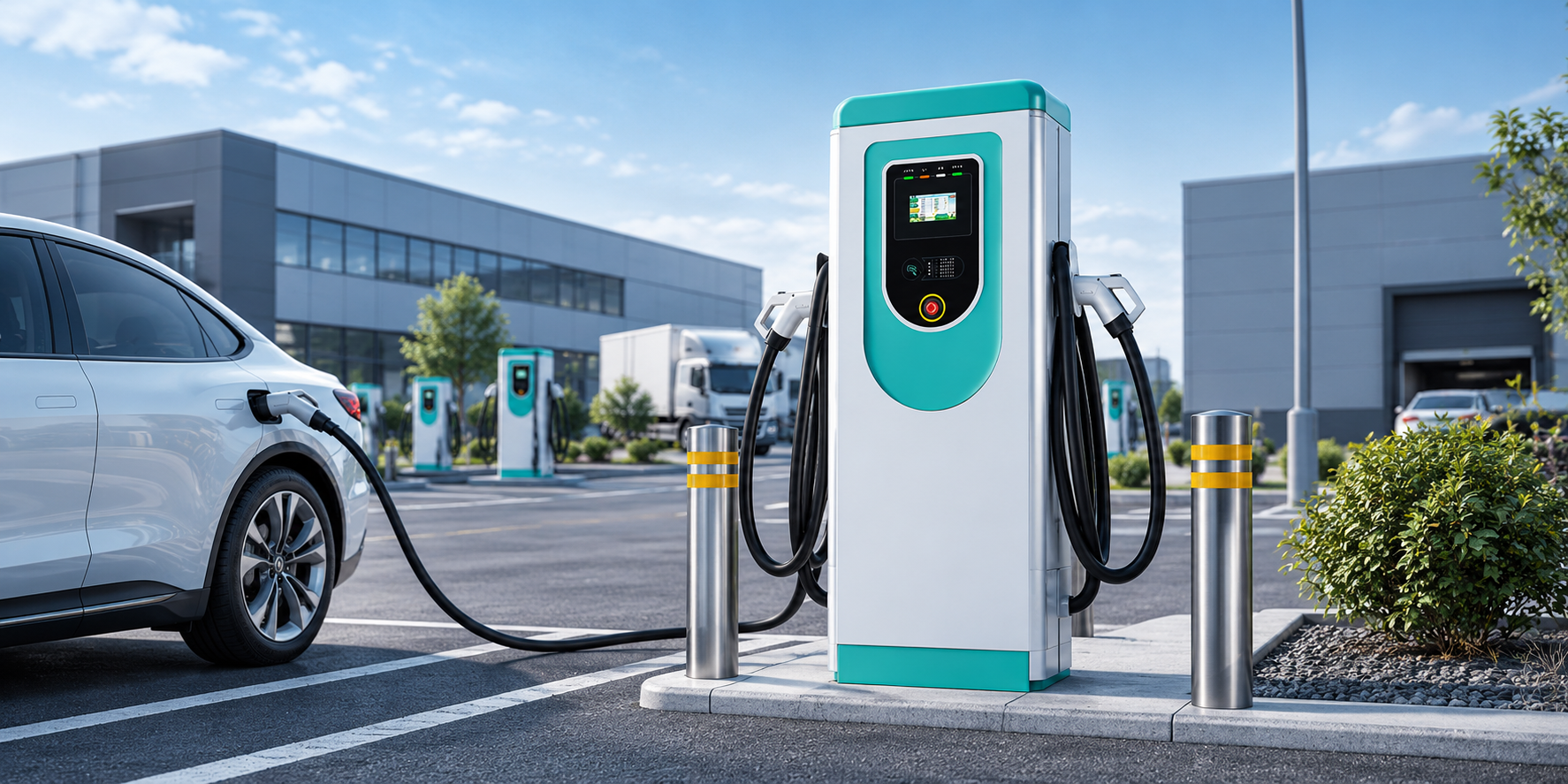
The EV-AC03201T is a floor-standing AC station with two Type 2 connectors sharing up to 43 kW (22 kW per connector), a 7-inch touchscreen, RFID access and an IP54 enclosure, built to be run from a platform over OCPP 1.6J. Sites planning several managed points can start from EVDANCE’s commercial charging solutions.
Frequently Asked Questions
Is the EV-AC03201T certified to work with my platform?
The listing states OCPP 1.6J; it does not claim a certification or name tested platforms. Treat “certified for your platform” as unconfirmed until the platform or EVDANCE confirms the pairing in writing.
Can drivers pay through the platform?
Payment is the platform’s service: the tariff you set there is yours, and the station’s part is authorising the driver — by RFID on this model — and reporting the session. Whether a given platform offers driver payment, and on what terms, is a question for that platform.
Can I change platforms later?
That is the point of an open protocol: the station is not tied to one maker’s app. Moving means re-pointing the station at the new platform’s back-end — a commissioning task for your installer — after confirming the new platform runs OCPP 1.6J.
Related Reading
- OCPP Explained: What Charge Point Operators Need From EV Charger Hardware
- RFID and User Management for Shared EV Chargers
- Fleet Depot Charging: How to Size AC Chargers for Vans and Light Commercial Vehicles
- How to Plan a Workplace EV Charging Program

