
Charging speed through a JT08 or JT09 depends on the car because a DC session follows the car’s own charging curve: the car requests power moment by moment, the station supplies up to that request, and the adapter only carries it. Two cars at the same post, through the same adapter, charge at different speeds — and one car rarely holds its headline rate for long.
Key Takeaways
- A DC session follows the car’s charging curve; the station supplies and the adapter carries — neither sets the speed.
- Peak power is a moment — judge a stop by the kWh added in your window, not the highest kW displayed.
- Your baseline is your own car against itself — the same curve appears at every DC station.
- A JT08 or JT09 still requires your car maker’s approval for third-party DC adapters, and a site open to your car.
Two Numbers That Are Not the Same Number
A fast-charging post advertises its maximum. Your car has a maximum too, and the two are independent. The session runs at what the car asks for, up to what the station can deliver. A charging curve is that request drawn over time: highest on a low, warm battery, stepping down as the battery fills — the taper that protects the cells (the mechanism is covered in how DC fast chargers work). So peak power is a moment, not a rate: what decides your stop is the average across your plugged-in minutes — why how fast a DC fast charger is never has a single answer.
Read Your Own Curve Before You Judge a Stop
Your car’s curve is not secret — three places show it:
| Where to look | What it tells you |
|---|---|
| The charge display during any DC session | The live rate against state of charge — where your car peaks, and where its taper begins |
| The owner’s manual and the maker’s charging documents | The car’s stated DC maximum and the conditions attached to it |
| Your own past fast-charge sessions | The average you actually achieve on your trips |
The same car shows the same curve shape at any DC station, with or without an adapter. That is the baseline for every Supercharger stop: your car against itself, not against the car in the next stall.
Plan the Stop by Energy, Not by Peak
On a trip, the useful question is not “how many kW did I see?” but “how many kWh did I add?” The example below is one invented car with invented figures, making the arithmetic visible — it is not any model’s data:
| Stop window | Example average rate | Energy added (cumulative) |
|---|---|---|
| First 10 minutes, low battery | About 140 kW | About 23 kWh |
| Next 10 minutes, taper beginning | About 110 kW | About 42 kWh |
| Next 10 minutes, battery filling | About 70 kW | About 53 kWh |
Read the energy column as the plan: the half hour adds most of its energy early, when the battery is low. Arriving low and leaving near 80% keeps you in the fast part of your curve; charging to full mostly buys the slowest minutes.
Where the JT08 and JT09 Sit in This
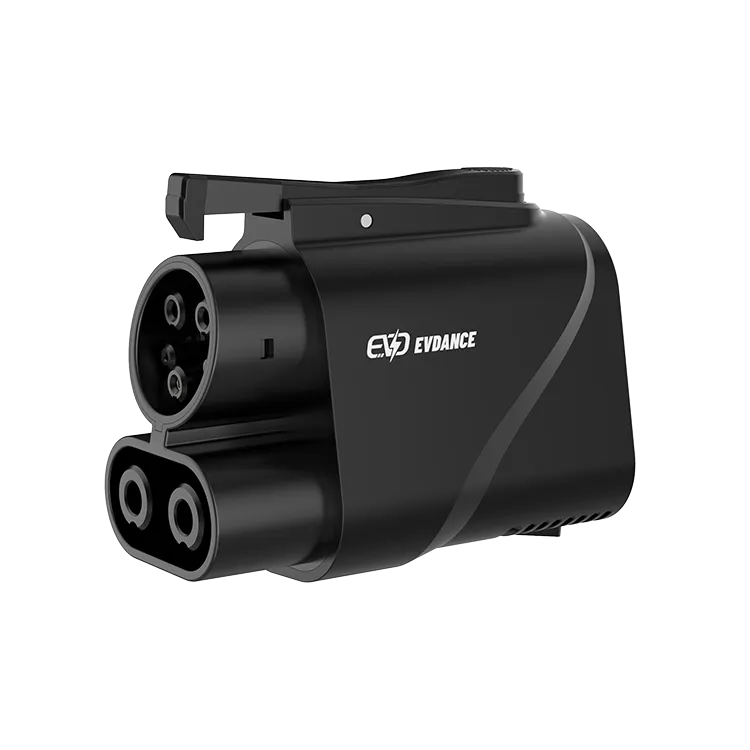
The JT08 and the JT09 are pass-through adapters between a NACS station connector and a CCS1 car inlet — the JT08 handleless, the JT09 with a handle. Their stated ceiling — up to 500 A, IP66 — sits above the sessions these cars draw; the adapter neither raises nor flattens the curve. Two conditions decide whether you may use one at all: your car maker must approve third-party DC adapters for your exact car, per the maker’s current document, and the site must be open to your car under the network’s current terms.

Frequently Asked Questions
Will a JT08 or JT09 slow my car down?
No. The adapter adds no power and sets no curve; it is a rated pass-through with a ceiling above the session. If a session runs below your car’s usual curve, the cause sits with the car’s state (charge level, battery temperature) or the station’s delivery — compare with your car’s sessions at other DC stations to see which travelled with you.
Why did the car next to me charge faster on the same post?
Because its curve is different: a higher peak, or a flatter curve that holds its rate longer, takes more energy in the same window. That is a property of the two cars — not of the post, and not of either driver’s adapter.
The post says 250 kW. Why did my car never show it?
The post’s figure is its own maximum. Your car shows its curve’s figure — its peak only at its best moment (low battery, warm pack), and less for most of the session. A car whose own maximum sits below the post’s never displays the post’s number.
Related Reading
- How Fast Is a DC Fast Charger?
- How Do DC Fast Chargers Work?
- Are EV Charging Adapters Safe?
- Is the Tesla Charger NACS? NACS, J3400 and Adapters Explained

