
Whether a Supercharger cable reaches your CCS1 car’s inlet is decided before you plug anything in: the cables are short and fixed to their stall, so the outcome turns on two variables — where your car’s charge port sits, and which way round you park. Match the port’s end to the post’s end and the cable reaches; mismatch them and no adapter saves the geometry. A JT08 or JT09 rides on the connector; it does not change this.
Key Takeaways
- Cable reach at a Supercharger is decided by your port’s position and your parking direction — match the port’s end and side to the post’s.
- Run the walk-around check before committing: post end, post side, the cable’s lie.
- When the geometry fails, move stalls. Never stretch a cable into a neighbouring bay or leave a connector strained under tension.
- The JT08/JT09 add no usable reach — and the stop still needs maker approval for the adapter and a site open to your car.
The Two Variables: Port Position and Parking Direction
The post stands at one end of its bay; its cable serves that bay’s car, not the next one. Your car’s inlet class decides the rest:
| Your port’s position | Nose-in | Reversed-in |
|---|---|---|
| Front wing or front corner | Port at the post’s end — the comfortable reach | Port ends up a car’s length from the post — the cable will not make it |
| Rear quarter panel | Port sits at the far end from the post — the classic struggle | Port arrives beside the post — the layout these bays assume |
| Rear, near the tailgate | Port at the wrong end for a relaxed cable run | Port close to the post — pick the stall whose post is on your port’s side |
Side matters as much as end: a port on the car’s left with the post to the right of your bay makes the cable cross the car and lose reach doing it. Where two stalls are free, take the one whose post matches your port’s side and end — even if it is not the first you reached.
The Walk-Around Check
Thirty seconds before you commit saves the move-stalls routine afterwards:
- Post end vs port end. Post and port at the same end of the bay, given how you intend to park.
- Post side vs port side. Post and port on the same side means a short, direct cable run.
- The cable’s lie. Its path should be a relaxed curve, not stretched across a bumper corner.
When the Geometry Fails
Sometimes the stall cannot serve your car. The correct move is to move: another stall, parked the other way round, or the bay whose post matches your port. Never make up the distance with strain: no stretching a cable into a neighbouring stall’s space (it blocks that driver and still may not reach), no parking outside the bay markings, and no connector left hanging at an angle under tension — a strained connection is hard on the car’s inlet, the connector and the adapter, which is why cable weight and strain deserve a guide of their own. Site rules are the operator’s, stated on site.
The Adapter’s Part in the Layout
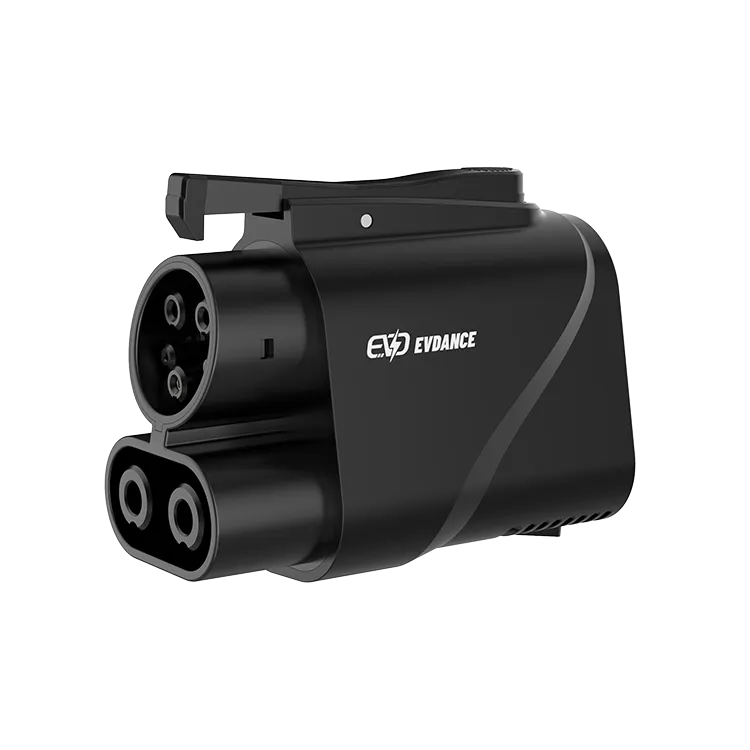
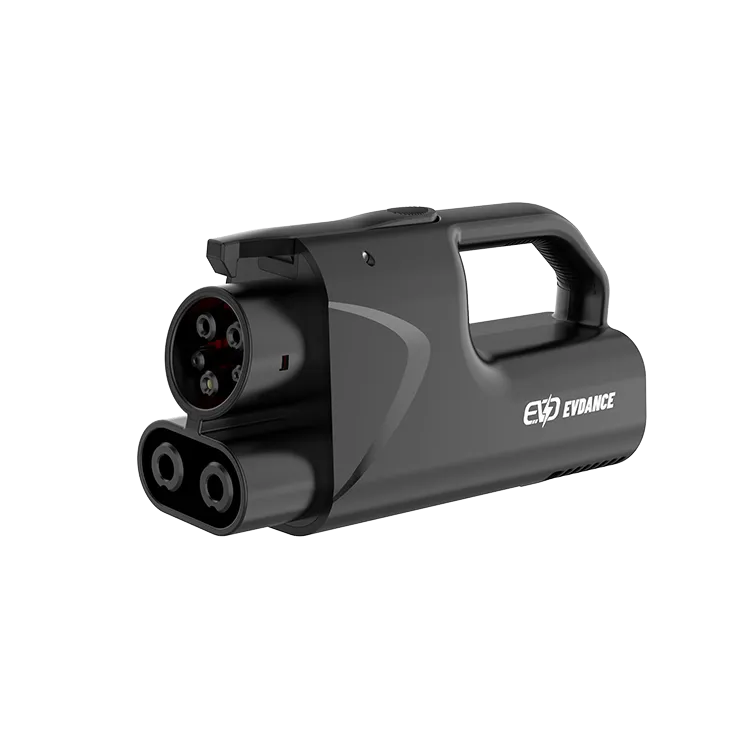
The JT08 and the JT09 connect a NACS station plug to a CCS1 car: the JT08 handleless, the JT09 handled, both up to 500 A, IP66. Neither adds working cable length — plan as if it adds none, seat it fully once positioned, and start by the network’s own method (the sequence is in how to use a DC fast charger; the connector families are explained in whether the Tesla charger is NACS). The standing conditions still gate the stop: your car maker must approve third-party DC adapters for your exact car, per its current document, and the site must be open to your car — a perfectly parked car at a closed site is still not charging.
Frequently Asked Questions
Does the adapter make the cable reach further?
Plan as if it adds nothing: an adapter contributes its own body length in your hand, not usable reach — the cable is exactly as long as it was. If the connector only reaches with the cable pulled tight, the fix is the car’s position.
My port is on the opposite side. Can I use the next stall’s post?
No. Each post serves its own bay; a borrowed cable blocks that stall and usually still leaves you short or strained. Move to a stall whose post matches your port’s side and end — or park the other way round in your own bay, if that flips the geometry.
Do all Supercharger sites lay out the same way?
No — post placement varies between sites and hardware generations, and some sites mix layouts. That is why the walk-around check is the constant: it works at every site, before you commit.
Related Reading
- How to Use a DC Fast Charger: Step by Step
- Is the Tesla Charger NACS? NACS, J3400 and Adapters Explained
- Are EV Charging Adapters Safe?

