
Workplace charging and customer charging are different services on similar hardware. Workplace charging serves known drivers who park all day, under your rules, usually as a staff benefit. Customer charging serves strangers who park briefly, expect the charger to work first time, and may pay. Choose per zone against those differences — a site with both should run two deliberate setups, not one compromise.
Key Takeaways
- Workplace and customer charging differ in driver, dwell, access and billing — choose per zone.
- Staff charging is a closed list under your rules; customer charging must start for a stranger.
- Billing runs through an operator platform you arrange; a charger screen is not a payment terminal.
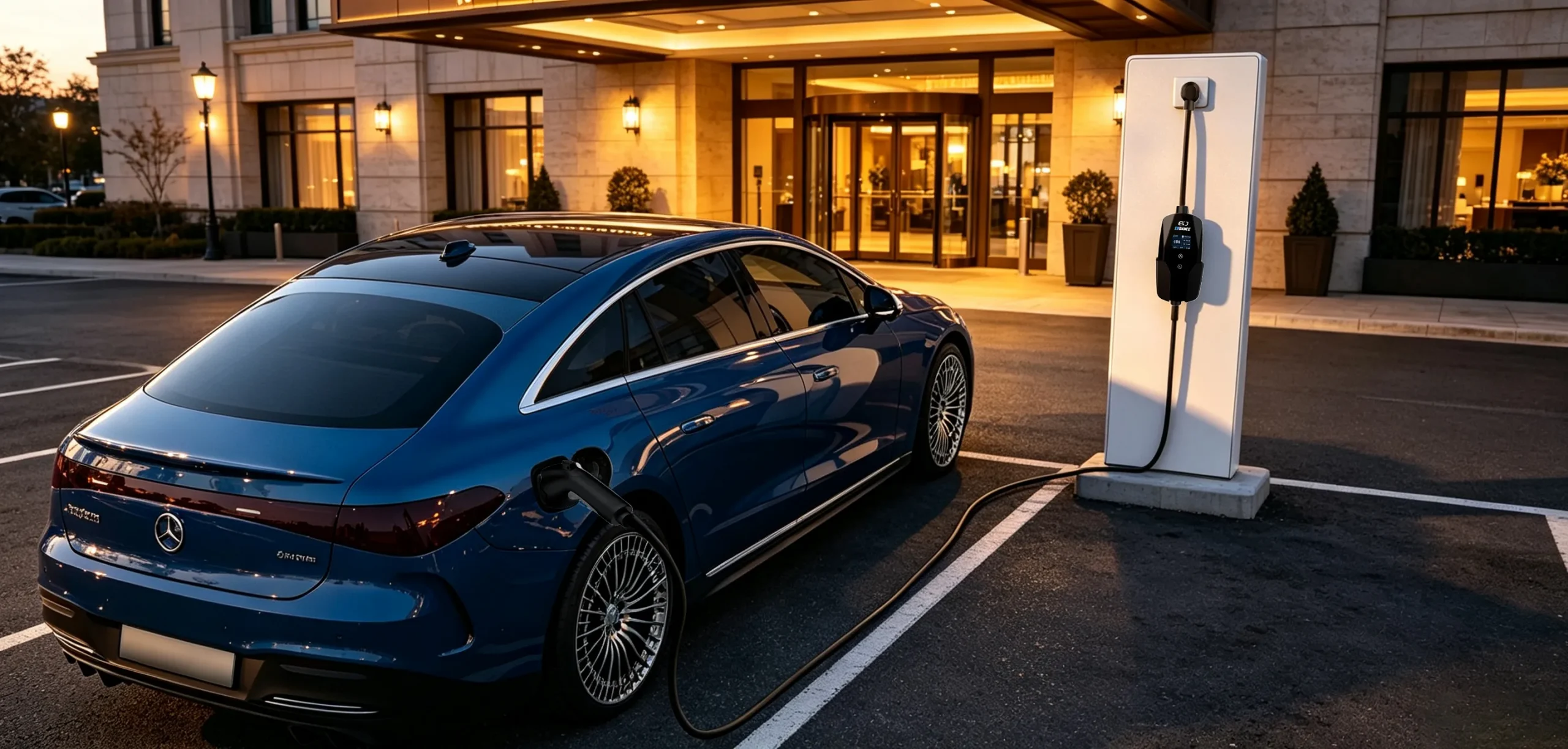
The Two Services, Side by Side
| Dimension | Workplace charging | Customer charging |
|---|---|---|
| Who charges | Known staff, enrolled once | Whoever arrives — guests, shoppers, visitors |
| Dwell pattern | A full shift or working day | Minutes to a few hours |
| Access control | Closed list: RFID cards or app accounts for staff | Open or pay-to-use: starts without enrolling with you first |
| Billing question | Free benefit, payroll deduction or cost recovery — an internal policy | Free amenity or priced per session — a customer-facing decision with receipts |
| Power fit | Level 2 across the board; dwell does the work | Level 2 for longer stays; faster charging only where stops are genuinely short |
Check the power row against the figures: U.S. DOT puts Level 2 at 7–19 kW (about 10–20 miles of range per hour) and DC fast charging at 50–350 kW. A customer parked for two hours gains plenty from Level 2; DC money — DOE-cited at $38,000–$90,000 equipment plus $20,000–$60,000 installation per unit, against roughly $3,500 plus $2,500 per Level 2 connector — is justified by turnover, not by the word “customer” itself.
Access and Billing: Decide Honestly
The access row is where the two services truly split. Staff charging can be closed — a card list, sessions attributed to drivers; our workplace charging program guide covers that policy side. Customer charging must start for a stranger, without joining anything first. Be precise about what hardware does: a networked charger records sessions and controls access (RFID is stated on the units below), but pricing, payment and receipts run through the operator platform arrangement you put in place. No EVDANCE listing states a built-in payment or billing platform, and a station’s touchscreen is a display and control surface, not a payment terminal. If customers will pay, confirm the platform arrangement in writing before ordering; if charging is a free amenity, say so in the plan.
The Mixed Site: Zones, Not a Compromise
- Zone by driver, not by budget. Staff bays get the closed, card-controlled setup; customer bays get the open, start-first-time setup. One shared row of identical units serves neither group well.
- Size the zones separately. Staff demand follows your count of EV drivers; customer demand follows your busiest trading hours. The two peaks rarely justify the same count logic.
- Do not promise balancing you have not confirmed. How power is shared across a constrained supply is a project question for your installer and supplier, in writing. EVDANCE’s dual-connector station states allocation between its own two connectors; site-wide load management is not a claim any EVDANCE listing makes.
Hardware for the Two Zones
For the workplace zone, the EVDANCE EV-ACT3204PE 22 kW wallbox (three-phase Type 2, cable or socket, RFID and app, IP66, CE) gives each staff bay a controlled point. For the customer zone, the EV-AC03201T dual-connector AC station serves two bays from one floor-standing unit — two Type 2 connectors sharing up to 43 kW (22 kW per connector), OCPP 1.6J and RFID, IP54 — with payment, where charged, arranged through your operator platform. Compare zones across the commercial EV charging range, or contact us with your two counts.
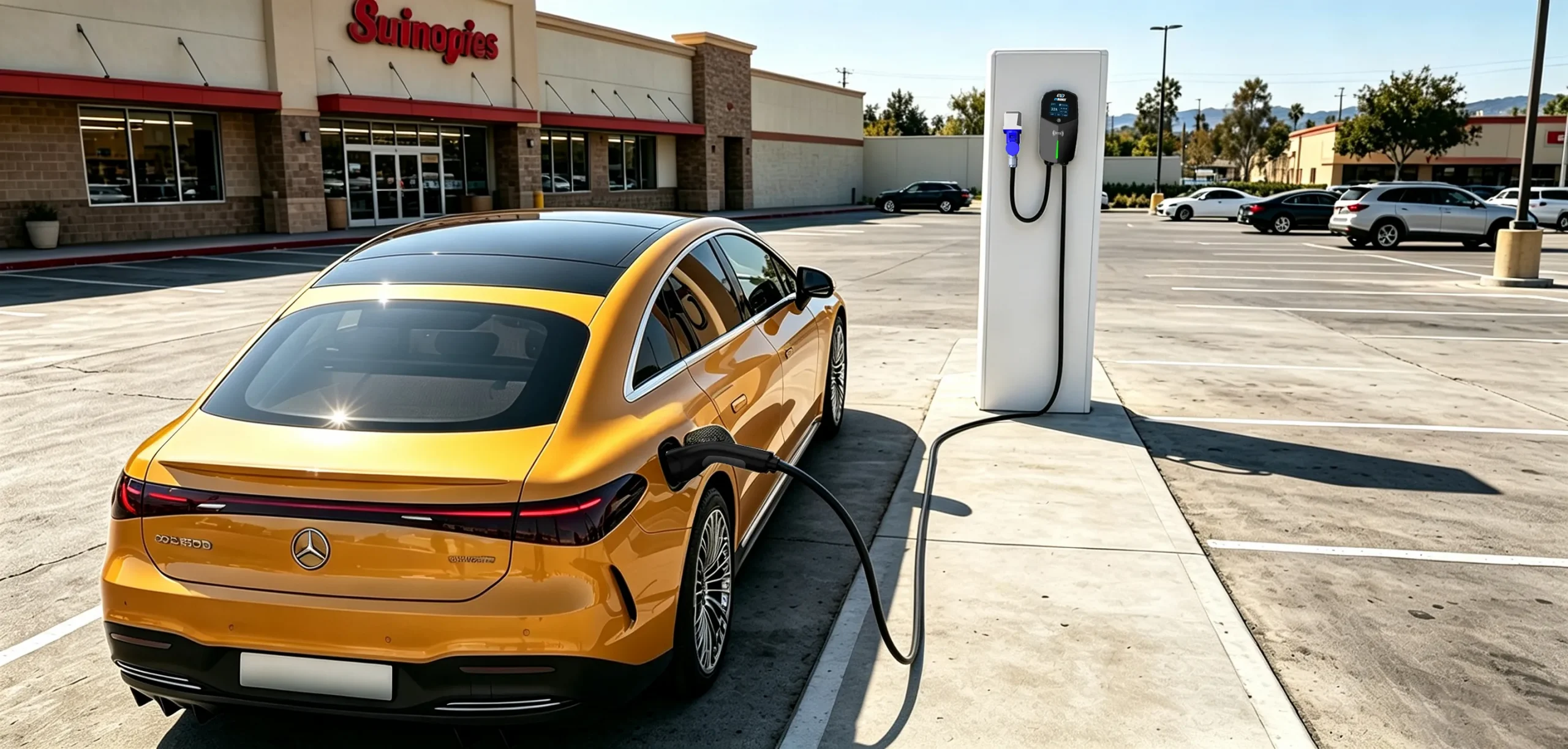
Frequently Asked Questions
Can one charger serve staff by day and customers by evening?
Yes, physically — many small sites do exactly that. The decision is the access arrangement: switching between a closed staff list and open customer use is a platform and policy setup to confirm in writing, not discover after installation.
Should customer charging be free?
That is your commercial decision: free charging is an amenity costing you the electricity (U.S. commercial average 14.53 cents per kWh, EIA) plus platform and maintenance; priced charging recovers costs but adds the payment arrangement. Either works; installing first and deciding later is the failure mode.
Do customer chargers need to be DC fast chargers?
Only where customers stop briefly and turnover pays for it. For dwell of an hour or more — shopping, dining, appointments, overnight stays — Level 2 delivers useful range at a fraction of the cost.
Related Reading
- How to Plan a Workplace EV Charging Program
- EV Charging for Restaurants and Retail: Turning Dwell Time Into Visits
- Hotel EV Charging: How to Plan Guest Charging That Pays Off
- RFID and User Management for Shared EV Chargers

