
Three decisions size a retail charging offer. Count the bays from peak demand you can observe. Zone the site by how long each visitor stays, and give each zone the charger class that fits it. Then settle — before ordering — how drivers are billed: free, paid and parking-validated charging are three different businesses on the same hardware.
Key Takeaways
- Zone first: short-stay, main shop and long-stay/staff areas park differently and take different charger classes.
- Count bays in connectors, from peak demand you observe — and build ducting and capacity ahead of the units.
- Free, paid and validated charging are operator platform decisions; a charger’s touchscreen is not a payment terminal.
- Add units on your own session and queue records, not published averages.
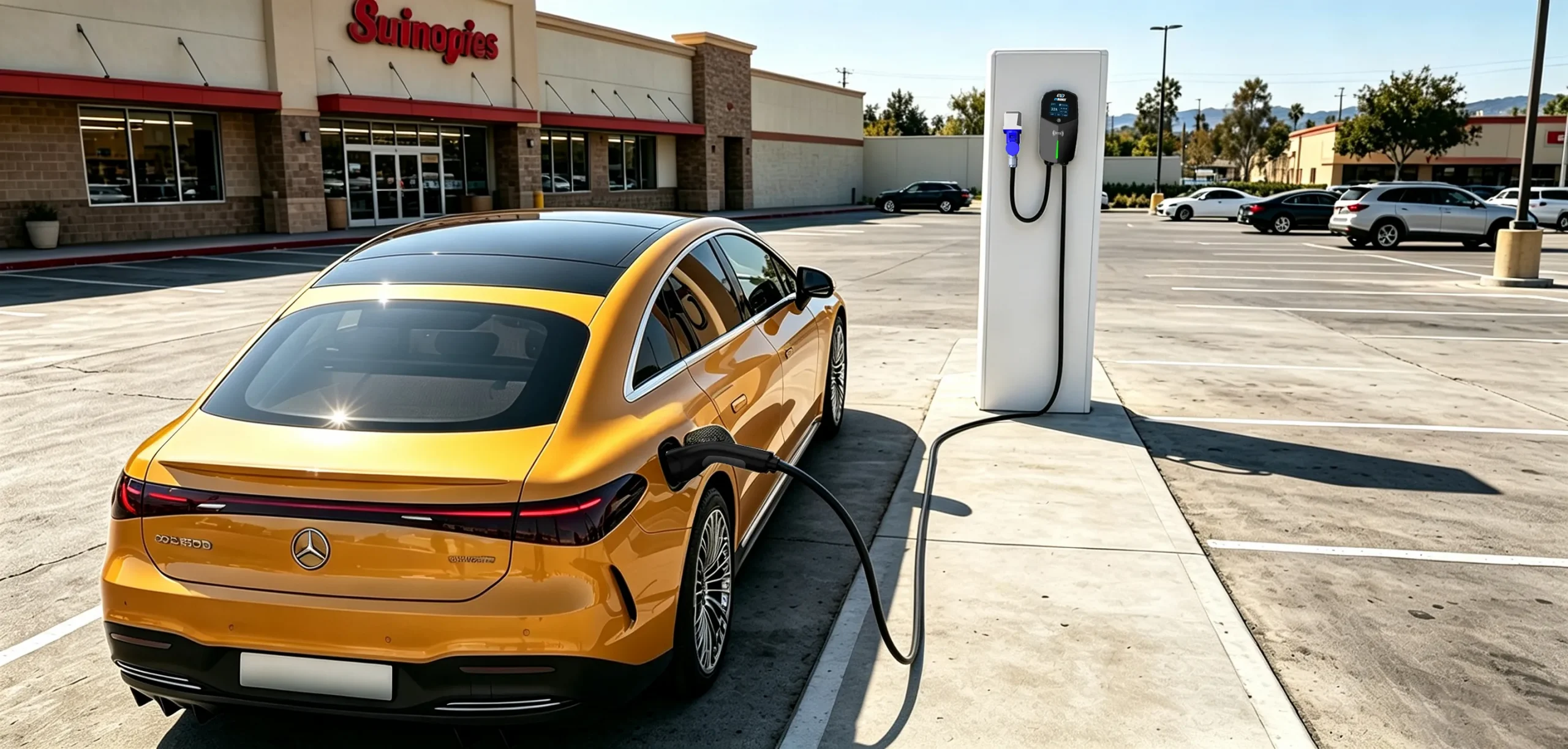
Zone the Car Park First
| Zone | The stay you observe there | Charger class that fits | Billing and access treatment |
|---|---|---|---|
| Front short-stay rows | Grab-and-go stops; highest turnover | Compact DC or the fastest AC the supply supports — U.S. DOT bands: Level 2 at 7–19 kW, DC fast at 50–350 kW; compact DC around 22 kW sits below the fast band | Paid per session suits turnover; keep these bays moving |
| Main shop parking | The standard shop — the hour-scale stay | Level 2 AC posts; dual-connector units serve two bays | Free, paid or validated against parking — one platform decision for the zone |
| Long-stay edge and staff parking | Leisure-length visits and full staff shifts | Level 2 AC — these cars have hours, so the band’s lower end does the work | Keep staff access (for example RFID) separate from public billing |
Zone before you count: one count across the whole car park averages away what decides the purchase. Our restaurants and retail guide covers dwell time and visits; this article stays on the three decisions.
Counting Bays From Your Own Peak
- Measure simultaneous demand, not daily totals. How many drivers would plug in at the same hour on your busiest day? Your entry and exit data is the evidence — published averages describe other people’s car parks.
- Count connectors, not units. One connector serves one car at a time: a dual-connector station counts as two bays; a single-connector unit in a high-turnover zone is one bay with a queue behind it.
- Build the infrastructure ahead of the units. Capacity, ducting and markings for the final layout go in with the first works; units are added as recorded queues prove them — phasing the spend without rebuilding the car park twice. Review monthly: sessions per bay and peak queues say when the next unit is earned; a row that never fills was zoned wrong.
Who Pays for the Power
Free charging is a marketing cost the retailer absorbs — rational where it defends visits, corrosive where it fills bays with non-shoppers. Paid charging recovers the energy and platform cost and filters for drivers who value the bay. Validated charging — free or discounted against a purchase — is the retail option between them. All three are operator arrangements: pricing, payment and overstay rules are set in your charging platform, not in the charger. Read hardware accordingly: the EV-AC03201T‘s 7-inch touchscreen is its driver interface — it is not a payment terminal, and no EVDANCE listing states a billing platform. Card or app payment is closed in writing with your operator before the bays open.

Hardware by Zone
For long-stay and staff zones, the EV-ACT3204PE 22 kW three-phase wallbox (Type 2, RFID and app, IP66, CE) covers structured parking. For main shop parking, the EV-AC03201T above serves two bays per unit at up to 43 kW shared — 22 kW per connector — with OCPP 1.6J and RFID at IP54. For a short-stay front zone, EVDANCE’s DC option is the EV-RHDC30K-L, a compact 22 kW DC unit below the DOT fast band; its listing does not name the DC connector standard, so confirm the fitted connector in writing against your customers’ cars before ordering. The full range is on our commercial EV charging page; site conversations start via contact us.
Frequently Asked Questions
Should retail charging be free for customers?
A business decision, not a technical one. Free defends visits and fills bays; paid recovers energy and platform costs and filters demand; validated charging ties the benefit to a purchase. Decide per zone, from your own goals — before ordering, because the platform arrangement follows from it.
How many charging bays should we start with?
Start from peak demand you observe, counted in connectors, and build ducting and capacity for more. Add units when your own session and queue records show bays full at peak — your evidence, not someone else’s ratio.
Can one charger serve two bays?
Yes: a dual-connector station serves two bays from one feed, sharing its rated power — the EV-AC03201T shares up to 43 kW across two Type 2 connectors, 22 kW per connector.
Related Reading
- EV Charging for Restaurants and Retail: Turning Dwell Time Into Visits
- How Do Commercial EV Charging Stations Work?
- How Much Does It Cost to Install a Commercial EV Charging Station?

