
Commissioning a multi-charger site means proving, unit by unit, that what was installed works as a system: every charger energised and set as designed, every connector run through a real session, access working as configured, and the platform seeing every port. The output is not a feeling that the site works — it is a signed record per serial number. The tests themselves are categories; the procedures, instruments and pass limits belong to each model’s manual and the licensed installer’s own documents.
Key Takeaways
- Commissioning is per serial number and per connector: function, platform visibility, access as configured, protective devices, labelling.
- Procedures and pass limits live in the model’s manual and the licensed installer’s documents — the project’s job is the complete record.
- A failed item becomes a written open item with an owner and a date, never a verbal promise.
- The signed records feed acceptance and handover; they are the site’s evidence from day one.

The Test Categories and the Evidence Each Leaves
| Test category | What gets exercised | Evidence produced | Who signs |
|---|---|---|---|
| Unit function, per charger | The unit powered, configured as the design states, and run through a complete session — start, charge, stop | A commissioning record per serial number, with settings as left | The commissioning installer |
| Every connector, not a sample | On dual-connector units, a full session on each connector — the second connector is half the asset | One record line per connector, not per station | The commissioning installer |
| Platform connection | The site visible in the operator’s back office, with sessions from every port in the platform record | The platform record filed alongside the unit records | Installer and operator together |
| Access as configured | The access method the site will actually run: an authorised credential accepted, an unauthorised one refused | An access test note: method in use, credentials issued and to whom | Installer and site owner |
| Safety and protective devices | The installation’s protective devices, tested as the installer’s test records show | The installer’s test record for the installation | The licensed installer of record |
| Labelling and bay state | Breakers labelled to their units, bays marked, each serial matched to the bay it serves | A dated photo set per bay, tied to the asset register | Installer and site owner |
What Commissioning Deliberately Does Not Contain
How each test is performed, with which instrument, and against which limit is set by the model’s manual, the licensed installer and the wiring rules of the market — in the U.S., the National Electrical Code published as NFPA 70. Printing pass values here would invent them for most sites. What does not vary is the shape of the record: category performed, result noted, a name against it. Commissioning follows the electrical test records in the sequence of a standard installation, and feeds the acceptance and handover pack rather than replacing them. Where a contract adds a formal acceptance stage, acceptance reads these records back against the contract criteria — commissioning produces the evidence, acceptance judges it.
Hardware Whose Records Multiply
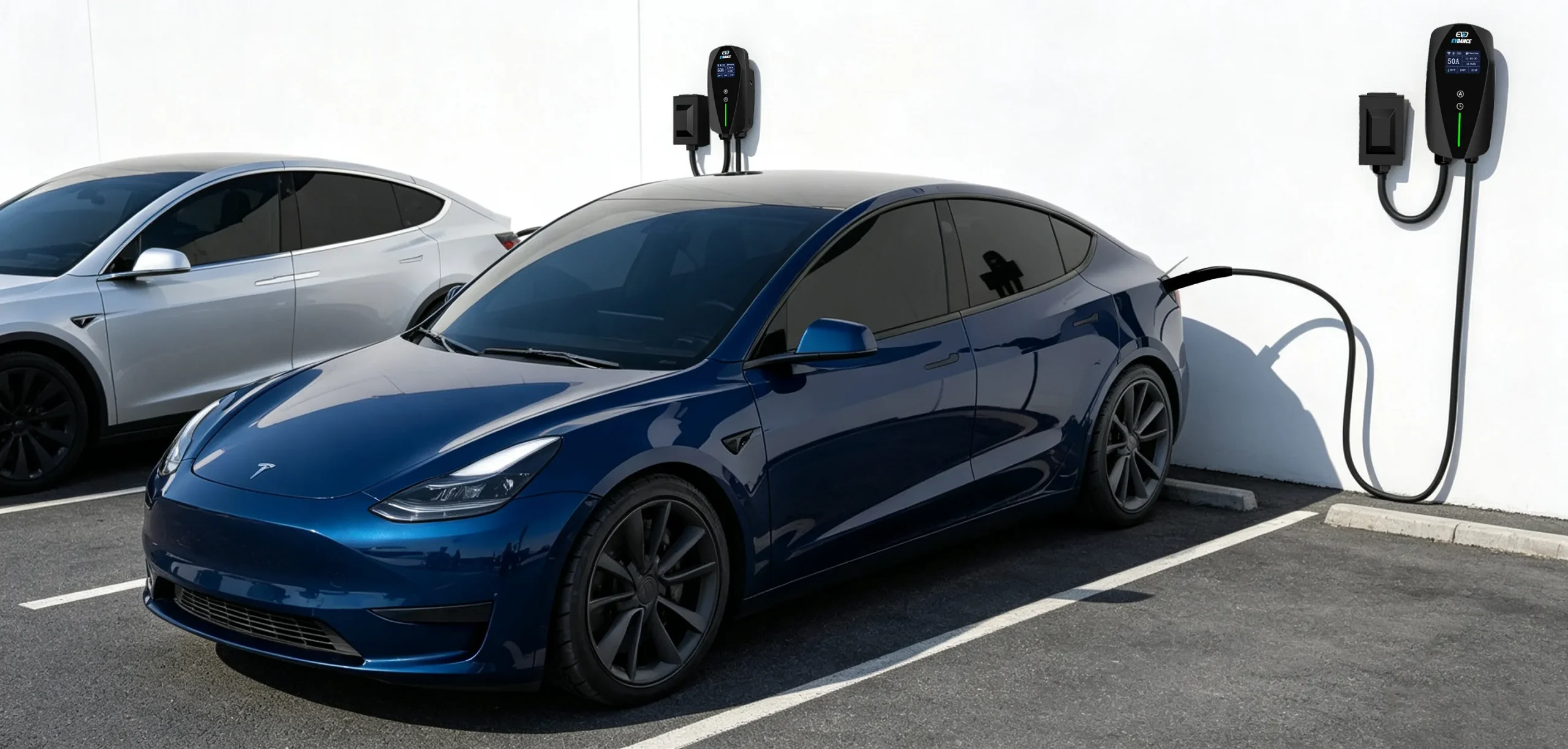
Networked stations make the per-unit discipline concrete. The EV-AC03201T is a floor-standing dual-connector AC station — two Type 2 connectors sharing up to 43 kW (22 kW per connector), OCPP 1.6J, RFID, IP54, its touchscreen a display for the driver flow — so its commissioning record covers two connectors, the platform link and the card set, not a single outlet. The EV-RHDC30K-L compact DC charger (22 kW DC, OCPP 1.6J, IP54) adds the platform session record on the DC side, and wallboxes such as the EV-ACT3204PE record their RFID and app state per unit. EVDANCE is a Shenzhen manufacturer founded in 2011 with a 3-year standard warranty. Project teams defining a commissioning pack for a tendered site can start through our commercial charging team or contact us.
Frequently Asked Questions
Is the commissioning record the same as a test certificate?
No. The installation test certificate is the instrument the licensed installer signs for the electrical work, recording measured values against the wiring rules. The commissioning record proves function — sessions run, access working, the platform seeing every port. A complete pack holds both; neither replaces the other.
One connector in twelve fails its session test. Do we sign off the rest?
That is the contract’s call, not the commissioning team’s. What is never acceptable is the failure leaving the room as a verbal promise: record it as an open item with an owner and a date in the sign-off pack, and let the contract documents decide whether the rest of the site is signed off around it.
Who signs the commissioning record?
The installer who performed the tests signs for the work; the owner or operator countersigns receipt of the record set. The signature turns a checklist into evidence a warranty claim, an insurer or a later contractor can rely on.
Related Reading
- Commercial EV Charger Maintenance Checklist
- OCPP Explained: What Charge Point Operators Need From EV Charger Hardware
- RFID and User Management for Shared EV Chargers
- How Do Commercial EV Charging Stations Work?

