
You cannot size retail chargers by counting the electric cars in your car park today: with nowhere to charge, many EV drivers never visit at all, and the ones who do park leave no record. A pre-install demand count fixes that by combining four observations — EVs present at peak, how long their drivers stay, staff cars, and how busy the nearest public chargers are — into a defensible stage-one number, plus a trigger for adding more.
Key Takeaways
- Today’s visible EV count is a floor: drivers with nowhere to charge often never visit.
- Count four things: peak simultaneous EVs, stay length by zone, staff EVs and intentions, and occupancy at the nearest public chargers.
- Size stage one from the peak count in connectors; build ducting and capacity for the final layout at the same time.
- Set the expansion trigger in advance and let your own session records fire it.
Why the Empty-Lot Count Misleads
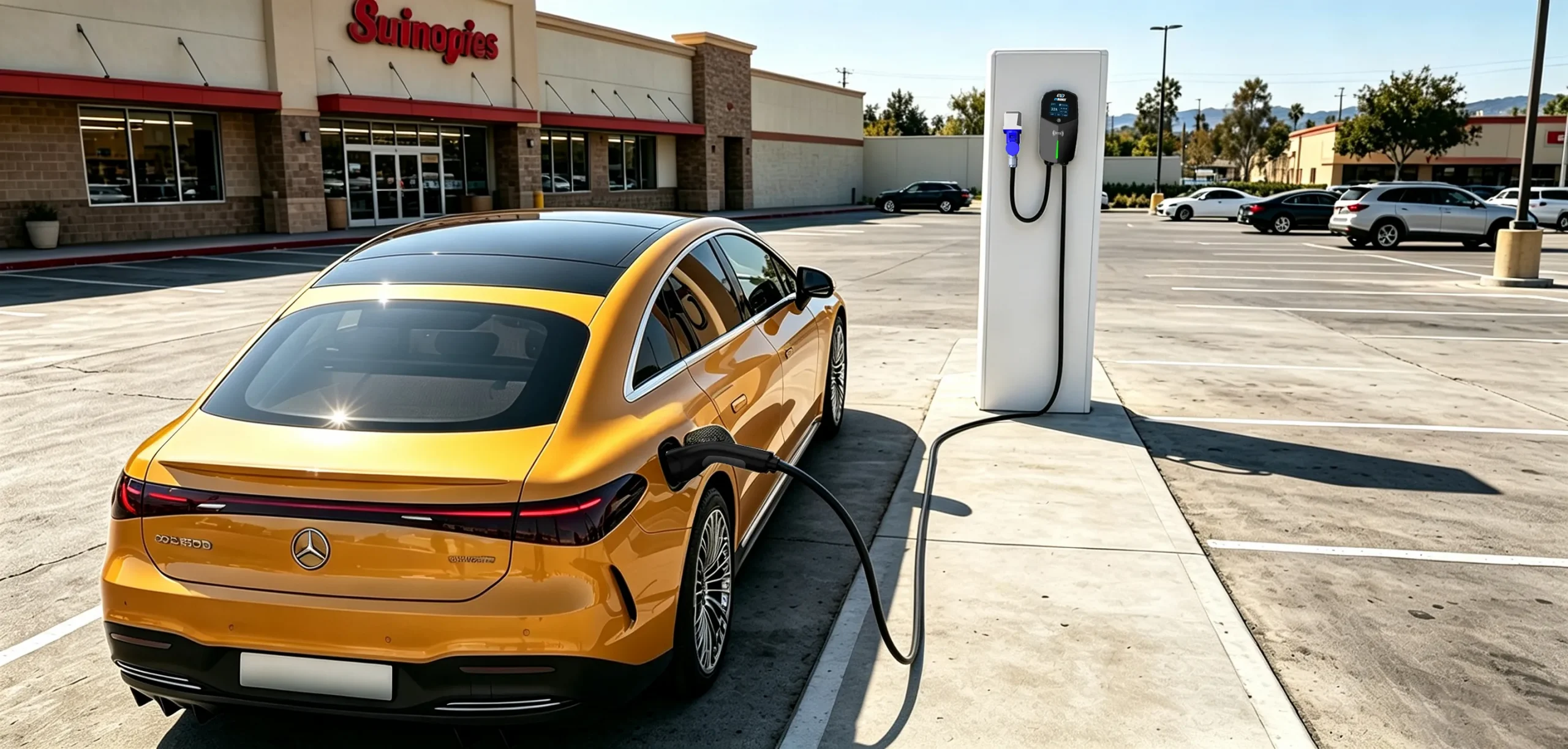
The visible count is a floor, not a ceiling. Drivers choose where to shop partly on whether they can charge, so a car park with no chargers under-records its own demand — the missing EVs are the point of installing. The opposite error is just as common: copying a published average or another centre’s chargers-per-space figure, which describes other car parks with other catchments. Our restaurants and retail guide covers why drivers value charging stops; this article covers measuring your own site.
The Four Counts to Take
| Count | How to take it | What it tells you |
|---|---|---|
| EVs present, by hour | Walk the car park at your busiest trading hours across several peak days and count EVs, noting which rows they use | Your simultaneous peak — the number the bay count is built from, not a daily total |
| Stay length | Use entry/exit records or till patterns to see how long the counted drivers stay, by zone | Which charger class fits each zone: short stays and long stays are different products |
| Staff EVs and intentions | Count staff EVs in the staff area, and ask staff whether they expect to drive an EV within the installation’s life | A separate, predictable long-stay demand — intentions are directional, not a promise, so weight them below observed cars |
| Nearby chargers at your peak | Visit the nearest public chargers during your busiest hour and note whether they are full or queued | Unmet local demand: a queue five minutes away is demand your bays would partly capture |
Turning the Counts Into a Stage-One Number
The peak simultaneous count — adjusted for the EVs your current count cannot see — is the demand the first installation must serve. Count it in connectors, not units: one connector serves one car at a time. Then make the staging decision deliberately:
- Build infrastructure for the final layout. Capacity, ducting and bay preparation for the full plan go in with the first works, while the ground is open once.
- Fit chargers for the counted demand. Ports are quick to add on prepared routes; ports bought early for uncounted demand are capital parked in a car park.
- Set the expansion trigger now. When your session records show bays full at peak on recurring trading days, the next unit is earned — write the trigger down before the first unit opens.
The zone and billing decisions that follow the count are worked through in our guide to how commercial charging stations work and the commercial installation cost guide (DOE-cited U.S. figures: public Level 2 at about $3,500 equipment plus $2,500 installation per connector — why staging the ports is worth money).
Hardware That Fits a Staged Count
Dual-connector hardware suits a staged plan because each unit adds two bays: the EV-AC03201T provides two Type 2 connectors sharing up to 43 kW (22 kW per connector), with OCPP 1.6J and RFID, at IP54 — and its session records are the evidence your expansion trigger runs on. For long-stay and staff zones, the EV-ACT3204PE 22 kW three-phase wallbox (tethered Type 2 cable, RFID and app, IP66, CE) covers structured parking. The full range is on our commercial EV charging page.
Frequently Asked Questions
How long should we count for?
Long enough to cover your real trading pattern — several of your busiest days, not an average week. A count that misses your peak event sizes the installation for the wrong day.
Can we skip the count and copy a similar store?
You can copy its layout questions, not its answer. Catchment, stay patterns and nearby competition differ site by site; the other store’s ratio encodes its evidence, not yours.
What if we count almost no EVs?
Then the count is telling you to start small on prepared infrastructure — the latent-demand argument cuts both ways. Fit the minimum that serves observed demand, keep the ducting and capacity for more, and let session records make the case for stage two.
Related Reading
- EV Charging for Restaurants and Retail: Turning Dwell Time Into Visits
- How Much Does It Cost to Install a Commercial EV Charging Station?
- How Do Commercial EV Charging Stations Work?
- How to Plan a Workplace EV Charging Program

