
The stated maximum current for a NACS-to-CCS1 DC adapter is 500 A. The EVDANCE JT08 and JT09 both carry that ceiling — the JT08 also states up to 1000 V, and the pair is described in the 250 kW class. Read it as a ceiling, not a promise: a session runs at the lowest of three numbers — station delivery, car acceptance, adapter rating.
Key Takeaways
- The stated maximum current for a NACS-to-CCS1 adapter is 500 A — stated by both the JT08 and JT09; the JT08 also states 1000 V.
- A session runs at the lowest of station output, car acceptance and adapter ceiling; the adapter rules only when smallest.
- Amps are the adapter’s unit: one ceiling means different kilowatts at different voltages.
- Two conditions sit above every number: your maker’s approval of a third-party DC adapter for your car, and a station open to it.
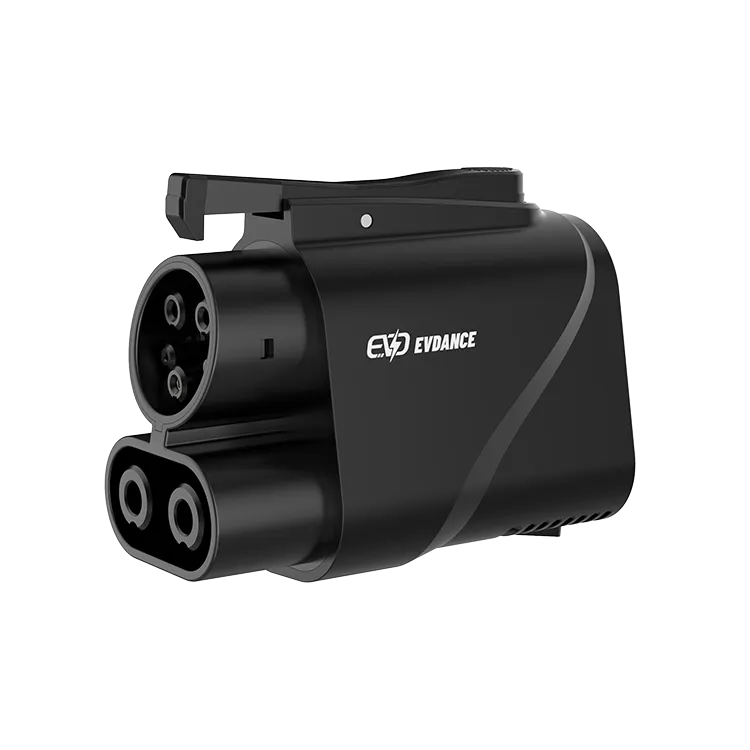
The Stated Numbers, Side by Side
| Stated figure | JT08 | JT09 |
|---|---|---|
| The job | A CCS1 car charging at a NACS DC station, including Superchargers open to that car | |
| Current ceiling | Up to 500 A | Up to 500 A |
| Voltage | Up to 1000 V, as stated | Not stated |
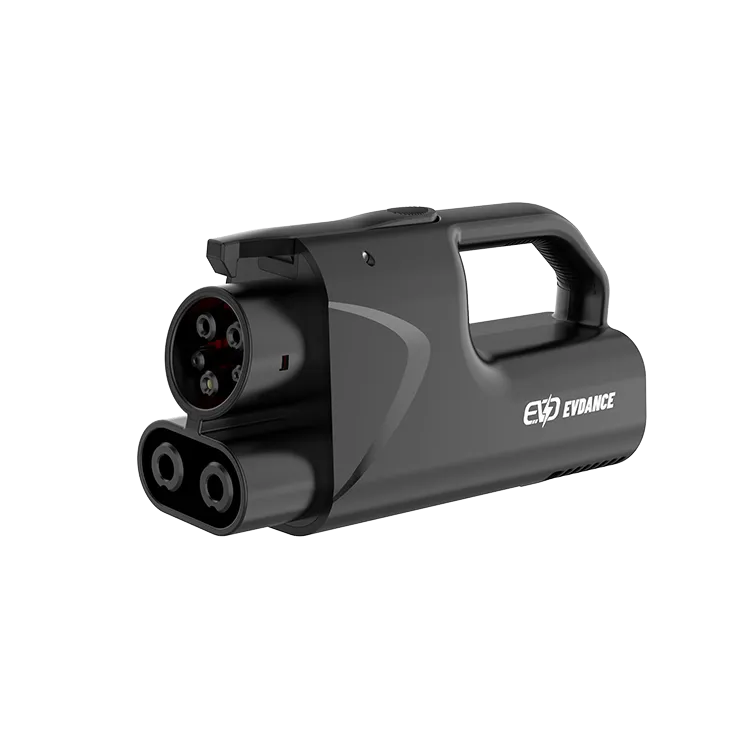
| Form & sealing | Handleless, IP66 | With handle, IP66 |
One row is not a number: the conditions. Either adapter may be used only where your car maker approves a third-party DC adapter for your exact car, per the maker’s current document, and only at a station open to your car.
Why the Adapter Is Rated in Amps and the Station in Kilowatts
Power is current multiplied by voltage; a station advertises the product — its kilowatt headline. An adapter carries current, so its honest figure is the current ceiling, plus a voltage ceiling where stated.
So the same 500 A ceiling represents more kilowatts at a higher-voltage station, fewer at a lower-voltage one. U.S. DOT puts the DC fast-charging class at 50–350 kW; the 250 kW class these adapters are described in sits inside that band — a summary of the two ceilings, not a third promise. Connector background: whether the Tesla charger is NACS.
The Lowest of Three Decides Your Session
| The limiter | Where its figure comes from | When it rules |
|---|---|---|
| Station output | The post’s rating and session offer | When it offers less than the other two allow |
| Car acceptance | Your car maker’s spec for your model | Most of the time — and it falls as the battery fills |
| Adapter ceiling | The adapter’s stated rating: 500 A here | Only when it is the smallest of the three |
With invented round numbers: a station can deliver 400 A and your car accepts 300 A — the session runs at the car’s 300 A, and the 500 A adapter is never the constraint. The adapter limits only when both of the others exceed its ceiling. How the rate is settled is covered in how DC fast chargers work.
How to Read an Adapter Listing
- Current ceiling first. It must cover what your car can accept; below that, the adapter becomes the limit.
- Voltage ceiling where stated. If a listing gives no voltage figure — as with the JT09 — close the gap with the maker; do not assume it matches another model. The safety frame is in whether EV charging adapters are safe.
- The class figure is a summary. “250 kW class” restates the two ceilings; it is not extra power on top of them.
- Conditions are part of the spec. Maker approval for your exact car and a station open to it decide whether the numbers may be used.
The Adapters Behind the Number
The EVDANCE JT08 is the handleless adapter: up to 500 A / 1000 V, IP66. The EVDANCE JT09 does the same job with a handle, at up to 500 A and IP66. Neither adds power; both carry the two conditions — your maker must approve a third-party DC adapter for your car, per its current document, and the station must be open to your car.
Frequently Asked Questions
Will a 500 A adapter make my car charge at 500 A?
No. The ceiling only removes the adapter as the limit; the session runs at what the station delivers and your car accepts — usually the car’s figure, which tapers as the battery fills.
My station advertises 350 kW. Do I need an adapter rated in kilowatts?
Read current and voltage instead. The headline is the station’s maximum across the cars it serves; your session draws what your car accepts, and the adapter’s ceilings must cover that — not the headline.
The JT09 listing states no voltage. Should I assume 1000 V like the JT08?
No. The JT08 states up to 1000 V; the JT09’s listing states none. Do not assume symmetry — ask the maker if the figure matters for your car.
Related Reading
- Are EV Charging Adapters Safe?
- Is the Tesla Charger NACS? NACS, J3400 and Adapters Explained
- How Do DC Fast Chargers Work?
- Does J1772 Work With CCS? CCS Connectors Explained

