
They are different parts built for different sessions. An AC Tesla adapter — the NACS-to-J1772 kind — bridges Level 2 charging, where the car’s onboard charger converts the AC power it receives. A DC adapter — the NACS-to-CCS1 kind — bridges fast charging, where the station has already converted the power to DC before it reaches the car. They differ in pin set, current class, and permissions.
Key Takeaways
- AC adapters bridge Level 2 charging, where the car converts; DC adapters bridge fast charging, where the station converts.
- The classes differ in pin set (AC contacts vs the CCS1 DC pins), current class (80 A vs 500 A stated ceilings) and sealing.
- Only the DC class carries the two gates: maker approval for your exact car, and a station open to it.
- Each class fails the other’s job by design — the wrong adapter is not a weaker option, it is a different session’s part.
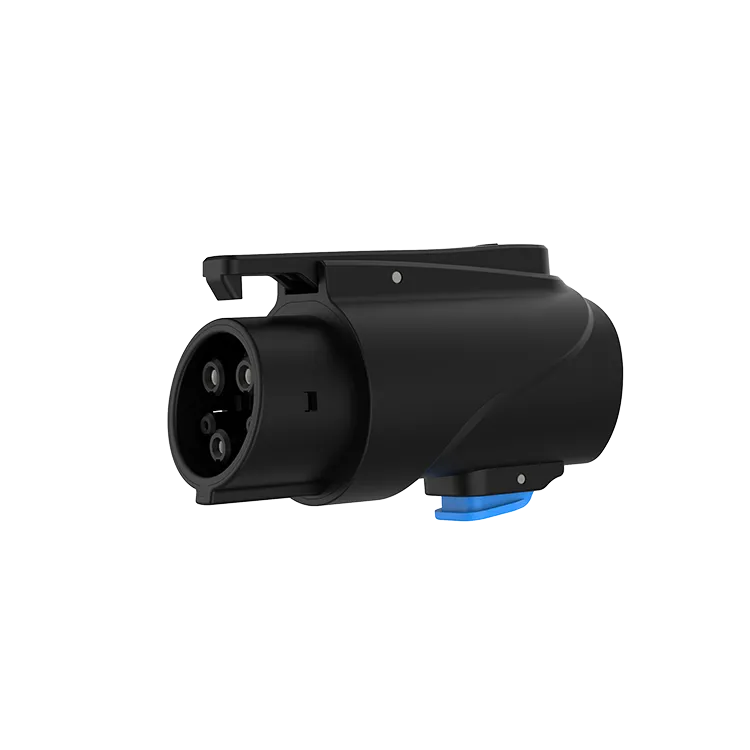
The Two Classes, Side by Side
| Dimension | AC adapter (JT02 class) | DC adapter (JT08 / JT09 class) |
|---|---|---|
| Session | Level 2 AC — home and destination charging | DC fast charging |
| Bridges | A NACS charger to a J1772 car inlet | A NACS DC station to a CCS1 car inlet |
| Conversion happens | In the car, via its onboard charger | In the station, before the adapter |
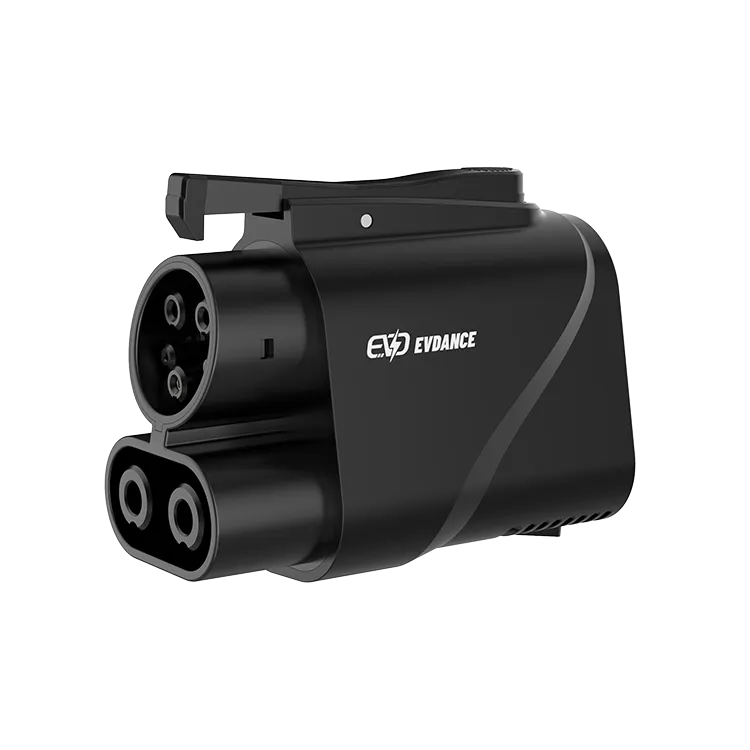
| Contacts used | The AC and signal contacts | The two large DC pins, through the full CCS1 face |
| Stated ceiling (EVDANCE) | Up to 80 A, AC 250 V | Up to 500 A; the JT08 also states up to 1000 V |
| Sealing | IP65 | IP66 |
| Permissions | Your car maker’s guidance on adapters applies | Two explicit gates: maker approval of a third-party DC adapter for your exact car, and a station open to your car |
The Difference That Decides the Session
The deepest difference is where conversion happens. In an AC session the charger is a supply and the car does the converting, at the pace its onboard charger allows — U.S. DOT puts Level 2 at 7–19 kW. In a DC session the station converts and controls delivery, at 50–350 kW in the DOT’s framing, with the car’s onboard charger out of the path.
An adapter is built for one of those conversations. The AC part maps AC contacts between two plug shapes, letting car and charger talk as if directly connected. The DC part presents the full CCS1 face — DC pins included — so the station’s delivery reaches the car’s DC inlet. Neither part converts anything.
The Permission Asymmetry
Only the DC class carries the two hard gates. A DC adapter bridges a high-power session, so the car maker must sign off on the bridge for the exact car — in its current document, not on the packaging — and the network opens its stations car by car, so the station must be open to yours. An AC adapter lives under your maker’s general adapter guidance, covered in whether EV charging adapters are safe. On the DC side, one closed gate means no session.
Grabbing the Wrong One
Each class fails the other’s job, by design. The AC adapter at a DC station has no DC contacts, so the fast-charging circuit is never completed. The DC adapters are equally out of place at an AC charger: they bridge DC only, so a CCS1 car at a NACS AC charger has no adapter among these three. The wrong part does not half-work. Connector background: whether the Tesla charger is NACS.
The EVDANCE Pair, on Stated Facts
The EVDANCE JT02 is the AC adapter: NACS to J1772, up to 80 A, AC 250 V, silver-plated copper terminals, IP65. The EVDANCE JT08 (handleless, up to 500 A / 1000 V, IP66) and the EVDANCE JT09 (with handle, up to 500 A, IP66) are the DC adapters, with the same two conditions: use only where your car maker approves a third-party DC adapter for your exact car, and only at stations open to your car.
Frequently Asked Questions
Does one adapter cover both AC and DC?
No. The pin sets and sessions differ, so the parts do. They also serve different pairings: the AC adapter serves a J1772 car at a NACS AC charger; the DC adapter serves a CCS1 car at a NACS DC station.
Is a DC adapter just a heavy-duty AC adapter?
No. It is not the same part built stronger: it presents a different face to the car — the CCS1 shape with its DC pins — and serves a session the AC part has no contacts for. The higher current class follows from the job.
Which class do I need for a Tesla destination charger or Wall Connector?
The AC class. Destination chargers and Wall Connectors are Level 2 AC, so a J1772 car uses a NACS-to-J1772 adapter such as the JT02 there. The DC class is for fast-charging stations only.
Related Reading
- Can I Use a Tesla Charger for Other Cars?
- Is the Tesla Charger NACS? NACS, J3400 and Adapters Explained
- Does J1772 Work With CCS? CCS Connectors Explained

