
Treat a charging adapter as session equipment: fit it, charge, take it off. Nothing in the stated designs makes an adapter a permanent fitting for your car, and leaving one seated between sessions keeps the inlet joint open to weather, leverage and theft for no benefit. For your exact model, the adapter maker’s and car maker’s manuals outrank any general guide, including this one.
Key Takeaways
- An adapter is session equipment: fit it, charge, remove it — nothing in its design makes it a permanent fitting.
- Left on the car, it holds the port door open and exposes the joint to weather, knocks and theft.
- Driving with an adapter fitted is outside any described use; remove it before the car moves.
- The adapter and car makers’ instructions govern your exact model and outrank general guidance.
Two Different Questions Hide in “Leave It On”
| The situation | What it really is | The answer |
|---|---|---|
| Adapter fitted while a session runs, you nearby or away | Normal use — the adapter doing its job | Fine; the session is what it is for. Stay within reach of its end at public sites |
| Adapter left in the inlet after the session, car parked | Storage in the worst place — outdoors, on the car | Take it off. The inlet was designed to be closed, not to hold accessories |
| Adapter left on and the car driven | Outside any described use | No maker’s instructions describe driving with an adapter fitted; remove it before the car moves |
What a Fitted Adapter Is Exposed To
- Weather at an open joint. An adapter’s IP rating is stated for the adapter itself. With it left on the car, the charge-port door cannot close, and the inlet and the mated joint sit exposed to rain, dust and road grit in a state nobody rated.
- Leverage on the inlet. A fitted adapter sticks out of the inlet with its weight at the end of it. Knocks, a brushing passer-by, a caught cable — the force lands on your car’s inlet, the expensive part of the chain to repair.
- Theft and loss. An adapter left on the car advertises itself to anyone walking past, for as long as the car is parked. The same object in the boot or glovebox is invisible.
- Dirt in the contacts. Contacts left open to the air collect what the air carries. Clean, dry faces are what make a good joint next session; a stored adapter keeps them that way.
The Routine That Replaces Leaving It On
The alternative costs about a minute. When the session ends: adapter off the car, into its fixed place, port door closed. One fixed place matters more than it sounds — the adapter that lives in one spot is the adapter whose absence you notice before you drive away from a charger, not after.
Two authorities govern any exception. The adapter maker’s instructions describe its intended use; the car maker’s manual describes what may stay in its inlet. If either addresses leaving an adapter fitted, follow it — and if both are silent, silence is not permission.
The Adapters in This Range
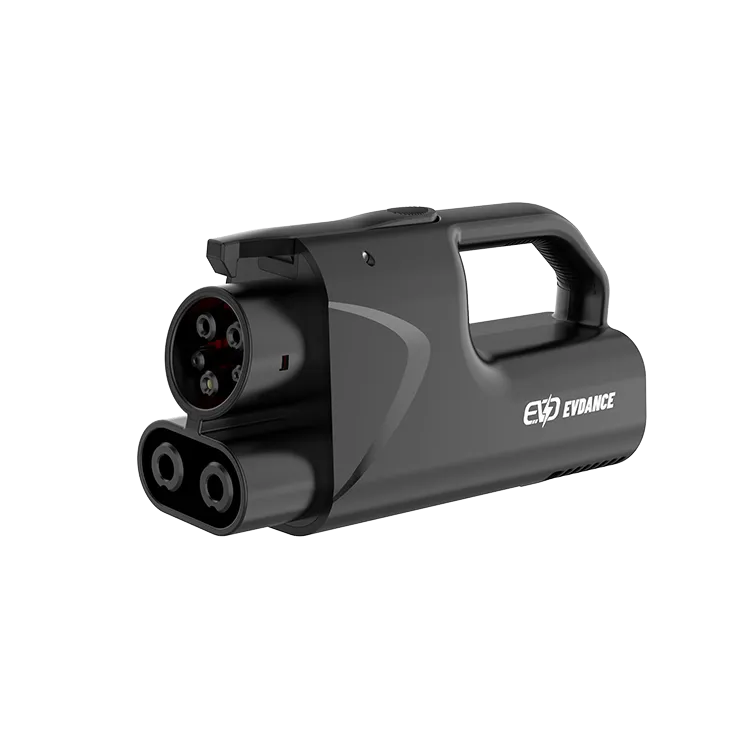
The EVDANCE JT09 (NACS-to-CCS1 DC adapter with handle, up to 500 A, 250 kW class, IP66) and the handleless EVDANCE JT08 (up to 500 A / 1000 V, IP66) are session tools for DC fast charging — use them only where your vehicle maker approves third-party DC adapter use for your car and the station is open to it, and take them off when the session ends. The EVDANCE JT02 (NACS-to-J1772 AC adapter, up to 80 A, IP65) follows the same routine at destination chargers: off at the end of the session, into the car, every time. No listing for any of the three describes leaving the adapter fitted, and no case is stated — a pouch of your own in the car does that job.

Frequently Asked Questions
Can I leave the adapter on during an overnight charge at a hotel?
While the session runs, the adapter is in use — overnight destination sessions are normal. Once it ends, the same routine applies: adapter off, into the car.
Will rain damage an adapter left fitted to the car?
The adapter’s stated IP rating covers the adapter; it says nothing about the open inlet, the unclosed port door, or the mated joint left out in weather. Do not test the gap — store the adapter and close the door.
My adapter feels stuck on the car. What should I do?
End the session fully first and use the car’s normal unlock routine for the connector; never force a held connector. If it still will not release, that is a car or station issue to work through their help routes — see our guide to a connector that won’t disconnect.
Related Reading
- Are EV Charging Adapters Safe?
- Why Won’t My EV Charger Disconnect? Stuck Connector Fixes
- How to Clean an EV Charger Connector
- Can a Tesla Use J1772 Chargers?

