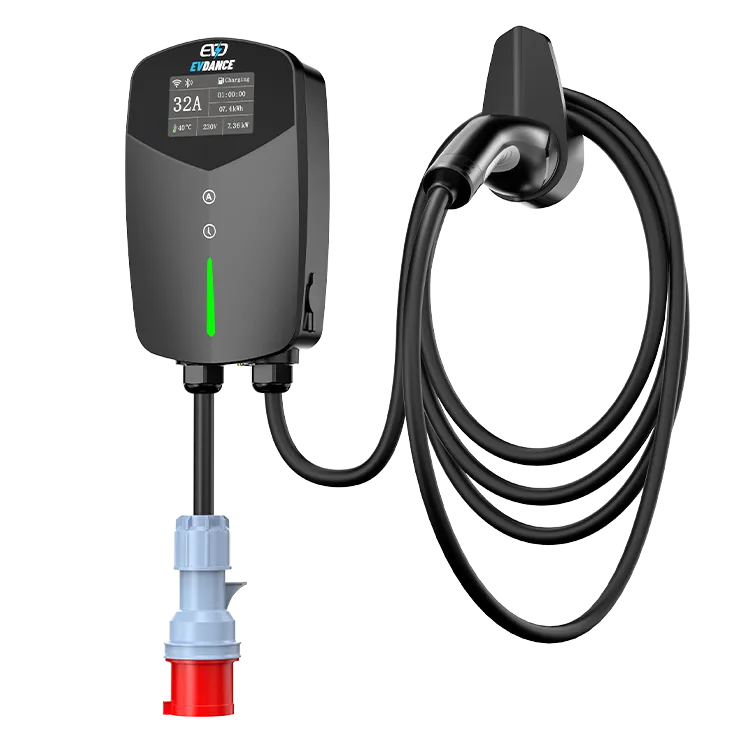
Charging time is the first question most EV drivers ask, and the answer is simpler than it looks. For AC charging, time is roughly the energy you need to add divided by the charging power. The catch is that the charging power is set by the weakest link: the charger, the supply, or the car’s own onboard charger.
The Basic Formula
Charging time (hours) ≈ energy to add (kWh) ÷ effective charging power (kW). Allow roughly 10% extra for charging losses and for the slower rate as the battery approaches full. For example, adding 42 kWh (a 60 kWh battery from 10% to 80%) at 7 kW takes about 6 to 6.5 hours.
Worked Examples
| Energy added | 7 kW (single-phase 32A) | 11 kW (three-phase 16A) | 22 kW (three-phase 32A)* |
|---|---|---|---|
| 20 kWh (about 130 km / 80 mi) | ≈ 3 h | ≈ 2 h | ≈ 1 h |
| 42 kWh (60 kWh battery, 10–80%) | ≈ 6–6.5 h | ≈ 4 h | ≈ 2 h |
| 63 kWh (90 kWh battery, 10–80%) | ≈ 9–10 h | ≈ 6 h | ≈ 3 h |
*Only for cars whose onboard charger accepts 22 kW AC. Figures are estimates and vary with temperature, battery condition and the car.
The Onboard Charger Sets the Limit
With AC charging, the conversion from AC to DC happens inside the car. Many EVs accept up to 7.4 kW on single-phase and 11 kW on three-phase, and only some models accept 22 kW. If a car’s onboard charger is limited to 11 kW, a 22 kW wallbox will still charge it at 11 kW. Some cars also accept only single-phase current, which limits them to about 7.4 kW on any AC charger. Check the vehicle’s specification before choosing a higher-power charger.
What This Means in Practice
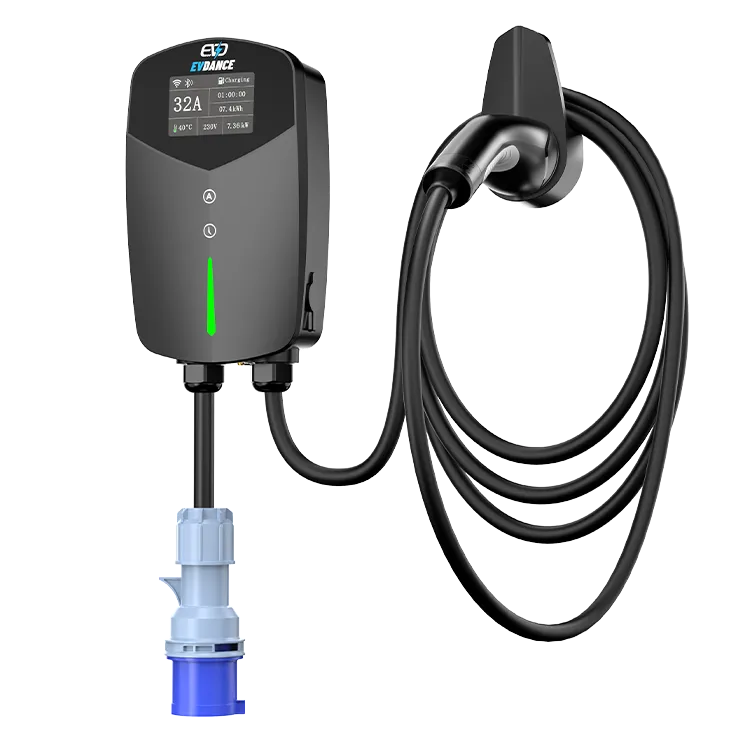
Most drivers cover 30 to 60 km a day, which needs roughly 5 to 10 kWh. Even a 7 kW charger replaces that in one to two hours, and overnight charging easily fills the battery. That is why a 7kW portable EV charger or a single-phase wallbox is enough for many homes. Higher power pays off for fleets, shared chargers, workplaces with short dwell times, and cars with large batteries. Our 7kW portable charger vs wallbox comparison looks at the trade-offs.
Choosing the Right Power
Match the charger to the supply first, then to the cars. Single-phase homes top out at about 7.4 kW. Three-phase supplies allow 11 kW or 22 kW with a wallbox such as the EV-ACT3204E or a portable unit such as the EV-ACT3204PE.
Related Reading
- Single-Phase vs Three-Phase EV Charging: 7kW, 11kW and 22kW Explained
- Smart Charging and Time-of-Use Tariffs: How Scheduling Cuts EV Charging Costs
- 7kW Portable EV Charger News: Why 7kW Is the New Default
Key Takeaways
- Charging time ≈ energy needed ÷ charging power, plus about 10%.
- The car’s onboard charger often limits AC charging to 7.4 kW or 11 kW.
- A 7 kW charger covers typical daily driving in one to two hours.
- 22 kW helps only cars that accept 22 kW AC.
Sources & Standards
- IEC 61851-1 — Electric vehicle conductive charging system
- U.S. DOE AFDC — Procurement and Installation for Electric Vehicle Charging Infrastructure