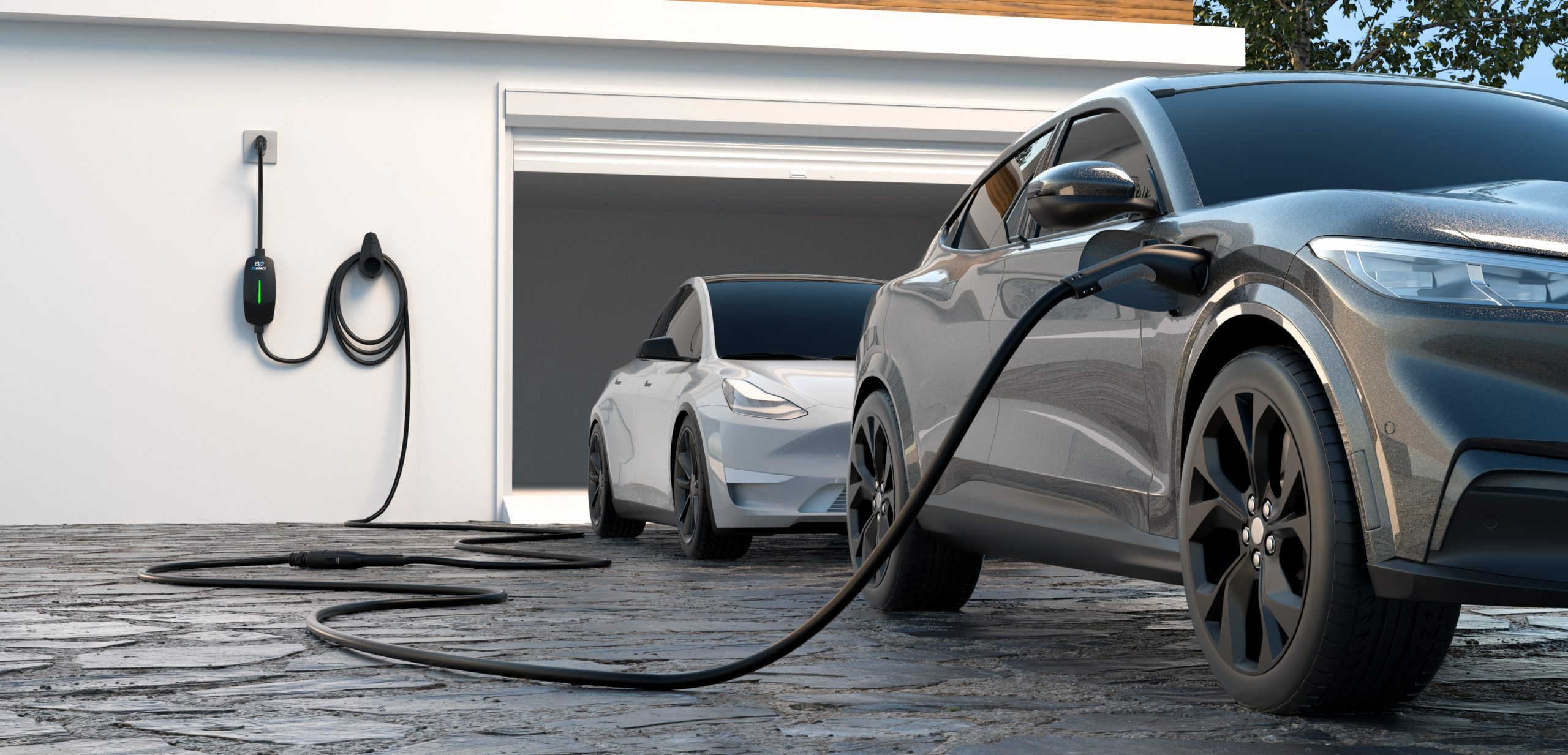
An EV charger has two ends that must suit the market: the vehicle connector that goes into the car, and the grid plug or fixed connection that draws power from the building. Get either one wrong and the product cannot be used, or is used unsafely with improvised adapters. For an OEM or private-label brand, these choices also decide which standards and certification route apply.
This guide summarises the usual choices for North America, the EU, the UK and Australia. It is part of our OEM and private-label EV charger guide. Electrical codes vary locally, so confirm details with a licensed electrician or a test lab for each market.
Vehicle connectors: J1772, NACS and Type 2
In North America, AC charging has used the J1772 connector for many years. The US Department of Energy notes that Level 1 and Level 2 charging both use a J1772 connector at the vehicle, while SAE is standardising the J3400 connector, known as NACS. SAE J1772 defines the vehicle inlet and mating connector, and SAE J3400 describes a coupler that supplies AC or DC power through two current-carrying contacts. As more new vehicles adopt J3400 inlets, many brands now offer both versions of the same charger.
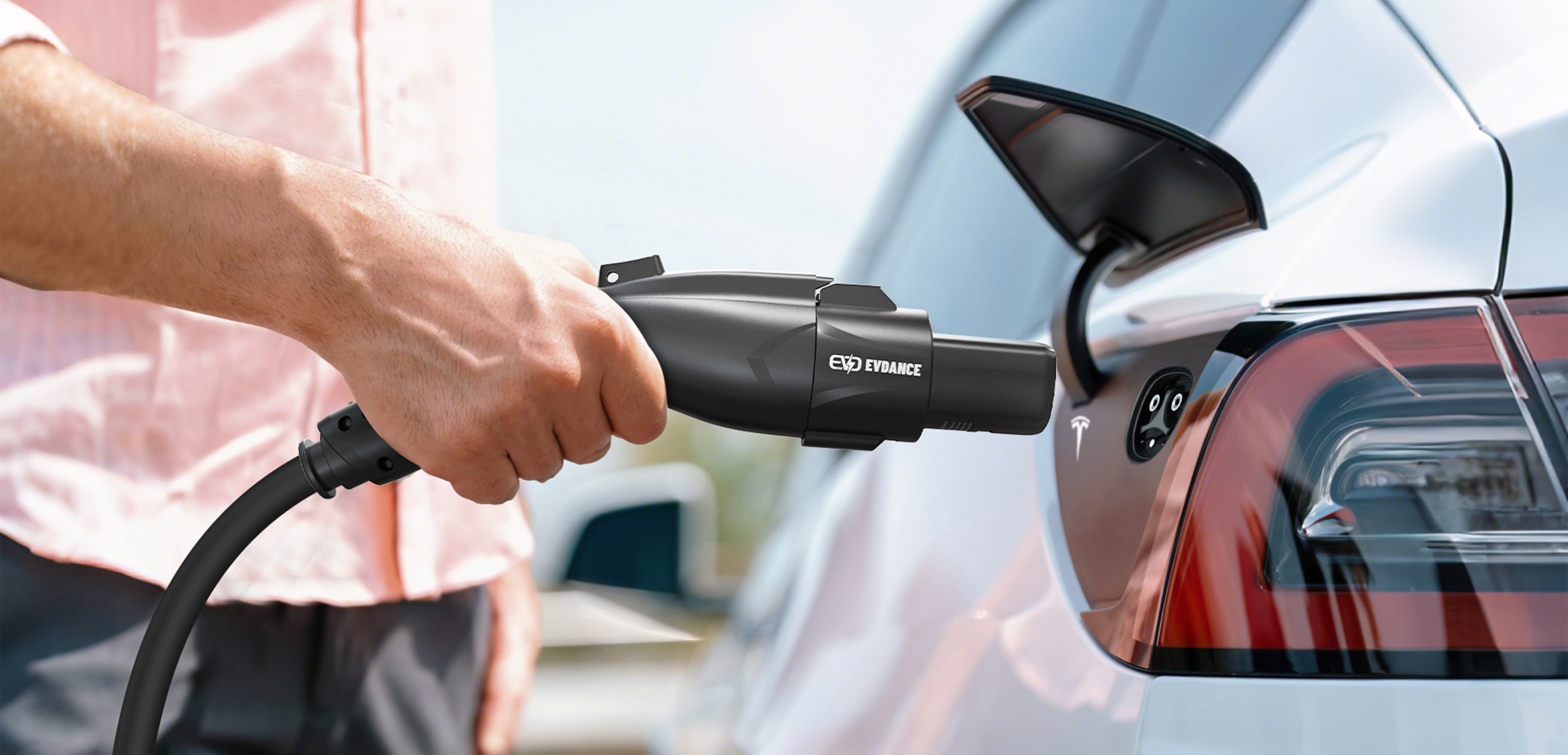
In Europe, the UK and Australia, AC charging uses the Type 2 connector covered by IEC 62196-2. Type 2 supports single-phase and three-phase charging, which matters for wall boxes rated at 11 kW or 22 kW. For a closer comparison of the three designs, see Type 2 vs J1772 vs NACS.
Grid plugs by market
The grid plug is where markets differ most. The table shows common options; the exact choice depends on the current rating and on the sockets your customers have.
| Market | Vehicle connector | Common grid plug options | Notes |
|---|---|---|---|
| US and Canada | J1772 or NACS (SAE J3400) | NEMA 5-15 (120 V, Level 1); NEMA 14-50 or NEMA 6-50 (240 V, Level 2) | Charging is a continuous load, so the circuit must suit the charger current |
| EU | Type 2 | Schuko for household sockets; CEE/IEC 60309 blue (single-phase) or red (three-phase) | Household sockets are not designed for many hours at full rating |
| UK | Type 2 | BS 1363 13 A plug for portable units; IEC 60309 for higher currents | Wall boxes are normally hard-wired |
| Australia | Type 2 | AS/NZS 3112 10 A or 15 A plug; IEC 60309 for higher currents | Confirm local rules for fixed installations |
Industrial plugs in the IEC 60309 family, often called CEE plugs, cover ratings up to 1000 V and 800 A and are widely used at campsites, workshops and for three-phase portable charging. Because they are built for sustained higher currents than household sockets, they are a common choice for 16 A and 32 A portable chargers in Europe.
Matching current rating to the plug
The plug must be rated for the charger’s maximum current, and the charger should never draw more than the circuit allows. In North America, EV charging is treated as a continuous load, so the circuit is normally sized above the charger’s current; a 40 A charger, for example, is usually paired with a 50 A circuit and a NEMA 14-50 receptacle. In Europe, portable chargers sold with Schuko plugs commonly default to a reduced current for long sessions, while CEE plugs allow higher settings.
Adjustable current settings help, but they do not replace a correct plug choice. If you plan to sell interchangeable plug adapters, each combination must be covered by the product’s certification, so check this with your test lab before listing adapter kits. Useful questions when choosing:
- Which sockets do your customers actually have at home or at work?
- Is the market mainly single-phase, three-phase or both?
- Which current settings will the charger offer, and which is the default?
- Does the plug need to cope with outdoor sockets and cold weather?
Cable length and cable type
Cable length is a trade-off between reach and weight. EVDANCE offers 25 ft or 28 ft cables for North America and about 5 m or 7.5 m elsewhere. A longer cable reaches a charging port on the far side of the car or across a driveway, but it is heavier, uses more copper and takes more space in the storage case.
Conductor size must suit the current rating and the length. Outdoor use also calls for jackets that stay flexible in cold weather and resist oil, UV light and abrasion. Ask the factory for the cable specification and its marking text, and check that the cable is covered by the certification of the finished charger.
Certification follows the configuration
Each change of connector, plug or cable can affect certification. In North America, the charger, its cord set and its connector are assessed against standards such as UL 2594 and UL 2251 by a recognised testing laboratory; our article on UL and ETL listing for EV chargers explains the process. In the EU and UK, the plug and connector must match the standards declared in the technical documentation.
Certification marks vary by model and configuration, so ask for the certificate and test report that cover the exact connector, plug and cable length you are buying. For portable chargers, our portable EV charger buying guide shows how these choices look from the end customer’s side.
Building a market-ready configuration
A practical approach is to define one base model and a small number of market variants:
- North America: J1772 or NACS connector, NEMA 14-50P plug, 25 ft or 28 ft cable
- EU: Type 2 connector, Schuko or CEE/IEC 60309 plug, about 5 m or 7.5 m cable
- UK and Australia: Type 2 connector and about 5 m or 7.5 m cable; confirm the local plug options for your chosen model with your account engineer
Each variant shares the same housing and branding, which keeps tooling and packaging simple. Browse our charger range to choose a base model, and our OEM and ODM program team will help you configure a variant for each market.
Key Takeaways
- North America uses J1772 or NACS (SAE J3400) at the vehicle, while the EU, UK and Australia use Type 2.
- Choose the grid plug from the sockets customers actually have, and match the charger current to the circuit.
- Cable length trades reach against weight and cost; EVDANCE offers 25 or 28 ft in North America and about 5 or 7.5 m elsewhere.
- Every change of connector, plug or cable can affect certification, so get documents for the exact configuration.
Sources & Standards
- SAE International — J1772_202401: EV and PHEV Conductive Charge Coupler
- SAE International — J3400_202409: North American Charging System (NACS)
- International Electrotechnical Commission (IEC) — IEC 62196-2:2025
- International Electrotechnical Commission (IEC) — IEC 60309-1:2021
- U.S. Department of Energy (AFDC) — Electric Vehicle Charging Stations