
Farm vehicles and yard equipment charge well overnight in the yard when three things are sorted: an outdoor-rated charger on a proper circuit, a schedule that staggers start times instead of firing everything up at once, and simple access control so only your own drivers start sessions. Overnight AC charging fits farm routines — the vehicles sit still for hours, which is exactly what Level 2 charging needs.
Key Takeaways
- Long overnight dwell makes farm vehicles the easy case for Level 2 AC charging.
- Stagger start times or share output so vehicles and buildings do not peak together.
- RFID or app access keeps a yard charger private and accounted for.
- Holstered connectors and marked parking spots keep cables out of mud and traffic.
Why Overnight Yard Charging Fits Farm Work
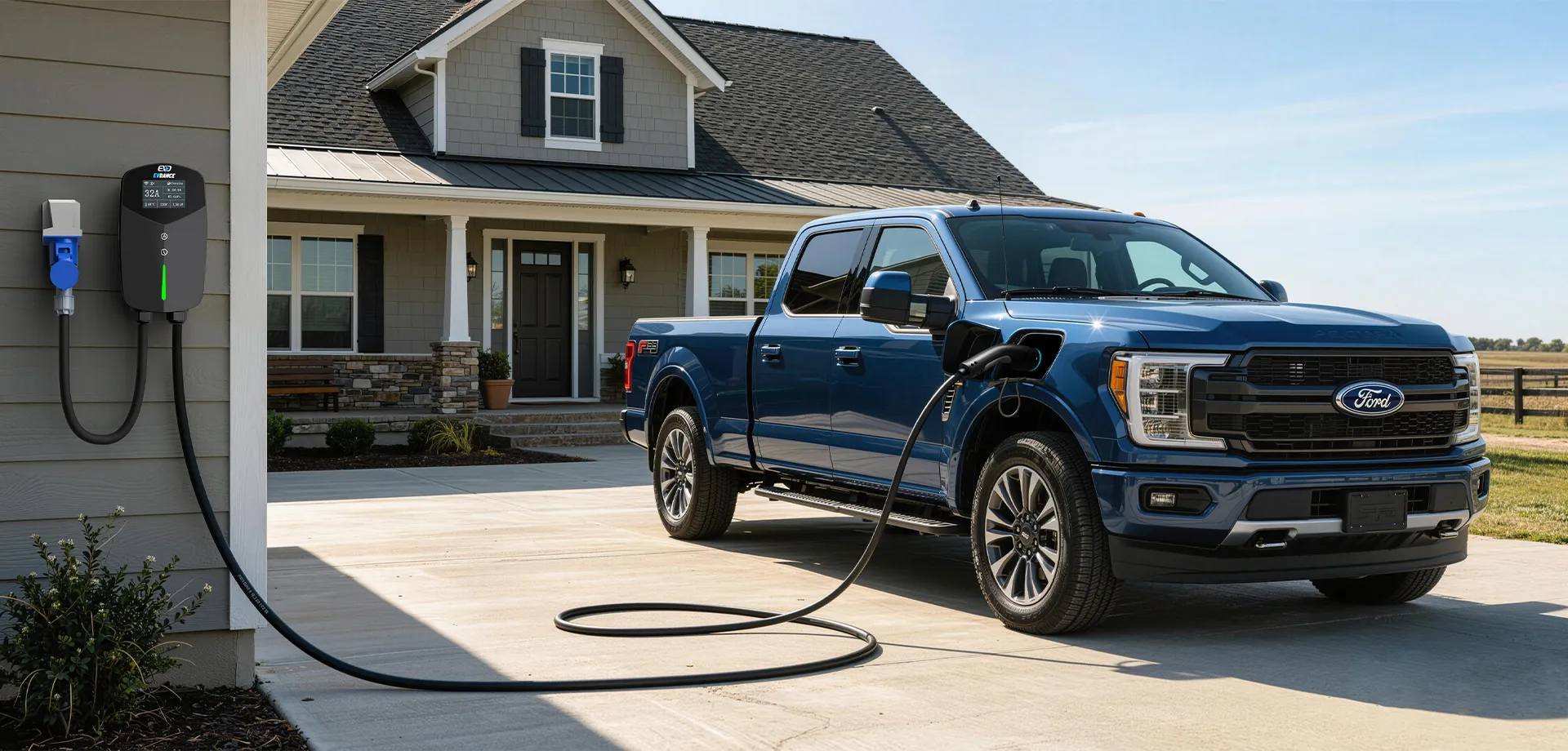
Pickups, UTVs and yard vehicles come back to the same yard every evening and leave at roughly the same time each morning. That long, predictable dwell is the easy case for charging. Level 2 delivers about 10–20 miles of range per hour per U.S. DOT figures, so a vehicle parked for ten hours can recover far more range than a day of farm work usually takes. There is rarely a case for fast charging on a working farm; the case is for enough AC points, in the right places, on a supply that can carry them together.
Spread the Load Instead of Stacking It
The trap is everything starting at 6 p.m. — two vehicles, the workshop, water heating and whatever else the property runs in the evening, all on one supply. Staggering avoids it: timers or scheduled starts let one vehicle charge early and another later, and load-sharing chargers divide their output between vehicles automatically. Think about the whole property’s evening demand, not just the chargers.
| Yard load | Typical pattern | Sensible approach |
|---|---|---|
| Main pickup | Back at dusk, out early | Full overnight AC session, started first |
| UTV or second vehicle | Shorter daily distances | Later scheduled start, or shared output on a dual charger |
| Occasional visitor or contractor vehicle | Irregular | Access by RFID or app approval, not an always-live socket |
| Buildings and other equipment | Evening and night loads | Counted in the total before charger sizes are chosen |
Access Control and Cable Manners in a Working Yard
- Control who can start. RFID cards or app authorisation keep a yard charger from becoming a public one, and give a record of who charged what.
- Park to the charger, not around it. Marked spots by the unit keep cable runs short and out of traffic lanes where machinery passes.
- Keep connectors off the ground. A holster at the parking spot keeps the connector out of mud and puddle water and off the tyre path.
- Inspect like any other kit. A weekly look at cables and connectors catches yard damage early; our commercial charger maintenance checklist adapts well to a farm.
For a yard with two vehicles charging nightly, the EV-AC03201T dual-connector AC station serves two vehicles at once, sharing up to 43 kW (22 kW per connector), with OCPP 1.6J and RFID access control. Its IP54 rating suits a covered yard spot — under a lean-to or barn overhang rather than fully exposed. Larger or mixed setups are covered in our commercial EV charging range. Planning the human side helps too: our guide to planning a workplace charging program covers rules and cost-sharing that translate directly to a farm crew.

Frequently Asked Questions
Can one charger serve several farm vehicles?
Often, yes. With staggered schedules or a dual-connector unit, one installation can cover two or more vehicles, as long as each vehicle’s overnight dwell is long enough for the miles it drives. Our article on sizing AC chargers for depot vehicles walks through the maths.
What about rain, mud and dust in the yard?
Use outdoor-rated equipment, holster the connector after every session, and keep cables out of standing water and traffic routes. Rain itself is not a barrier to charging; damaged or ground-dragged cables are the real problem.
Does a farm need DC fast charging?
Almost never for overnight work. DC suits operations with quick turnarounds during the day. For vehicles parked all night, AC is simpler and gentler on the property supply. Our explainer on how commercial charging stations work compares the two.
Related Reading
- Fleet Depot Charging: How to Size AC Chargers for Vans and Light Commercial Vehicles
- How to Plan a Workplace EV Charging Program
- Commercial EV Charger Maintenance Checklist
- How Do Commercial EV Charging Stations Work?

