
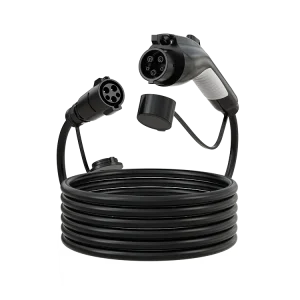
EV-AC04001U Holiday Travel: Charging at Family Homes
Bring the portable — at a family home the answer never changes. The fixed 40 A EV-AC04001U needs a 14-50 on a 50 A circuit; check the house once, charge every visit.
Bring the portable — at a family home the answer never changes. The fixed 40 A EV-AC04001U needs a 14-50 on a 50 A circuit; check the house once, charge every visit.
Moving from a 14-30 to a 14-50 is a circuit upgrade, not a plug swap: 50 A breaker, 50 A wiring, panel checked. When it is worth it — and when stepping down is smarter.
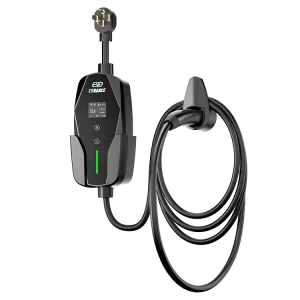
Six settings, 10 A to 32 A. The circuit sets the ceiling by the continuous-load rule; the parked window picks the step. Why the 10 A floor is this unit’s signature.
At 32 A the ACS3210T delivers about 7.7 kW. Its Type 2 sibling, the ACS3210E, is the same 32 A charger for a different standard — choose by inlet and market, not speed.
No — not directly. The EV-ACS3210T’s 14-50 plug does not fit a 14-30, and the circuit caps charging at 24 A. The two locks, and the routes that work.
A native NACS portable for Tesla owners: six steps from 10 A to 32 A fit circuits a bigger portable cannot use — at a 7.7 kW ceiling. When that trade is right.
On a six-step charger, the 1.77-inch screen is a check, not a courtesy: confirm the step, watch the draw, record the energy — and any fault, exactly.
Older homes fail on arithmetic, not chargers. The EV-ACS3210T’s six steps, 10 A to 32 A, meet the ceiling your electrician names — after the check, not instead of it.
On a 40 A circuit the EV-ACS4005T must run at 32 A — the EV-ACS3210T’s maximum — so the extra 8 A exists only on a 50 A circuit, with a car that can use it.
A 32 A charger on a 40 A breaker is an exact NEC pairing — and a final one: bigger circuits give the EV-ACS3210T nothing more. When an upgrade is worth it, and when it is not.