
Developers should specify EV charging at design stage: decide which spaces get installed chargers and which get EV-ready cabling, size the electrical supply with load management in mind, and choose hardware that suits the building type. For houses, a wallbox per driveway is common; for apartments, shared AC stations or wallboxes with RFID and OCPP; for mixed-use sites, add a few faster units. Building codes increasingly require EV-ready parking, so check the code edition that applies to your project.
Key Takeaways
- Specify charging at design stage, not after construction.
- Combine installed chargers with EV-ready cabling.
- Load management reduces the supply needed.
- Specify OCPP and plan operations after handover.
Specify by Building Type
| Building type | Typical specification | EVDANCE options |
|---|---|---|
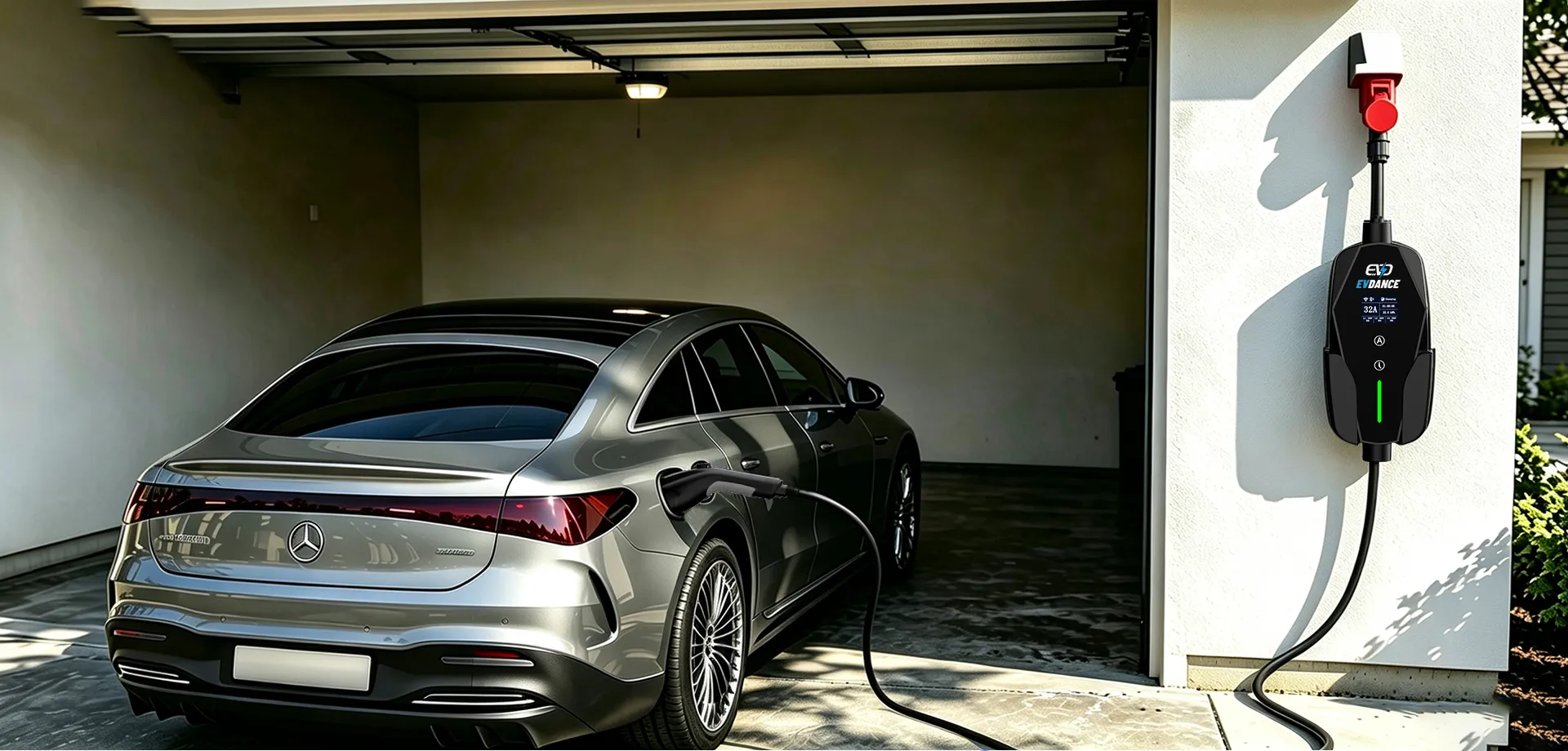
| Single-family homes, North America | 240 V circuit per garage, wallbox or 14-50 receptacle | EV-ACT5006T hard-wired, or plug-in portable units |
| Single-family homes, Europe | Single- or three-phase wallbox per driveway | EV-ACT3204PE where three-phase is supplied |
| Apartments and condos | Shared wallboxes or stations with RFID, OCPP and load management | EV-ACT3204PE, EV-AC03201T |
| Mixed-use and retail podiums | AC for residents, compact DC for visitors | EV-RHDC30K-L plus AC units |
EV-Ready vs EV-Installed
Installing every charger on day one can be expensive and underused. Many projects install chargers in a share of spaces and run conduit or cabling to the rest, so residents can add a charger quickly when they buy an EV. Retrofitting later costs far more than including ducts during construction. Read EV-ready construction and building codes and load calculation basics.

Capacity and Load Management
Sizing a building’s supply for every charger at full power is rarely necessary. Load management shares available power and can reduce the connection size needed. Agree the approach early with the electrical engineer and utility, because the connection application can take months. Our guide on load balancing explains how it works.
Operations After Handover
Decide who will own and operate the chargers after sale: residents, an owners’ association or a managing agent. Specify OCPP so the building can choose its software provider, and plan how residents are billed. Hand over documentation, warranties and as-built drawings.
Buyers increasingly ask about charging before they reserve a home or apartment. A clear statement in sales materials, such as which spaces have installed chargers, what power they deliver and how residents will be billed, answers that question and avoids disputes after completion. It also helps the owners’ association plan for the future, because they will know exactly what capacity and cabling already exist and what would be needed to add more chargers as demand grows.
EVDANCE supports developers with factory-direct supply, private label from 100 units and a 3-year standard warranty. Project teams can start through EVDANCE commercial solutions.
Frequently Asked Questions
Should developers install chargers or just EV-ready cabling?
Many install chargers in some spaces and EV-ready cabling in the rest, following the applicable building code.
Is load management acceptable in new buildings?
It is widely used to share supply among chargers. Confirm with the electrical engineer and local code.
Who operates chargers after handover?
Usually residents, an owners’ association or a managing agent. Specify OCPP to keep software options open.
Related Reading
- EV-Ready New Construction: 2026 Building Codes and the Real Cost of Waiting
- Adding EV Chargers to a Building: Load Calculation Basics
- What Is EV Charger Load Balancing? How Multi-Charger Sites Share Power
- Apartment and Condo EV Charging: Solutions for Shared Parking

