
On a heavy-use site, a charger is handled by many people and plugged in several times a day. The warranty fact for the EV-ACS3205PE is one line — EVDANCE’s 3-year standard warranty — and whether heavy commercial duty sits inside those terms is a written question, not an assumption. The rest of its working life is the site’s care routine, and on a shared site care works only as a roster: a named checker, a rhythm the site sets, and stop signs everyone follows.
Key Takeaways
- The only warranty fact is the 3-year standard term; heavy-use coverage is a written question.
- Wear items — above all the cable and connectors — need their defect-versus-wear line settled in writing before service.
- Care on a shared site is a roster: a named checker, a rhythm the site sets, and stop signs that retire a damaged unit.
- A portable’s downtime answer is a spare unit in rotation, bought by the operator — not a warranty promise.
The Warranty Half: One Fact, Three Questions
The fact is simple: EVDANCE chargers carry a 3-year standard warranty. What it means for heavy site duty is not stated in the product literature, so settle three questions in writing before the unit enters service:
- Use category. Do the standard terms cover commercial, shared use — several sessions a day, many users — as for a private unit?
- Wear items. Where is the line between a defect and wear for the parts heavy use consumes first — the cable and the connectors? The answer decides real claims.
- Process and turnaround. If the unit fails mid-season: repair or replacement, and how long is the site without it? The answer tells a site whether it needs a spare.
File the written answers with the invoice, a photo of the rating label and serial number, and the site’s use log. Our guide to which EV charger has the best warranty explains what to read beyond the headline number.
The Care Routine: A Roster, Not a Habit
No inspection interval is published for this model, so the rhythm belongs to the operator: a quick check on each return to its store point, and a slower weekly look, works. For a portable in many hands, the list centres on the handled parts:
| Part | What heavy use does to it | The site’s check |
|---|---|---|
| Cable | Coiled badly by many hands; dragged and driven over | Coil wide, keep off drive paths; a cut or crushed jacket takes the unit out of service |
| CEE plug | Grit on the pins, drops, forced fits | Look at the pins before plugging in; bent pins or a warm plug are stop signs |
| Type 2 connector | Left on the ground, knocked | Store it off the ground; check the shell and latch |
| Display and housing | Knocks in a working yard | The screen still reads, the housing uncracked; a cracked housing ends service until assessed |
| The log | Use by many hands is invisible | One sign-out line per use; the log is the record behind any warranty conversation |

Stop Rules, and the Spare-Unit Answer
The stop rules are the same whoever holds the unit: damaged jacket, bent pins, a warm plug, a cracked housing or any burning smell means out of service until assessed. A damaged cable is replaced, not taped. The unit is never opened — there are no user-serviceable parts inside, and opening it risks both the user and the warranty cover. The handled parts set a portable’s life first — see our overview of how long EV chargers last.
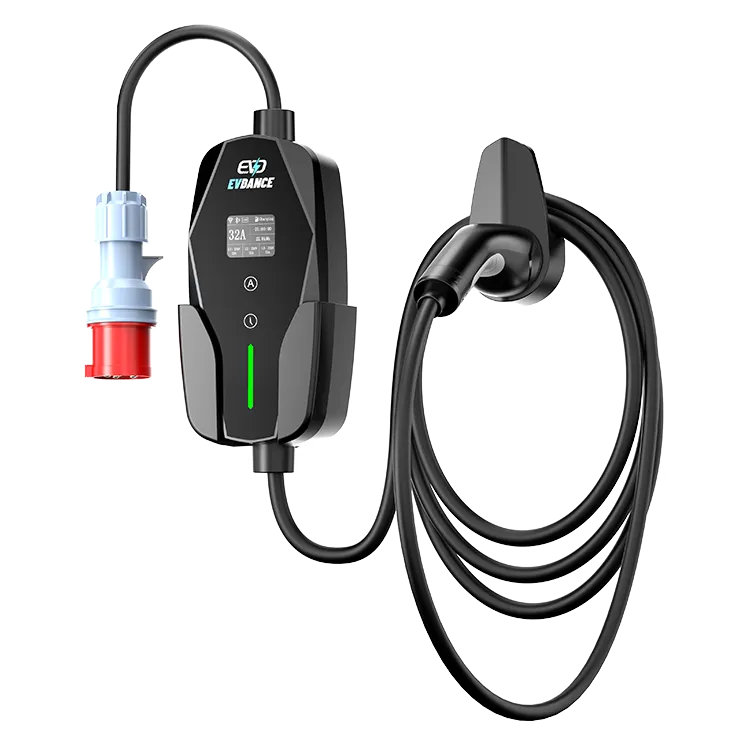
Heavy use also shows the portable’s one real advantage: a suspect unit unplugs in minutes, where a suspect fixed charger means an installer visit and a dead bay. A site that cannot pause keeps a second unit and rotates — downtime planning is bought as a spare, not promised by any warranty. The EV-ACS3205PE (22 kW three-phase, CEE five-pin plug, Type 2, 1.77-inch display, IP66) and its maker are reached through the contact page for the written answers above.
Frequently Asked Questions
Does the 3-year warranty cover commercial site use?
The standard term is 3 years. Whether heavy commercial duty — shared users, several sessions a day — sits inside the standard terms is not stated in the product literature, so it is a written-confirmation question. Ask before the unit enters service, describing the duty.
Is a worn cable a warranty claim?
The line usually runs this way: wear from use sits with the owner, a manufacturing defect with the maker. If you are unsure which side a failure falls on, send EVDANCE photos and the use log and let them decide.
How often should the site inspect the charger?
No interval is published for this model, so the site sets its own: a check on each return and a weekly look is a workable pattern. The point is that it happens every time, by a named person, and lands in the log.
Related Reading
- Which EV Charger Has the Best Warranty?
- Commercial EV Charger Maintenance Checklist
- How Long Do Home EV Chargers Last?

