
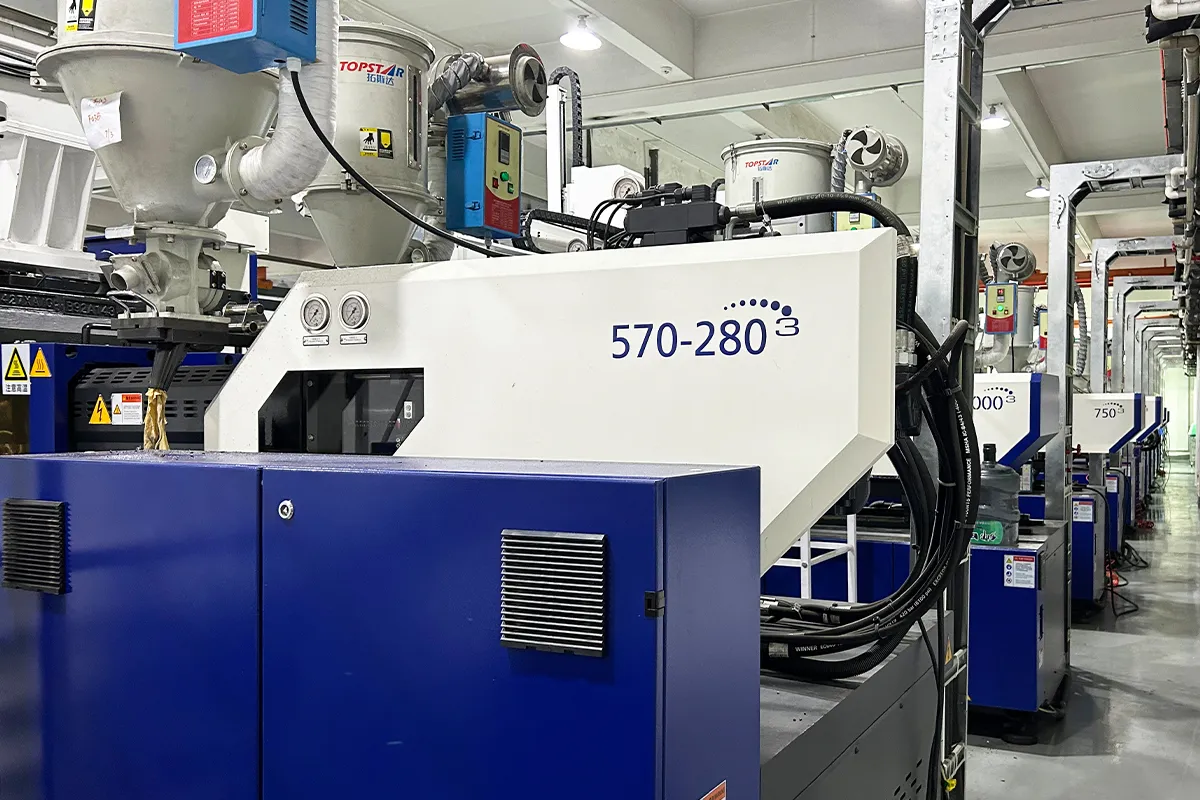
Distributors searching for the best supplier for residential EV charging stations with stable supply and delivery are really asking two things. Can the factory ship the next order on the date it promises? And will that order be identical to the last one? No single claim answers either question. What answers them is evidence: who builds the units, how many different parts the range depends on, how batches are inspected, and how honestly lead times are quoted. This checklist turns supply stability into questions you can put to any EV charger supplier, and shows the answers EVDANCE can document.
Key Takeaways
- Stable supply = on-time delivery plus batch-to-batch consistency. Judge both.
- Ask who builds the units: own production lines are easier to plan than outsourced assembly.
- A shared hardware platform across models means fewer unique parts that can run short.
- Ask for the inspection steps and traceability records, not just a quality statement.
- Share a 12-month forecast. It helps any factory plan components for your orders.
Two Parts of Supply Stability
| Part | What goes wrong | What protects you |
|---|---|---|
| Delivery reliability | Late shipments, split shipments, missed installation dates | Realistic lead times, component planning, your forecast shared early |
| Batch consistency | Second order differs in colour, firmware, components or packaging | Approved reference sample, written configuration, traceability |
For a distributor serving installers, the second part is often the costlier one. An installer who finds a different mounting plate or app behaviour in a new batch calls you, not the factory.
Supplier Checklist: Questions and Evidence
| Question | Evidence to ask for | What EVDANCE can show |
|---|---|---|
| Who builds the units? | Factory address, line video, business licence | Own production lines at the Shenzhen headquarters; facility visits on request |
| How many unique parts does the range use? | Platform explanation by model family | A shared hardware and firmware platform across product families |
| How are units inspected? | Inspection stages and records | Incoming, in-process and final inspection; pre-shipment functional and safety testing |
| Can a unit be traced back? | Serial and batch records | Full factory traceability on every unit |
| Will colours match across batches? | Colour reference method | Colour-matched tooling for consistency across production runs |
| What is the lead time, by tier? | Written lead times | Samples within days; 100–499 units in 2–3 weeks; larger orders quoted with lead time |
To check the factory itself, see how to verify a Chinese EV charger factory’s business licence and what a video audit can verify.
Why the Product Range Affects Supply
Every unique controller, relay or cable assembly is a part that can run short. A supplier whose wallboxes and portables share one platform has fewer such parts to plan. That is easier to keep in stock than a catalogue of unrelated designs. The EVDANCE Technology & R&D page describes a modular architecture shared across product families. For how factories plan around shortages, read component shortages and EV chargers.
For a residential range, the EVDANCE models most distributors stock are:
| Market | Wallbox | Portable |
|---|---|---|
| Europe, single-phase | EV-ACT3204E (7 kW, 32 A) | EV-ACS3210E |
| Europe, three-phase | EV-ACT3204PE (22 kW) | EV-ACS1605PE (11 kW) |
| North America | EV-ACT4001 (40 A), EV-ACT5002 (50 A) | EV-ACS4005T (40 A) |
Red Flags in a Supplier’s Answers
- One lead time for every quantity. A 20-unit order and a 2,000-unit order do not take the same time. A single figure usually means nobody has checked.
- No inspection detail. “Strict QC” with no stages, records or test list cannot be checked.
- Silent component changes. Ask how you will be told if a critical component changes between batches. No answer is an answer.
- No access to the site. A supplier that cannot arrange a video walk-through or a visit may not control the production it is quoting.
What You Can Do to Make Supply More Stable
- Share a rolling forecast. Even a rough 12-month figure lets a factory plan components ahead of your orders. See forecasting demand as a distributor.
- Standardise your range. Fewer variants (connector, cable length, colour) means fewer things to run short.
- Lock the reference sample. Keep a sealed approved sample and a written configuration for each model.
- Combine models in one shipment. Portables, wallboxes and adapters can be quoted and shipped together, which smooths ordering.
- Hold the right buffer. How much stock a distributor should hold helps set it.
Supply stability matters most once your brand is on the product. The charging pile OEM/ODM guide explains how order tiers and lead times work from first sample to full OEM. For the engineering side of a reliable partner, see factory-direct R&D support.
Comparing suppliers for a residential range? Request a quote with lead times by tier on our EV charger OEM & ODM page. Samples of 1–9 units ship within days.
Frequently Asked Questions
What lead time should I plan for a branded batch?
At EVDANCE, small batches of 100–499 units with logo print have a 2–3 week lead time. Larger OEM orders are quoted with their lead time. Add shipping time for your Incoterm.
How do I know the second batch will match the first?
Approve a sample in writing, keep a sealed reference unit, and ask the factory to confirm the configuration against it before each production run. See golden samples.
Should I choose FOB or DDP for steadier delivery?
DDP puts delivery to your door on the supplier. FOB gives you more control over freight. Our FOB vs DDP guide compares them.

