EV chargers are usually sold by power: 7 kW, 11 kW, 22 kW. Those numbers are not arbitrary. They fall out of two things: the electricity supply at the site and the onboard charger inside the car. Understanding both prevents the most common complaint in home and workplace charging, which is a customer who bought a 22 kW wallbox and still charges at 7 kW.
Where the Numbers Come From
Charging power is voltage multiplied by current, multiplied again by the number of phases. On a European or UK single-phase 230V supply, a 32A charger delivers about 7.4 kW. On a three-phase 400V supply, the same current flows on each of three phases, so power rises roughly threefold.
| Supply | Current | Approximate power |
|---|---|---|
| 230V single-phase | 16A | 3.7 kW |
| 230V single-phase | 32A | 7.4 kW |
| 400V three-phase | 16A per phase | 11 kW |
| 400V three-phase | 32A per phase | 22 kW |
| 240V North American split-phase | 32A / 40A / 48A | 7.7 / 9.6 / 11.5 kW |
That is why a 7kW portable EV charger is the natural maximum for single-phase homes, and why 11 kW and 22 kW chargers are designed for three-phase supplies.
Which Countries Use Which Supply?
- Mostly single-phase homes: the UK, Ireland, Australia, New Zealand and many apartments worldwide. 7.4 kW is the practical home maximum.
- Common three-phase homes: Germany, Austria, Switzerland, the Nordic countries, Poland and Czechia. 11 kW is the usual home choice.
- North America: 240V split-phase, which is single-phase for charging purposes; power scales with current up to about 11.5 kW at 48A.
Our country guides list the typical supply for each market.
The Car Has the Final Say
An AC charger only supplies power; the car’s onboard charger converts it for the battery and sets the real ceiling. Many cars accept 11 kW on three-phase, fewer accept 22 kW, and some models accept only single-phase at 7.4 kW even when plugged into a three-phase charger. A 22 kW charger is never wasted, since it will run at whatever the car accepts, but it helps to set customer expectations before they buy.
Choosing the Right Power for a Project
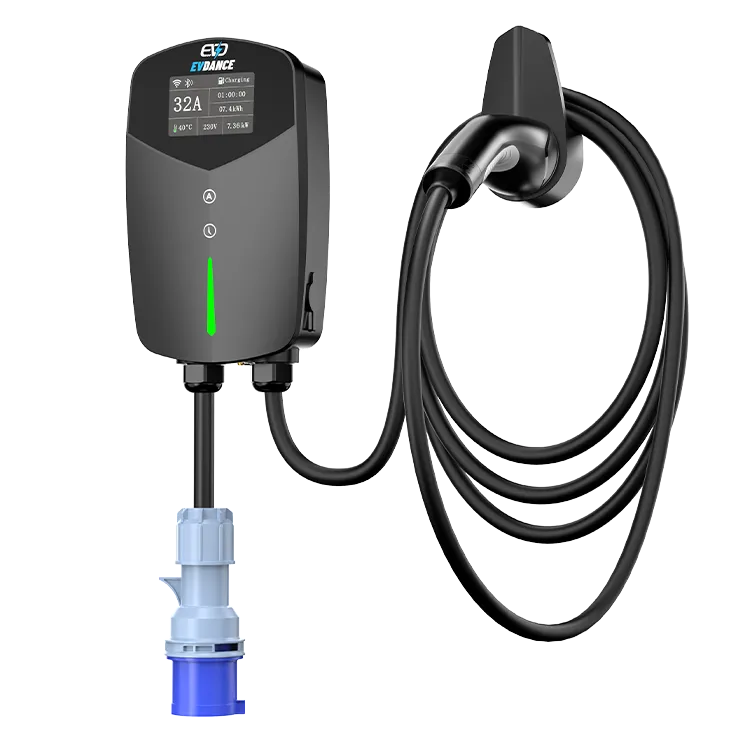
- Single-phase homes: a 7.4 kW smart charger such as the EV-ACS3210E, with adjustable current for smaller supplies.
- Three-phase homes: 11 kW is usually enough overnight and, in Germany, only needs registration with the grid operator.
- Workplaces, fleets and hotels: 22 kW wallboxes or a 43 kW dual-gun station, with load management to share the connection.
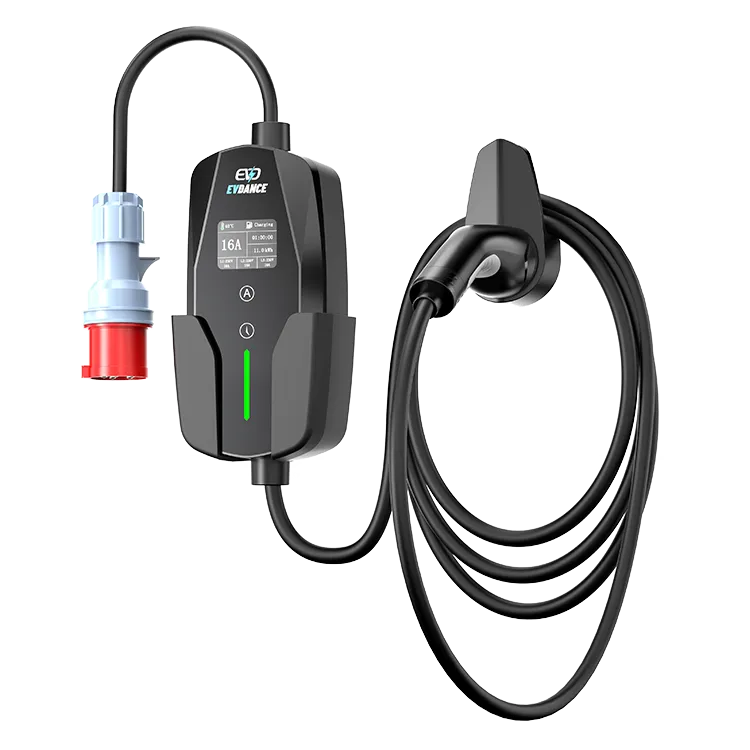
- Portable and backup charging: CEE 16A (11 kW) or CEE 32A (22 kW) three-phase portable chargers for sites with industrial sockets.
Related Reading
- How Long Does It Take to Charge an EV at 7 kW, 11 kW and 22 kW?
- Tethered vs Socketed Wallbox Chargers: Which Should You Install?
- EV Charging News: UK Battery-Electric Share Hits Record 29.8% in August
Key Takeaways
- Single-phase 230V supplies top out around 7.4 kW; three-phase 400V supplies allow 11 kW or 22 kW.
- North American Level 2 charging is single-phase and scales with current up to about 11.5 kW at 48A.
- The car’s onboard charger sets the real charging speed, whatever the charger’s rating.
- Match charger power to the site supply and the vehicles, and add load management for shared sites.
Sources & Standards
- IEC 61851-1 — Electric vehicle conductive charging system, Part 1: General requirements
- IEC 62196-2 — Type 2 connector (single- and three-phase AC)