Charging an electric car from rooftop solar is one of the most satisfying ways to drive. It lowers running costs and uses more of the energy a home generates. But solar and EV charging do not always line up: panels produce most in the middle of the day, and many cars are away from home at that time. A good setup plans for that mismatch.
How Much Solar Does a Car Need?
A typical EV uses roughly 15 to 20 kWh per 100 km. Driving 40 km a day needs about 6 to 8 kWh. In many sunny regions, each kilowatt of solar panels produces around 3 to 5 kWh a day on average, so a few kilowatts of dedicated solar output could cover average daily driving. Output varies a lot by location and season, so check a local solar estimate.
Three Ways to Use Solar for Charging
| Method | How it works | Good for |
|---|---|---|
| Daytime charging | Charge when the car is at home during sunny hours | Home workers, weekend top-ups, second cars |
| Solar surplus mode | Charger adjusts current to match excess solar output | Homes with energy monitoring and a compatible charger |
| Home battery | Store solar energy in a battery and charge at night | Homes that already have or plan a battery |
Why Adjustable Current Matters
Solar output rises and falls with clouds. A charger that can vary its current, and ideally respond to a home energy meter, makes better use of surplus power. Many cars need at least 6A to start charging, which is about 1.4 kW on single-phase or 4.1 kW on three-phase, so single-phase charging often works better with small solar systems.
Timing and Tariffs
If a car is away during the day, charging overnight on a cheap off-peak tariff may be more economical, while solar covers daytime household use. Smart chargers with scheduling let owners choose the cheapest option. Our wallbox features guide explains scheduling and app control.
What to Look For
- Adjustable charging current, ideally in small steps.
- App control and scheduling.
- Compatibility with the home energy meter or management system, if solar surplus charging is required.
- A qualified installer who can review the whole system, including the inverter and protection devices.
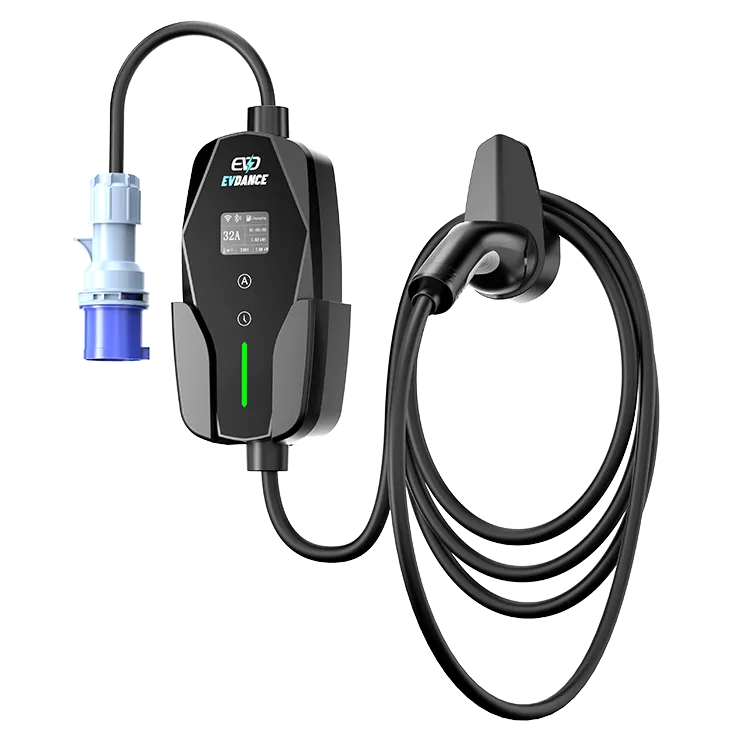
EVDANCE supplies residential chargers with app control and adjustable current, including the EV-ACS3210E, which adjusts from 10A to 32A.
Related Reading
- Smart Charging and Time-of-Use Tariffs: How Scheduling Cuts EV Charging Costs
- What Is Dynamic Load Balancing, and Why Does Your Wallbox Home Charger Need It?
- EV Charging News: Zaptec and Kraken Partner on Smart Tariffs and Vehicle-to-Grid for Charger Owners
Key Takeaways
- A few kilowatts of solar can cover average daily driving in sunny regions.
- Solar surplus charging needs a charger that can vary current.
- Single-phase charging often suits small solar systems better.
- Scheduling lets owners choose between solar and off-peak tariffs.
Sources & Standards
- IEC 61851-1 — Electric vehicle conductive charging system
- IEC 60364-7-722 — Supplies for electric vehicles
- NREL PVWatts Calculator