
An overnight depot plan is arithmetic plus discipline: how much energy each vehicle needs, how long it sits, and who moves what, in which order. With 22 kW wallboxes like the EV-ACT3204PE, one post can finish several vehicles in a single night — but only if the plan decides the running order, not luck. How many posts to install is a separate sizing question.
Key Takeaways
- Plan from nightly energy per vehicle and the real dwell window — not from the wallbox’s rating alone.
- One post can serve several vehicles a night; the changeover, not the kilowatts, is the binding constraint.
- Dedicated, paired and mixed plans cover most depots; a plan needing a 2 a.m. swap will fail.
- RFID gives the depot its session log; platform load management is not stated for this unit — confirm it in writing if your plan needs it.

The Night’s Arithmetic
Start with the window: last vehicle back to first vehicle out. Ten hours is a common depot window and is used here as an example — measure your own. At a sustained 22 kW with about 10% allowed for losses, a post puts roughly 20 kWh per hour into a battery, for a vehicle that accepts the full rate; a vehicle that accepts less takes longer, and its acceptance — not the wallbox — sets its time on the post.
| Each vehicle needs tonight | Time on a post at 22 kW (vehicle accepting the full rate) | Vehicles one post can finish in a 10-hour window |
|---|---|---|
| About 20 kWh | About 1 hour | Up to 8 on paper — in practice, the swapping sets the limit |
| About 40 kWh | About 2 hours | About 4, with disciplined changeovers |
| About 60 kWh | About 3 hours | About 3, with an early start for the first vehicle |
Read the last column as a ceiling, not a promise. Every changeover needs a person, or vehicles parked so the next one can be plugged in without moving the finished one. A plan that needs someone to swap cables at 2 a.m. is a plan that fails — build the rotation around the hours staff are actually present.
Three Plan Shapes That Work
- A dedicated post per vehicle. Every vehicle plugs in on arrival and stays plugged in — no moves, no rota. This is the shape for high nightly needs or thin staffing; the cost is posts, and our fleet depot charging guide works through how many a depot needs.
- Paired rotation. Two low-need vehicles share one post: the first takes the early-evening slot, the second the deep-night slot. It works when each vehicle’s nightly need is comfortably under half the window’s energy — and when the swap happens at a staffed hour or the vehicles park so both can reach the post in turn.
- Mixed. The highest-need vehicles get dedicated posts; the low-need remainder rotate. Most real depots land here, because fleets are rarely uniform.
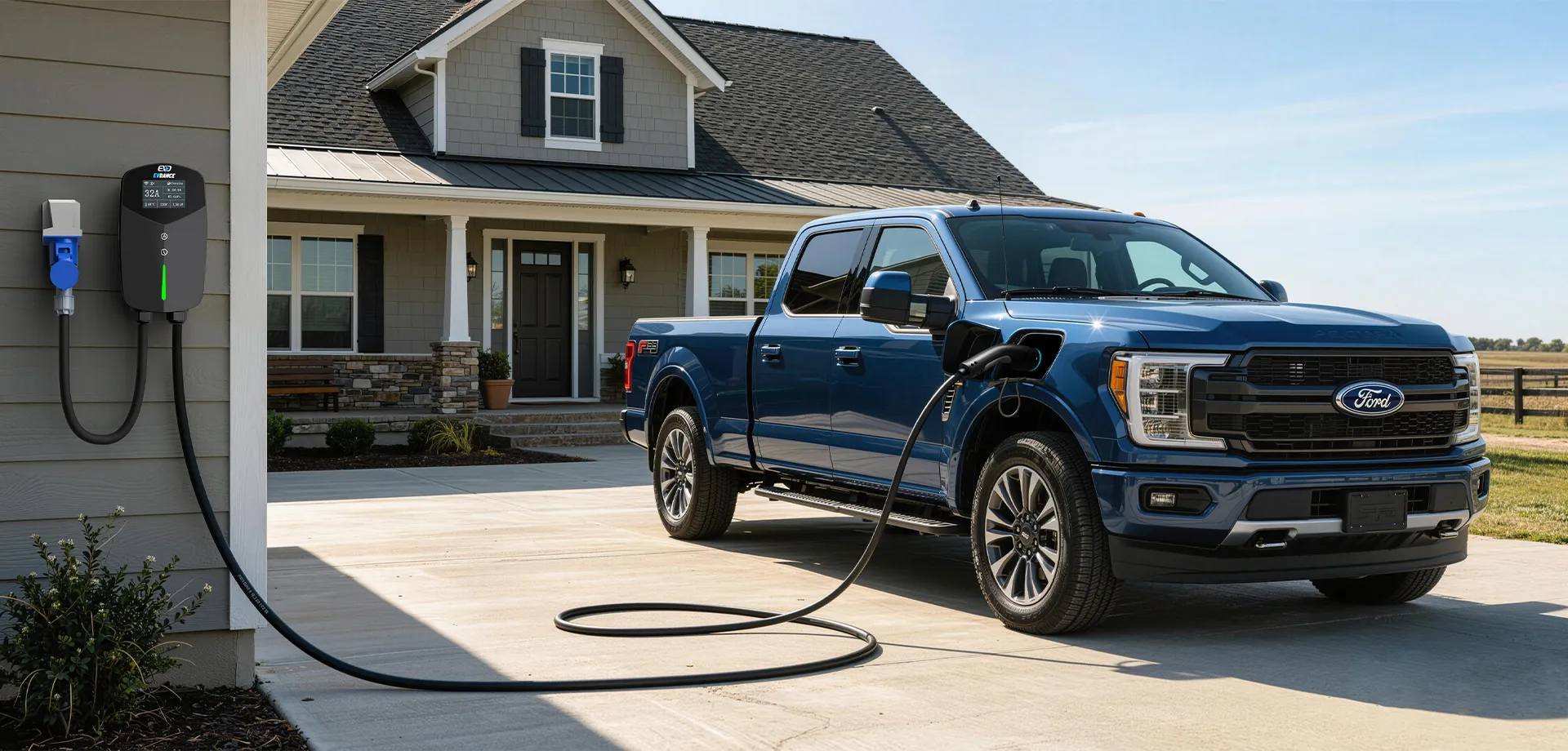
Records: The Depot Log on the EV-ACT3204E
The EV-ACT3204E lists RFID and app control. In a depot that is the log: a card issued per vehicle or per driver starts each session, so sessions are tied to cards, not anonymous — the record that shows which vehicle charged. Our overview of RFID and user management for shared chargers covers how card systems run day to day.
Be clear about the boundary. The listing states RFID and app control; it does not state platform-level load management, automatic scheduling across posts, or billing integration for this unit. So the overnight plan is worked by rotation and routine — people and parking order — and any platform feature is a written confirmation to get from EVDANCE before the plan depends on it. Where a managed row with platform control stated outright is the requirement, the step up in the same range is the EV-AC03201T dual-connector station, which lists OCPP 1.6J with RFID; how OCPP management works is explained in our OCPP explainer. The wider programme around the hardware is covered in our workplace charging programme guide.
Frequently Asked Questions
How many wallboxes does a depot need?
It depends on nightly energy per vehicle and the dwell window — the table’s two inputs. Our depot sizing guide works the calculation; the plan shapes here decide whether fewer posts than vehicles can work.
Can these wallboxes balance the load between posts automatically?
Not stated for this unit. Treat it as a written confirmation to obtain before relying on it; the rotation plan achieves the same end with routine instead of software.
What if a vehicle comes back nearly empty?
Give it a dedicated post or the first slot. At the full rate, adding about 60 kWh takes roughly three hours — well inside a ten-hour window, as long as the plan puts it first.
Related Reading
- Fleet Depot Charging: How to Size AC Chargers for Vans and Light Commercial Vehicles
- RFID and User Management for Shared EV Chargers
- How to Plan a Workplace EV Charging Program
- OCPP Explained: What Charge Point Operators Need From EV Charger Hardware

