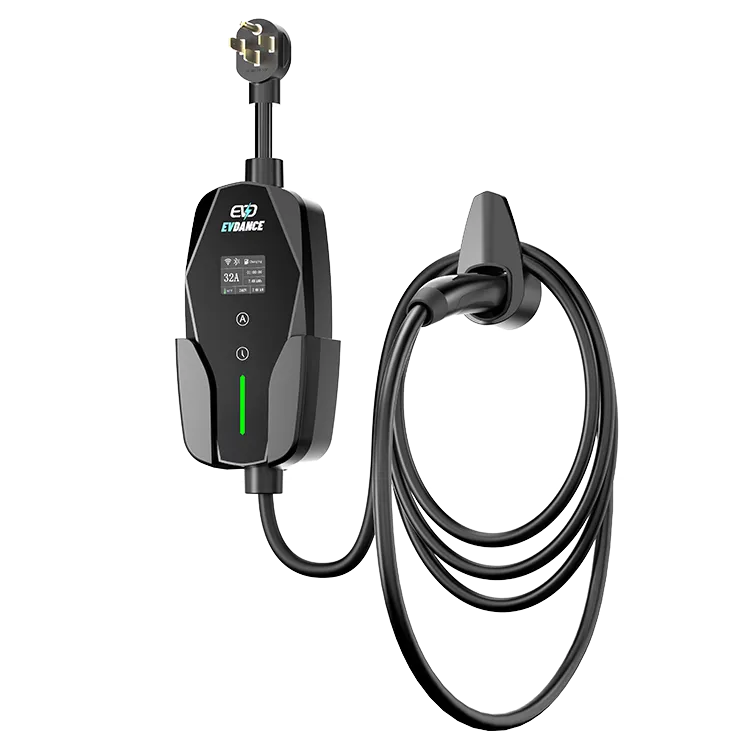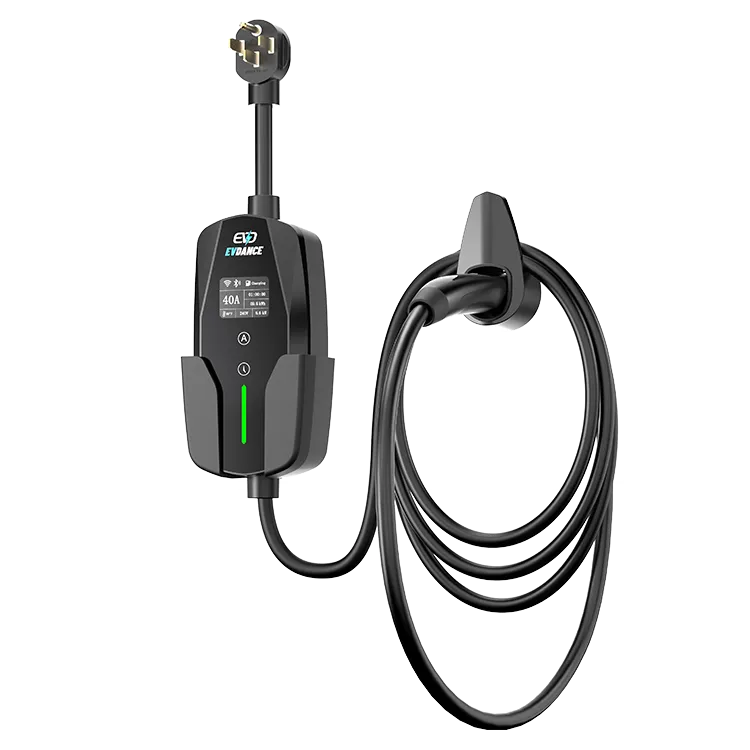
“Portable EV charger” covers a wide range of products, from a small travel charger that plugs into a household socket to a 22 kW three-phase unit that uses an industrial plug. The difference comes down to two things: how much current the charger draws and what grid plug it uses. Getting both right determines how fast a car charges and whether the socket is safe to use for hours.
The Main Types at a Glance
| Type | Typical plug | Approx. power | Best for |
|---|---|---|---|
| Household socket, 8–13A | Schuko, BS 1363, AS/NZS 3112 | 1.8–3 kW | Travel, occasional top-ups |
| 16A single-phase | Blue CEE 16A or dedicated outlet | 3.7 kW | Campsites, garages with a 16A outlet |
| 32A single-phase (7kW class) | Blue CEE 32A, NEMA 14-50P (US, 240V) | 7.4–7.7 kW | Daily home charging without a wallbox |
| 16A three-phase | Red CEE 16A 5-pin | 11 kW | Garages and workshops with three-phase sockets |
| 32A three-phase | Red CEE 32A 5-pin | 22 kW | Workshops, fleets, commercial sites |
In North America, portable chargers are grouped differently: Level 1 units run at 120V from a NEMA 5-15 outlet at about 1.4 kW, and Level 2 units run at 240V from a NEMA 14-50 or 6-50 outlet at up to 9.6 kW with 40A.
Why Current Must Match the Socket
A charger draws its rated current for hours, much longer than a kettle or heater. Household sockets are not designed for many hours at high current, so household-socket chargers are limited to modest currents. Higher-power portable chargers use sockets rated for the load, such as CEE industrial sockets or a NEMA 14-50 outlet on a correctly sized circuit. In North America, the NEC treats EV charging as a continuous load, so a 40A charger needs a 50A circuit.
Adjustable Current Adds Flexibility
Many modern portable chargers let the user choose the charging current. The EVDANCE EV-ACS4005T steps from 16A to 40A, and the 7kW portable EV charger EV-ACS3210T adjusts from 10A to 32A. That lets one product serve different circuits, from a friend’s garage to a dedicated home outlet.
How to Choose
- Occasional or travel use: a household-socket charger at 8–13A.
- Daily home charging on single-phase: a 32A (7kW class) portable charger on a dedicated circuit.
- Sites with red industrial sockets: a CEE 16A (11 kW) or CEE 32A (22 kW) three-phase charger; see our CEE 16A vs 32A plug guide.
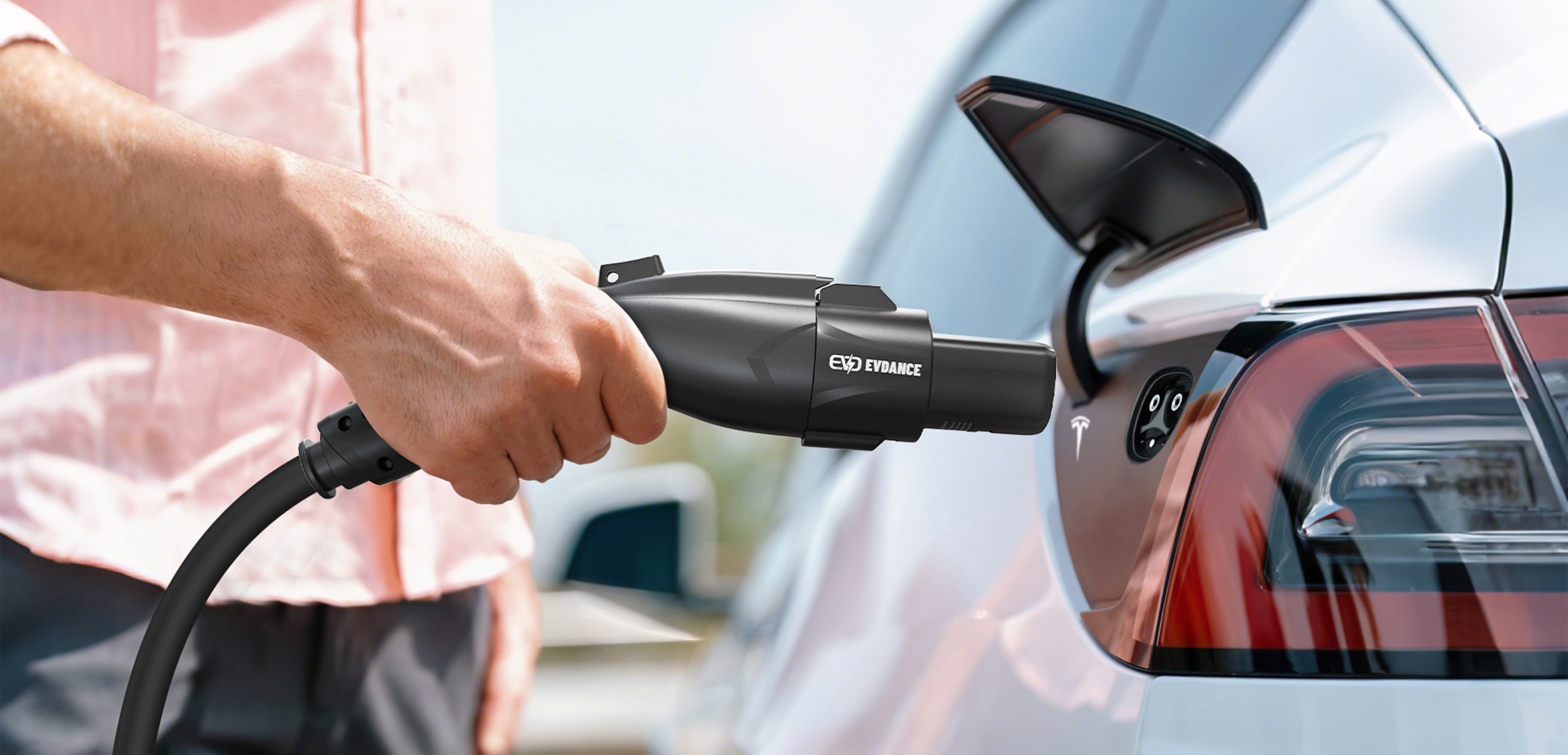
- North America: Level 2 on NEMA 14-50P, with NACS or J1772 connector.
Our portable EV charger buying guide covers features and pricing in more detail.
Related Reading
- 7kW Portable EV Charger vs. 7kW Wallbox: Which Should You Choose?
- Cold-Weather EV Charging: What Happens to Chargers and Cables Below Freezing
- 7kW Portable EV Charger News: Why 7kW Is the New Default
Key Takeaways
- Portable chargers range from 8–13A household-socket units to 22 kW three-phase models.
- The grid plug and socket rating set the safe charging current.
- Adjustable current lets one charger serve several circuits.
- Choose by the sockets your customers have and how often they charge.
Sources & Standards
- IEC 61851-1 — Electric vehicle conductive charging system
- IEC 62752 — In-cable control and protection device (IC-CPD)
- IEC 60309 — Industrial plugs and sockets (CEE)