
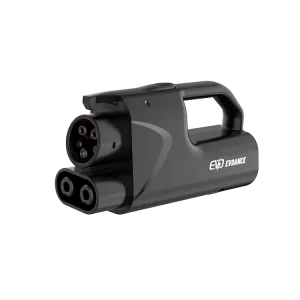
JT08/JT09 Handling Tips for Drivers With Limited Grip Strength
The JT09’s handle gives grip and leverage for seating a heavy DC connector – and technique does the rest. Honest limits, plus routes that skip the adapter.
The JT09’s handle gives grip and leverage for seating a heavy DC connector – and technique does the rest. Honest limits, plus routes that skip the adapter.
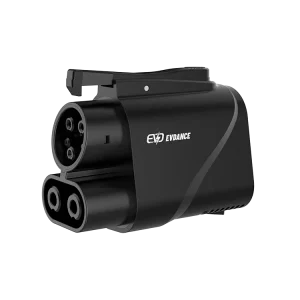
Supercharger cables are short and fixed to the stall: reach is decided by your port’s position and which way you park. Match port end and side to the post.
A counterfeit NACS-to-CCS1 DC adapter has no verified rating behind it. Five spot checks — ratings, direction, maker, approval honesty, documentation — expose most bad ones.
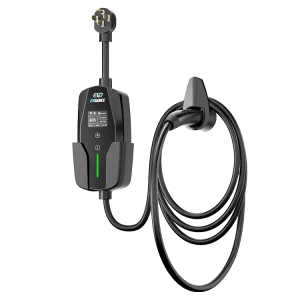
Three NACS home chargers compared: 7.7 kW and 9.6 kW portables against the 11.5 kW wallbox — form, ceiling and current steps decide which fits your garage.
A NACS car and a J1772 car can share one home with both portables: native charging for each, turns on one outlet, and a second circuit when parallel matters.
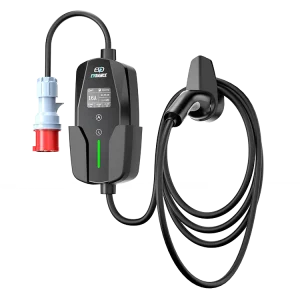
Mixed CEE sites do not have to choose: the 11 kW ACS1605PE covers 16 A sockets, the 22 kW EV-ACS3205PE covers 32 A ones, and the pair runs as one system.
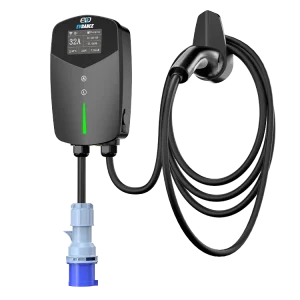
Same 22 kW, two chargers — the decision starts with your building: an existing 32A CEE socket, spare capacity, and permission decide before the products do.

Two AC connectors sharing 43 kW, or one 22 kW DC connector? For a small business the answer is how many cars plug in at once, and how long each one stays.
Match the adapter to the car’s inlet and the station in front of it: JT02 for J1772 cars at NACS AC, JT08 or JT09 for CCS1 cars at NACS DC — plus the two pairings with no adapter.
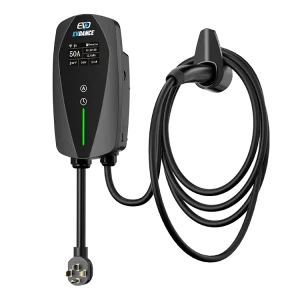
Four EVDANCE chargers plug into a NEMA 14-50 outlet, and the outlet caps all of them at 40 A continuous. Sort by your car’s inlet first, then by amps and cable.